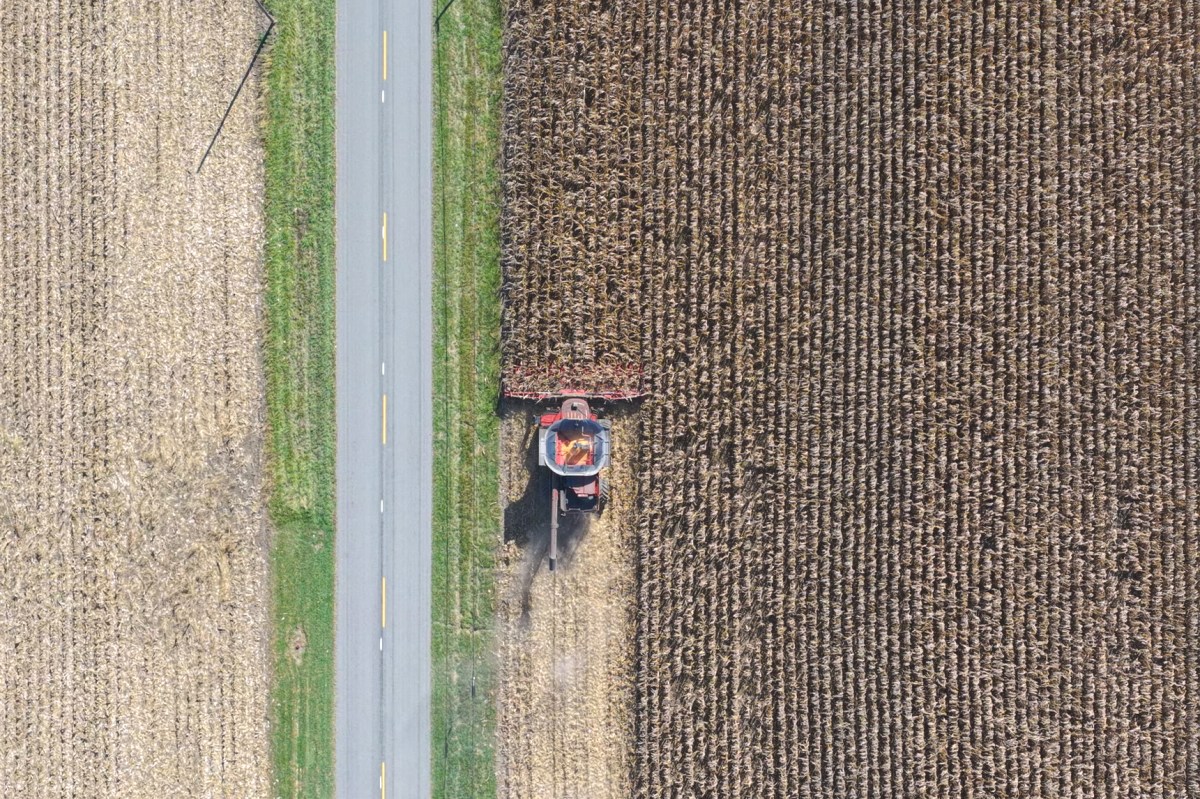
Rising input costs, debt, climate change and market losses are straining producers—even the stunning rise of corn prices cannot alleviate the pressure. President Trump’s war with Iran, for example, has caused diesel prices to skyrocket, hitting agriculture producers hard just as combines start to roll. Congress Joint Economic Committee found that American farmers spent $1.4 billion more on diesel fuel during this year’s spring planting season—a 63 percent increase from 2025—with average farmers spending up to $1,500 more on refilling.
Other inputs have also become more expensive. Phosphate prices in the Corn Belt have risen by 20 percent this year, as a price war unfolds between the big five global fertilizer chemical suppliers: China, Morocco, Saudi Arabia, Russia and the U.S. Meanwhile, an NCGA study of 2023–2025 prices found that U.S. farmers paid more than Brazilian farmers for almost every seed and crop protection category.
The squeeze is exacerbated by an export slowdown. China’s retaliatory tariffs reduced U.S. agricultural exports to China by an estimated $14.9 billion in the last year, with farms in Iowa, California and Illinois hit the hardest. As a result, after rising by 9.1 percent in 2024 and a further 3.8 percent in 2025, U.S. farm debt is forecast to climb another 4.6 percent in 2026.
U.S. producers must also compete in markets dominated by corporate power. Four global companies control 85 percent of the beef sector, driving down prices paid to farmers and increasing costs for consumers at grocery stores. Corporate consolidation of farmland ownership over the past three decades has created fewer, bigger farms and blocked the next generation of smallholders from accessing land.
American agriculture groups have called for greater market control and fiscal support for over a decade, yet both the House Farm Bill, passed in April, and the proposed Senate bill have disappointed U.S. farmers, who say they fail to tackle systemic issues. Alongside market and economic issues, climate change is eroding crop yields and damaging farmer revenues. The U.S. suffered its worst spring drought on record this year, with 60 percent of land experiencing moderate to exceptional drought, according to the U.S.
In the past year alone, the USDA has paid out nearly $18 billion in supplemental disaster assistance to farmers and ranchers. Rachel Cleetus, senior policy director at the Union of Concerned Scientists, has said climate change is “fundamentally altering conditions for U.S. agriculture, creating unprecedented risks and uncertainties for livelihoods of farmers and ranchers.” While subsisting in these conditions, farmers are under pressure to cut carbon emissions by adopting new technologies and techniques. Such changes may have long-term benefits, but the upfront costs and risks—often borne by smallholders alone—are prohibitive.
Extract — continue reading at the source.