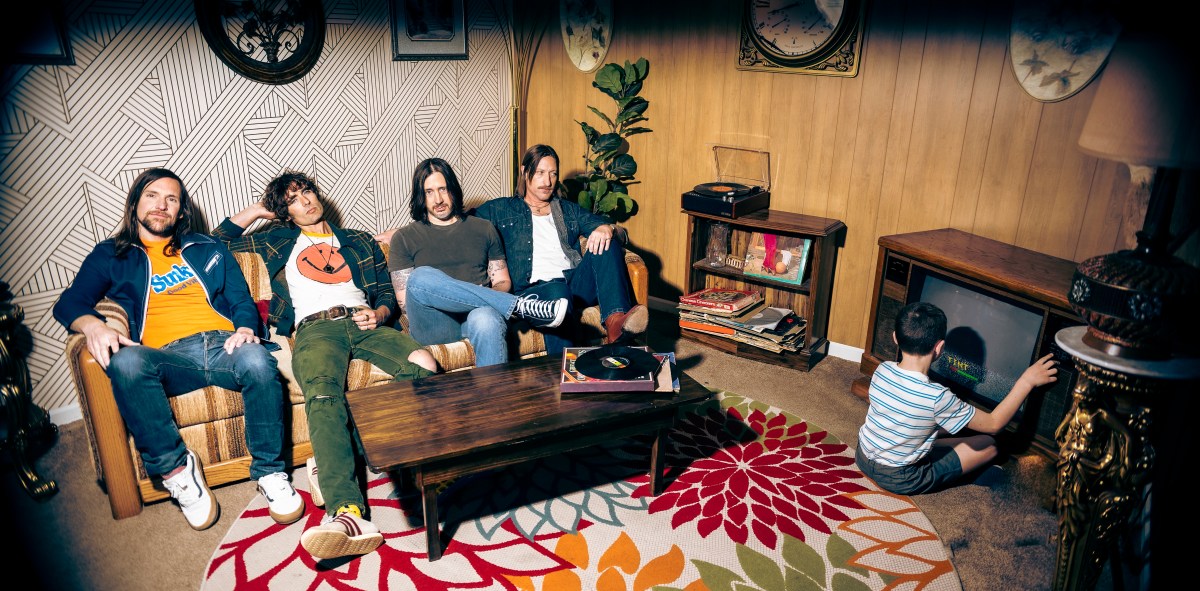
When the All-American Rejects released Move Along in 2005, listeners still bought complete albums, retailer exclusives scattered bonus tracks across competing editions, and a hidden song might surface only after 20 minutes of silence. Now, as the band gathers the sessions’ strays into a 21st-anniversary deluxe edition, guitarist Nick Wheeler sees a chance to restore the record’s original shape. He added, “To still be able to see people discover a record as if it’s brand new” is “a beautiful evergreen result of, I guess, songs that matter.” Wheeler encounters the same ownership in the deep cuts, which survived because listeners once heard a single, bought the album and absorbed the full sequence.
When the band returned to headlining in 2023 and pulled “I’m Waiting” into the set, he discovered how thoroughly those songs had lodged in memory. Guitarist Mike Kennerty, dressed as Gene Simmons, accepted “the tallest heels,” “the most costume,” and the blood capsules, so Wheeler awarded him the night’s commitment prize: “He had blood running down his face for the last half of the show. He definitely had to commit.” The role also carried its own symmetry, since Kennerty’s first record purchase was KISS’s Destroyer.
In an age where music is more accessible than ever but live experiences become more costly, Ritter has aimed to bridge the gap between audience and experience with a new digital platform called PlayHouse. PlayHouse bypasses the traditional need for promoters, allowing artists to connect directly with fans to book and create intimate, community-driven shows in a house-party setting. The house parties invert every element of the festival production, and because the band walks through a living room, steps into a backyard and begins without the insulation of a vast stage, each performance recovers the looseness of its earliest bars and parties.
Let’s play a song,” Wheeler recalled, describing a set built through eye contact, crowd response and instinct; the risk of a fan stepping on a pedalboard or unplugging a cable only makes the scene feel closer to the band’s origins. Ritter found a deeper exchange in the same proximity.
Extract — continue reading at the source.