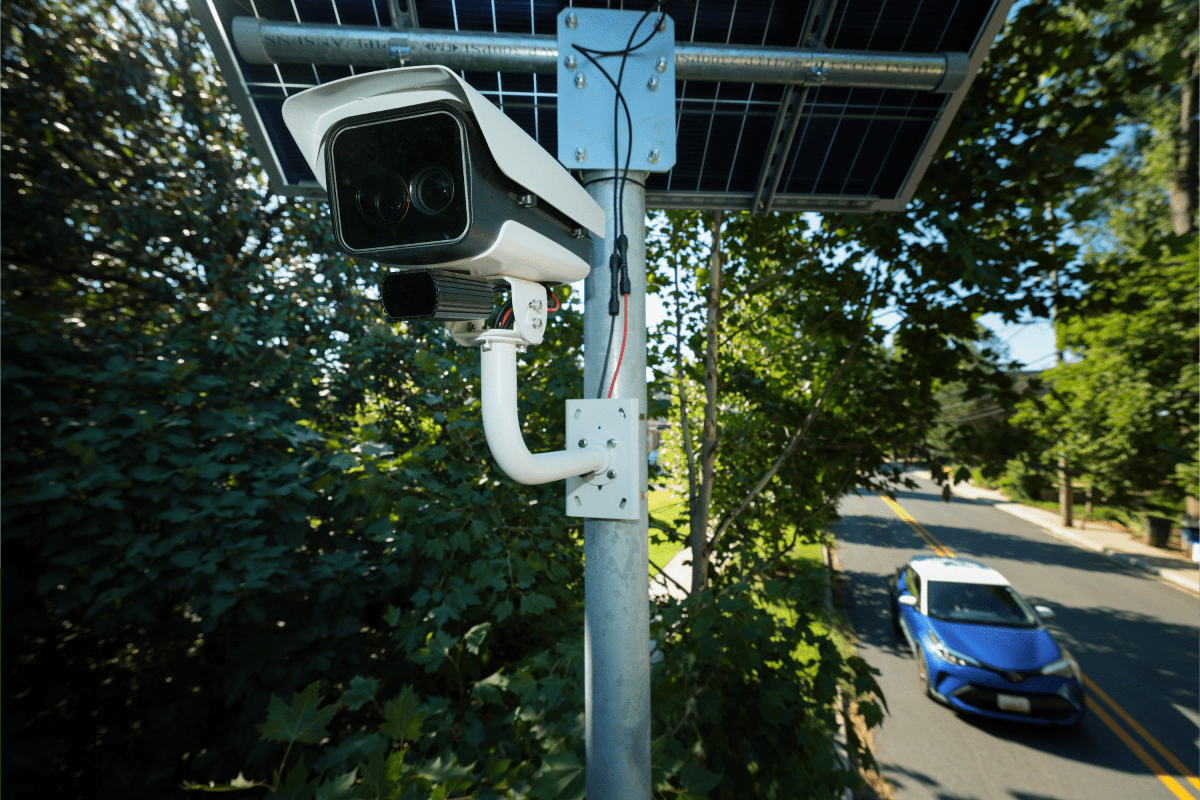
Flock Safety's automated license plate readers (ALPRs) are facing one of the biggest challenges in the company's history as a growing number of cities and counties across the United States move to cancel contracts, deactivate cameras or reject new deployments amid mounting privacy concerns. Data from the privacy advocacy group DeFlock the USA shows that 46 communities have canceled Flock contracts, 20 have rejected proposed contracts, 19 have deactivated Flock cameras, eight have removed cameras and 12 have paused or suspended programs. Yet as Flock comes under increasing scrutiny, local governments are looking for alternatives, and competitors—particularly Axon, Motorola, Rekor, Verkada and Genetec—are positioning themselves to take Flock's place, according to Civic IQ, a business-to-government market intelligence platform that tracks government procurement activity and contracts.
The backlash against ALPRs has accelerated throughout 2026, with communities raising concerns about government surveillance, data sharing, potential federal access to vehicle records and allegations of misuse by law enforcement officers. Critics argue that large-scale ALPR networks allow authorities to build extensive databases of drivers' movements without warrants, while supporters maintain the technology is an important crime-fighting tool. Newsweek contacted Flock, Axon and Rekor for comment via email outside normal working hours.
Perhaps the biggest beneficiary to the backlash against Flock could be Axon, the Arizona-based public safety technology giant best known for its Taser devices and body-worn cameras. During a recent earnings call, CEO Rick Smith said the company was seeing "a significant number of agencies" looking to switch to Axon's ALPR products because of what he described as stronger privacy controls. Axon's advantage may lie in its broader ecosystem.
Unlike Flock, which is primarily known for its camera network, Axon integrates license plate readers with evidence management software, body camera footage and real-time crime center tools, according to the company's website. Supporters argue that this creates more oversight and more accountability. However, Matthew Guariglia, a senior policy analyst at the Electronic Frontier Foundation, told NPR that switching from Flock to Axon amounts to "replacing one color of camera for another color of camera," and that the underlying privacy concerns will still be there as the capability to track vehicle movements remains pretty much the same.
Motorola Solutions is another major player seeking to capitalize on the controversy. The company has offered ALPR technology for years through its Vigilant platform and is among the biggest companies competing with Flock in the ALPR market. Motorola markets its system as an enterprise-grade platform capable of integrating with police databases and wider public-safety infrastructure.
Its scale and long-standing law-enforcement relationships could make it an attractive option for agencies reconsidering Flock. But critics note that Motorola's platform performs many of the same functions that have sparked opposition to Flock. For many surveillance advocates, the concerns are not company-specific but stem from the technology itself.
Extract — continue reading at the source.