For years, Azerbaijan’s relationship with Central Asia was viewed largely through the lens of shared Turkic identity, Caspian connectivity and energy diplomacy. However, that description is becoming outdated. Azerbaijan is increasingly emerging as an active participant in the political and economic architecture of Central Asia, and among the countries in this geography, Uzbekistan stands at the centre of that transformation.
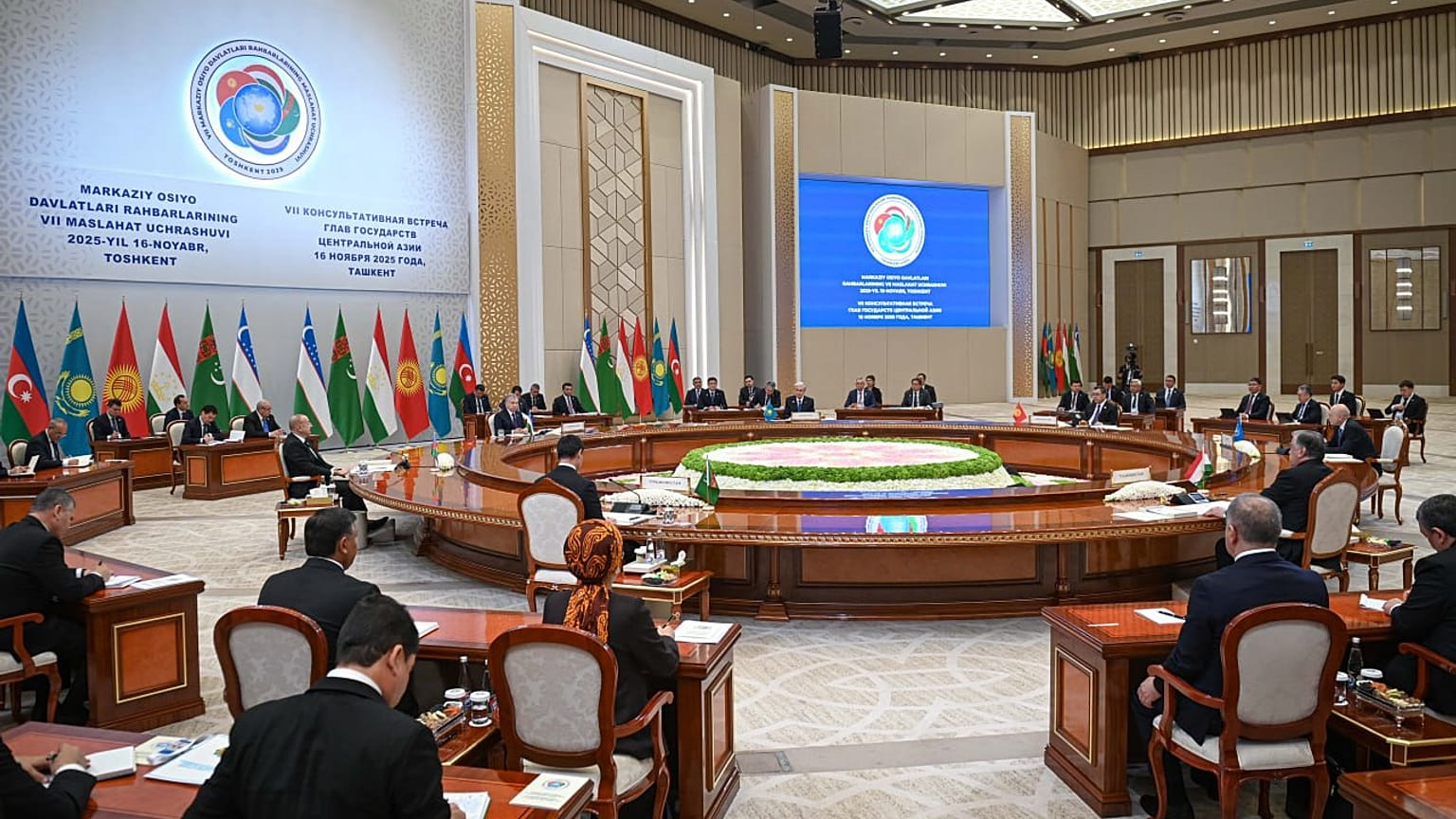
The clearest evidence came in November 2025, when Azerbaijan was granted full participation in the Central Asian Heads of State Consultative Meeting. A format historically built around the five Central Asian republics was effectively expanded into a C6 framework, which was in fact a recognition that Azerbaijan has acquired strategic weight in a region whose importance is growing rapidly. Therefore, President Ilham Aliyev’s current state visit to Uzbekistan should be understood against that larger backdrop.
Uzbekistan’s rapidly expanding economic and strategic potential means that its role extends well beyond that of one of Azerbaijan’s closest partners. Tashkent has, of course, emerged as a key gateway for Baku, providing high-level access as Azerbaijan deepens its engagement with Central Asia and expands its regional ties. Central Asian states are seeking diversified trade routes, investment, access to international markets and stronger links with neighbouring regions, while Azerbaijan wants to strengthen its position as a transport, logistics, energy and trade hub connecting Central Asia with the South Caucasus, Türkiye and Europe.
And for this reason, this convergence has transformed the political relationship between Baku and Tashkent into something much more strategic. Certainly, President Ilham Aliyev and President Shavkat Mirziyoyev have built a relationship based on frequent high-level contact and political trust. Their governments have constructed an expanding legal and institutional framework, culminating in the establishment of the Supreme Interstate Council in 2023.
And now, President Aliyev’s current visit provides another opportunity to coordinate priorities at the highest level, further aligning the bilateral alliance with Azerbaijan’s broader regional strategy. The answer increasingly lies in connectivity. Azerbaijan’s position on the Caspian gives Central Asian economies an alternative route towards Western markets.
In turn, Uzbekistan, with its large population, industrial base and growing economy, provides Azerbaijan with an important partner on the eastern side of that corridor. So, the relationship is consequently becoming part of a larger Eurasian equation. We can now say that these efforts are beginning to pay off handsomely in trade.
Extract — continue reading at the source.