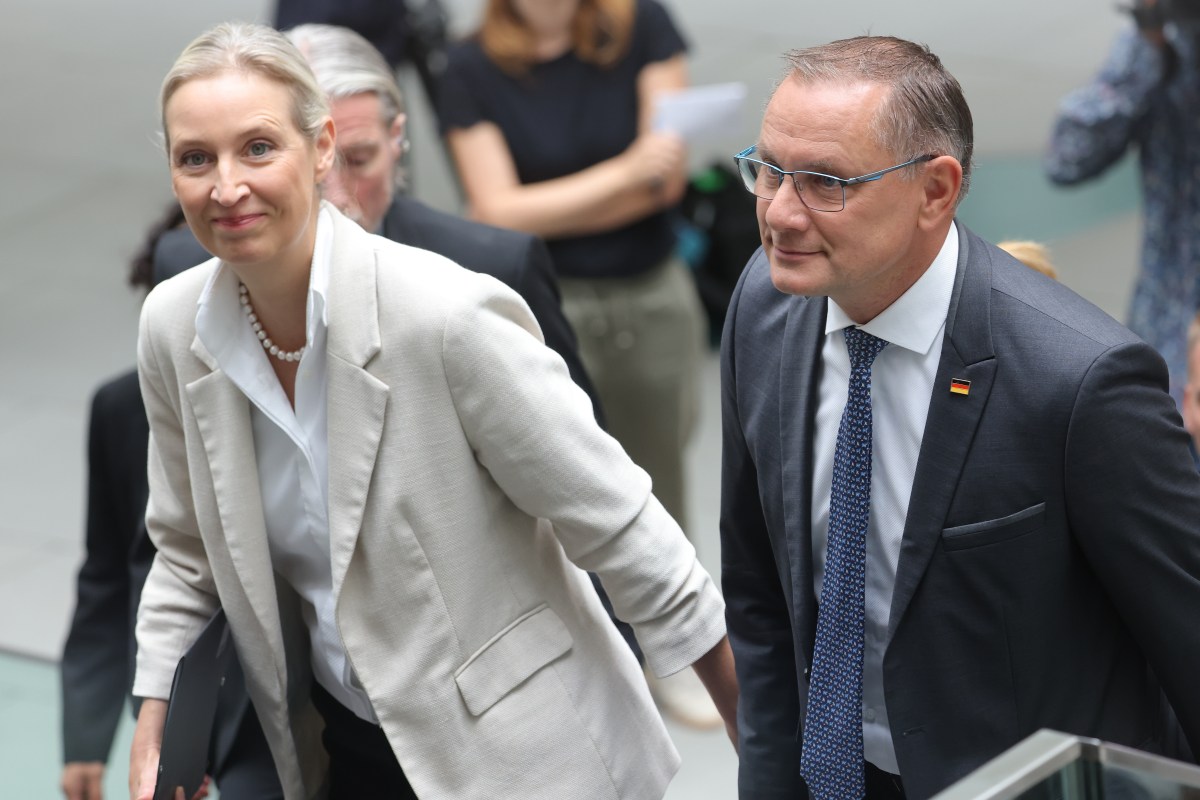
Flush with its success in Saxony-Anhalt, the far-right Alternative for Germany (AfD) party is in a strong position heading into two other state elections later this month, according to polls and prediction markets. On Sunday, the party got 44 percent of the vote in the state in the country’s east, well clear of the 17 percent won by the Christian Democratic Union (CDU), the party of German Chancellor Friedrich Merz. The AfD now has a strong chance of further success in Mecklenburg-Western Pomerania and Berlin, where voters go to the polls for local elections on September 20.
Polling has put the AfD ahead in Mecklenburg-Western Pomerania, and prediction markets have put its chances of being the biggest party there at over 80 percent, although the race is a lot tighter in Berlin. But other major parties refuse to cooperate with the AfD to keep them from power in what is known as a "firewall." However, in Saxony-Anhalt, the far-left BSW (Bündnis Sarah Wagenknecht), which got 5 percent of Sunday's vote, has expressed interest in becoming the kingmaker this time round. This raises the prospect of AfD candidate for governor, Ulrich Siegmund, becoming the first far-right head of a state government in Germany since WW2.
As the horse trading continues, the AfD has its eyes on two other states where ballots take place on September 20. In Mecklenburg-Western Pomerania, a coastal state in the north-east of Germany, the AfD is ahead of its opponents according to recent surveys. The state’s chamber has 71 seats with 36 needed for a majority.
Both sides think that they have to save the country from the other one so the other parties will—and already are—using the result in Saxony—Anhalt to mobilize their supporters to stop the AfD." The AfD has Leif-Erik Holm as candidate for minister-president, while Enrico Schult, the state’s party co-chair, heads the state list, the two being co-chairs of the state party. Manuela Schwesig stands for the SPD, Daniel Peters for the CDU, Simone Oldenburg for the Left and Claudia Müller for the Greens. The election data platform PolitPro, found that polling averages show 35 percent of respondents backed AfD, as of September 6.
Next is the SPD with 30 percent, Die Linke with 11 percent, the CDU with 9 percent, Grüne with 5 percent and BSW with 4 percent. Other parties achieved 5.1 percent of the votes. PolitPro said the polling suggested that the governing alliance of SPD and Die Linke would take just 45.1 percent of the seats –which is not enough for a majority of its own.
Meanwhile, the polling firm Insa found that an average of its last five surveys put the AfD at a slightly lower 30 percent, while the SPD was at 23.2 percent and the CDU was at 15.8 percent. The parties BSW on 10 percent and Linke were at 10 percent and 9 percent, respectively, although its most recent poll was taken between June 11 and June 18. As of Monday, prediction market Polymarket put the AfD’s chances of being the biggest party at 82 percent, and the SPD at 19 percent.
Extract — continue reading at the source.