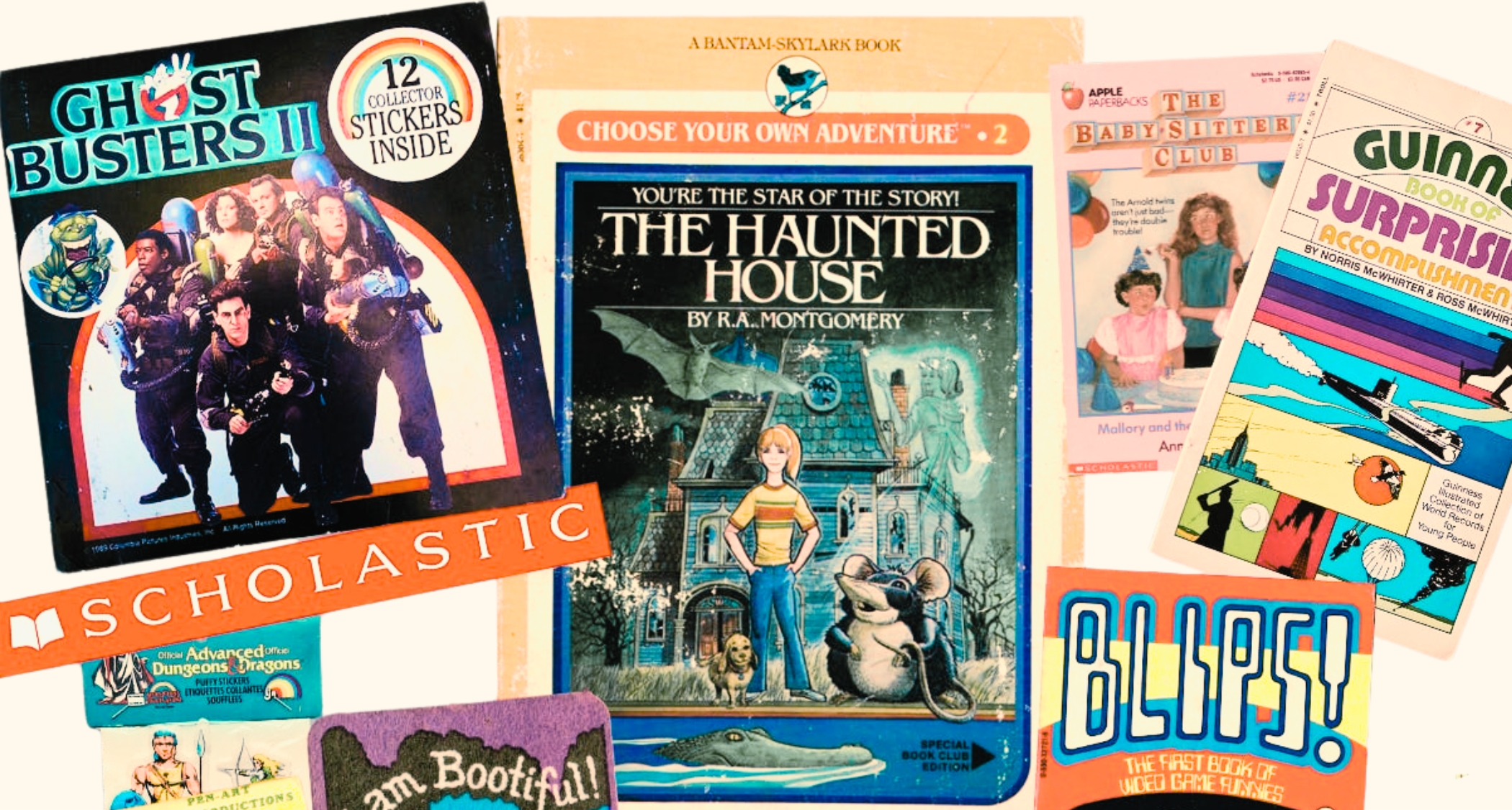
If you made your way through a public school in North America anytime during the past half-century, you should recall that shiny catalog. That sudden, circus-like presence in the school library. On Monday, the critic Michelle Cyca argued as much in an evocative piece for The Walrus.
Cyca remembered the fair, with its order forms and Animorphs box sets, as a key Millennial touchstone. But when her young daughter brought a current catalog home, sorrow usurped nostalgia. Cyca was distressed to note that many of today’s fair offerings are mere “extensions of toy or TV franchises,” like Lego, Pokémon, or Paw Patrol.
What’s worse, these offerings seem “to be marketing themselves not on the merits of imaginative storytelling but on their proximity to more stimulating entertainments.” But what does it mean—especially considering this national reading crisis we keep hearing about—if the fair of yore is dead? Is this one more win for the baddies? Or a case of rose-colored glasses?
Scholastic launched its first teen-targeted book clubs in 1948. Their Pocket Book program allowed students to access affordable books by ordering them from magazines stationed in the classroom. The book fairs kicked off in 1982.
Early iterations gave Scholastic titles—like the Clifford series—space to do gangbusters. In subsequent eras, the fair proved crucial to the growth of other YA properties, like The Hunger Games or Goosebumps series. Neither spin-off books nor merch are new to the fair.
And franchise offerings are something we can trace back to at least 2002. In addition to fanning a love of reading, the fair has always claimed a fiscal purpose. In North America, it offers a supplemental funding pipeline for under-resourced schools.
Extract — continue reading at the source.




/https://tf-cmsv2-smithsonianmag-media.s3.amazonaws.com/filer_public/e6/36/e636b185-79c0-4391-9026-b5a1ca490cd1/4_______-787b484df8505720c52d3086a2927b91.jpeg)