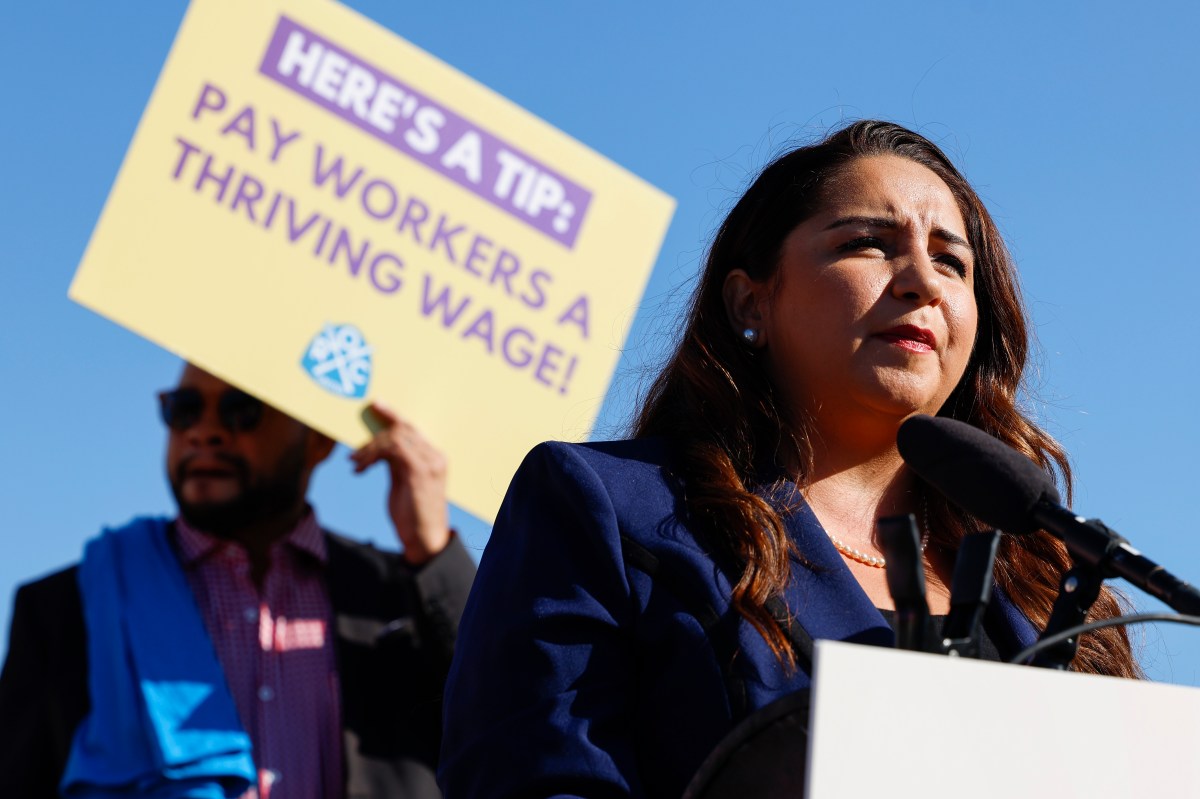
A bill to raise the federal minimum wage to $25 an hour has spent nearly six months in Congress, with lawmakers facing a narrowing window to advance the proposal before the current legislative session ends. Illinois Democratic Representative Delia Ramirez introduced the Living Wage for All Act, or H.R. 8555, on April 28. It would gradually increase the federal minimum wage over the next few years, with different deadlines for large and smaller employers.
Senator Chris Murphy, a Connecticut Democrat, said in June that he would introduce a Senate version of the bill. The Democratic lawmakers who introduced the bill hailed it as a landmark piece of legislation that would reflect America's real cost of living today. The federal minimum wage is currently $7.25 an hour, and it has remained that way since 2009.
The bill has been referred to the House Committee on Education and the Workforce, but is yet to receive a committee hearing. Newsweek contacted Ramirez’s office by email and the House Committee on Education and the Workforce through the contact form on its website for comment. The legislation would gradually raise the minimum wage, targeting $25 an hour by 2031 for large employers and 2038 for other employers.
Large employers, defined as those with at least $1 billion in annual revenue or 500 or more employees nationwide, would incrementally increase the minimum wage and meet specific annual targets. Other employers would follow a more gradual schedule, reaching annual targets more slowly. The bill would also tie the minimum wage to two-thirds of the national median hourly wage, the midpoint of hourly wages among all employees nationwide.
Once the minimum wage reached that level, it would automatically adjust each year to maintain the same ratio as median wages changed. The bill would also phase out lower minimum wages for tipped workers, younger workers and certain workers with disabilities, bringing them up to the standard minimum wage over time. For tipped workers, this would mean gradually increasing the minimum amount employers must pay them directly, eventually phasing out the system that allows employers to count tips toward meeting their minimum-wage obligations.
The House legislation has 32 cosponsors, all Democrats, including Representatives Rashida Tlaib of Michigan, Ro Khanna of California and Pramila Jayapal of Washington. Minimum wage is not a living wage. If we want to address the affordability crisis, we must also address the wage crisis,” Ramirez said when introducing the bill.
Extract — continue reading at the source.