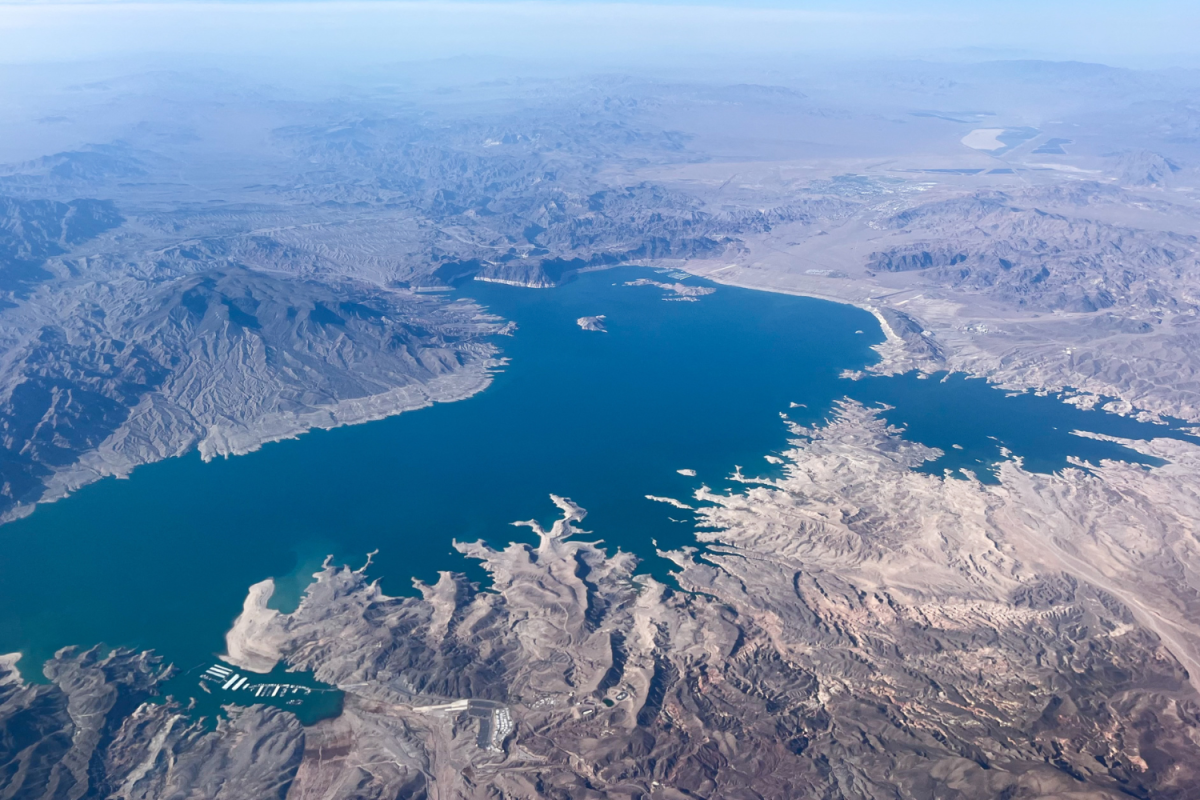
Lake Mead remains near its lowest level on record as the state of Nevada and the Southern Nevada Water Authority launch a legal challenge to a new federal plan governing the Colorado River, arguing it would impose disproportionately steep water cuts on the state while sparing some upstream neighbors from mandatory reductions. The plaintiffs on Monday became the first parties to challenge the Interior Department's newly finalized operating framework in court. The plan will govern river operations after the current guidelines expire at the end of 2026 and is intended to address growing pressure on water supplies across an already drought-stricken West.
The lawsuit comes as Lake Mead, the nation's largest reservoir, sits roughly 190 feet below full pool and near its lowest level since it was first filled in the 1930s. As of August 24, Lake Mead's water level stood at approximately 1,039.3 feet above sea level, according to monitoring data, placing it 189.7 feet below its full-pool elevation of 1,229 feet. NASA reported this as the lowest level recorded since Lake Mead was filled in 1937.
Meanwhile, Lake Powell, the nation's second-largest reservoir, is also under severe stress. Levels have fallen to about 22 percent full and dropped below its previous record low, reaching an elevation of 3,518.79 feet above sea level on August 23. The reservoir's declining level has become one of the most visible signs of long-term stress on the Colorado River Basin, a system that supplies drinking water to approximately 40 million people and irrigates around 5 million acres of farmland in the western United States.
NASA said prolonged drought, below-average snowfall, rising temperatures and continued demand from cities and agriculture have contributed to shrinking water supplies across the Colorado River Basin. Together, Lakes Mead and Powell are central to managing water deliveries across seven Western states, making their declining levels a major concern for communities, industries and farmers throughout the region. The plaintiffs argue the federal framework places an unfair burden on Lower Basin states by requiring significant reductions in their Colorado River withdrawals while not imposing equivalent mandatory cuts on Upper Basin states including Colorado, Utah, Wyoming and New Mexico.
In announcing the lawsuit, Nevada Governor Joe Lombardo said Southern Nevada could lose more than 70 percent of its Colorado River allocation under the plan's most severe shortage scenarios. Nevada receives an annual allocation of 300,000 acre-feet of Colorado River water, but state officials say the new framework could reduce that amount by as much as 213,556 acre-feet. "Under the proposed plan issued by the Department of the Interior, southern Nevada could lose more than 70 percent of its already meager Colorado River allocation while the Upper Basin states of Colorado, Utah, New Mexico, and Wyoming are not required to contribute a drop,” Lombardo said in a statement on Monday.
Southern Nevada used nearly 212,500 acre-feet of Colorado River water in 2024, while the framework could leave the region with less than 86,500 acre-feet annually in the driest scenarios. In the complaint, the plaintiffs argue the plan violates the Administrative Procedure Act, the National Environmental Policy Act and longstanding Colorado River agreements known as the "Law of the River." They also contend federal officials failed to adequately assess the economic consequences the proposed cuts could have on Southern Nevada. The lawsuit asks a federal court to set aside the Interior Department's newly adopted management plan and prevent it from being implemented while the dispute is resolved.
Extract — continue reading at the source.