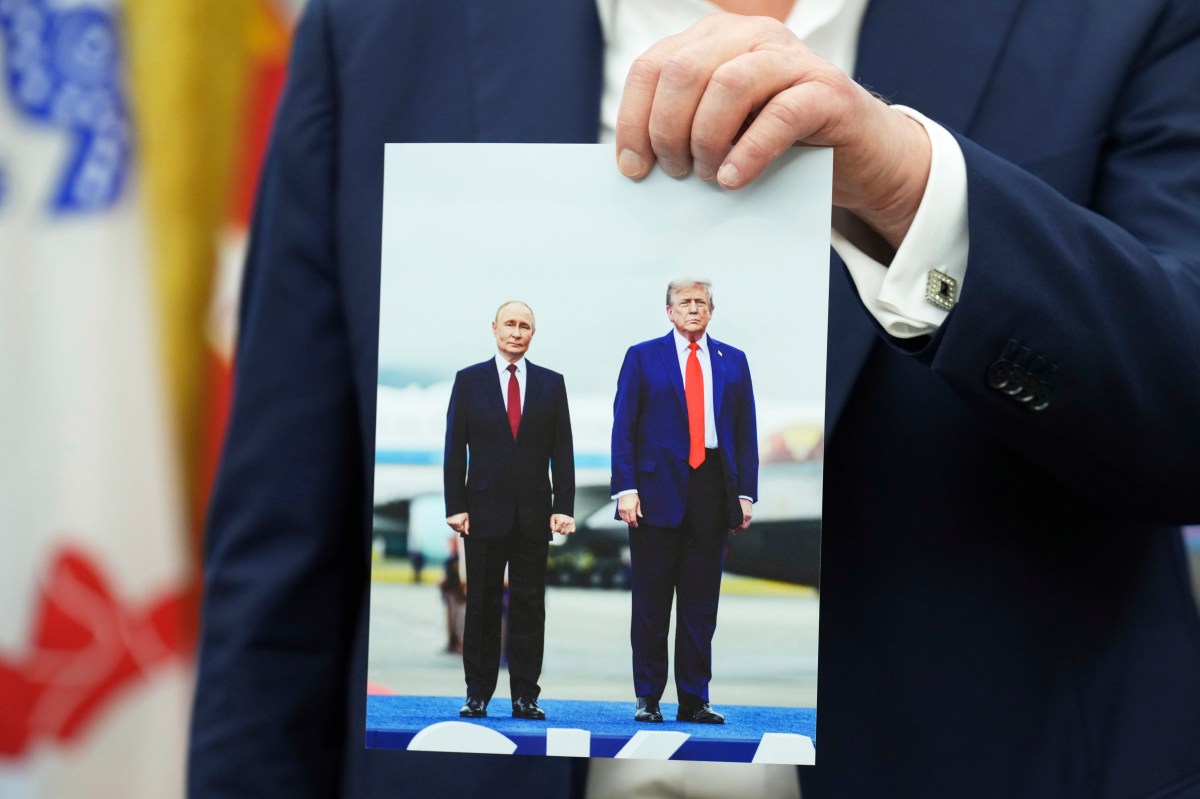
Donald Trump likes to think of foreign policy as a business. Allies should earn their keep and adversaries should be made to pay, unless they can make an offer that leaves America better off than it was before. The man who brought you The Art Of The Deal and a few too many seasons of The Apprentice should really know when he’s the one being taken for a ride.
Vladimir Putin is currently waging a war on Ukraine and threatening Washington’s historical allies across the pond, while the Kremlin’s digital operatives spread fabricated news and attempt to manipulate the American political conversation via extensive disinformation campaigns. This, according to the White House, should not discount the Russian president from consideration as Washington’s best partner to help resolve America’s fuel crisis. Trump’s Russian diesel import deal, hashed out over the phone to Moscow last week, is likely to leave Putin better off, Ukraine worse off, and Americans with little to show for it.
But Kyiv's recent strikes on Russian data centers suggest it might’ve found another way to make life hard for Putin, and demonstrate why Ukraine, not Russia, could be the more valuable partner for Washington. Trump’s answer to the fuel crisis is not an answer. It’s an act of desperation from which there is only one clear beneficiary.
Following a phone call with Putin on Friday, Trump announced that Russia would supply 300,000 tons of diesel immediately, another 500,000 in November and a million more shortly afterward. To get the diesel moving, the Treasury promptly relaxed sanctions on Russian diesel until April 2027 and authorized imports directly into the United States. There are, unsurprisingly, a few issues here.
For starters, Congress explicitly banned Russian energy imports in 2022, with provisions requiring Moscow to agree to end hostilities and withdraw its forces on terms acceptable to Ukraine before the U.S. president can terminate the ban. Putin has done nothing of the sort. On the contrary, the Kremlin said he had not even committed to resuming peace negotiations during his phone call with Trump.
The president did not consult Congress before striking his bargain, either, and senators from both parties have already demanded the deal be reversed on legal grounds. Senate Minority Leader Chuck Schumer described the agreement as “a deal with the devil.” Secondly, the deal makes a mockery of Trump’s own demands that European allies stop buying Russian oil, and his repeated threats to punish China and India for keeping the Kremlin’s coffers topped up. Less than a month ago, Trump signed the Lindsey O.
Extract — continue reading at the source.