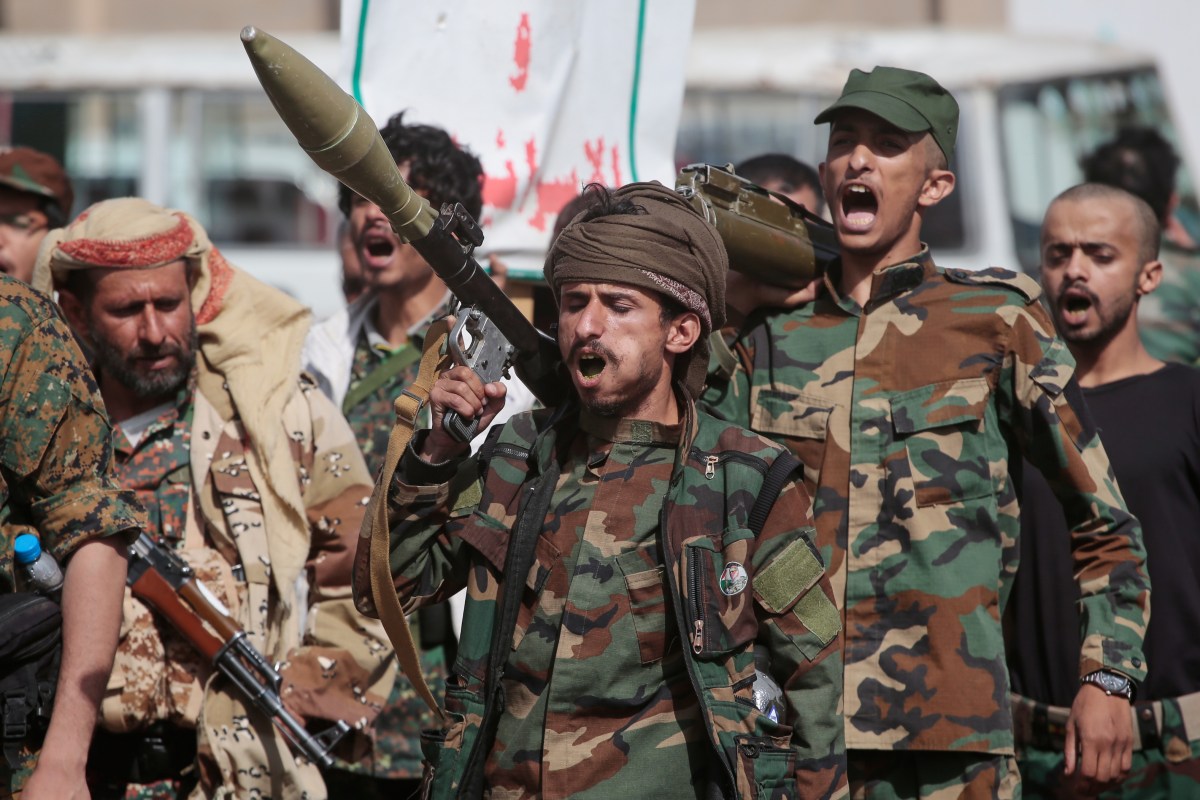
Yemen's Iran-backed Houthi rebels might be one of the smallest forces in the Middle East, but they pose a greater problem to their adversaries—and potentially even their masters—with each passing day. This non-state movement from one of the world's poorest nations has managed to seize strategic territory from Yemeni government forces around the Bab el-Mandeb Strait and has amassed an arsenal capable of striking Saudi oil facilities, major cities, and even Riyadh's international airport. Now Iran, creaking under American sanctions and locked in a confrontation with U.S.
President Donald Trump over the Strait of Hormuz, has offered to broker peace between Saudi Arabia and the Yemeni rebels it helped empower. But the Houthis may have slipped their master’s leash. The rebel group, officially known as Ansar Allah, has become a powerful military and political movement with its own objectives.
Regional experts expressed doubts to Newsweek over whether Tehran has the influence to rein in its increasingly ambitious beneficiary. For Saudi Arabia and the United States, neither prospect is good news. Iranian Foreign Minister Abbas Araghchi on Sunday made a cheeky proposition: Tehran could mediate ceasefire talks between Riyadh and Yemen’s Houthis, a movement Iran itself has spent years arming, training and supporting.
The offer followed a devastating series of Houthi missile and drone attacks on Saudi Arabia, including one on Riyadh’s international airport which killed 13 people and wounded hundreds more. Riyadh offered no public response to Araghchi’s offer, and Houthis wasted no time in resuming their attacks, battering the headquarters of Saudi national oil company Aramco on Tuesday. But even if the Saudis had sought to engage Tehran, there’s no promise Yemen’s rebel force would’ve halted its offensive.
More than a decade of war against Saudi-backed government forces, coalition airstrikes and American, British and Israeli bombardment have failed to break the Houthis. Instead, the movement has expanded its territorial reach, developed increasingly sophisticated weapons and established its own political and economic networks. It is also attempting to break free of its reliance on Iran for arms.
A recent investigation by Conflict Armament Research claimed the Houthis had sourced Chinese components to locally manufacture a ballistic missile, after Anthropic revealed last month that a weapons-development cell in Houthi-held northern Yemen had used its Claude AI model to develop missile-guidance software and troubleshoot a failed rocket test. "The Houthis are not a remote-controlled Iranian militia," Andreas Krieg, a Middle East security expert at King's College London, told Newsweek. "They have developed into a powerful governing and military organization." “Tehran provides important military technology, expertise, political support and strategic coordination, but that does not translate into operational control over every Houthi decision," Krieg said.
Extract — continue reading at the source.