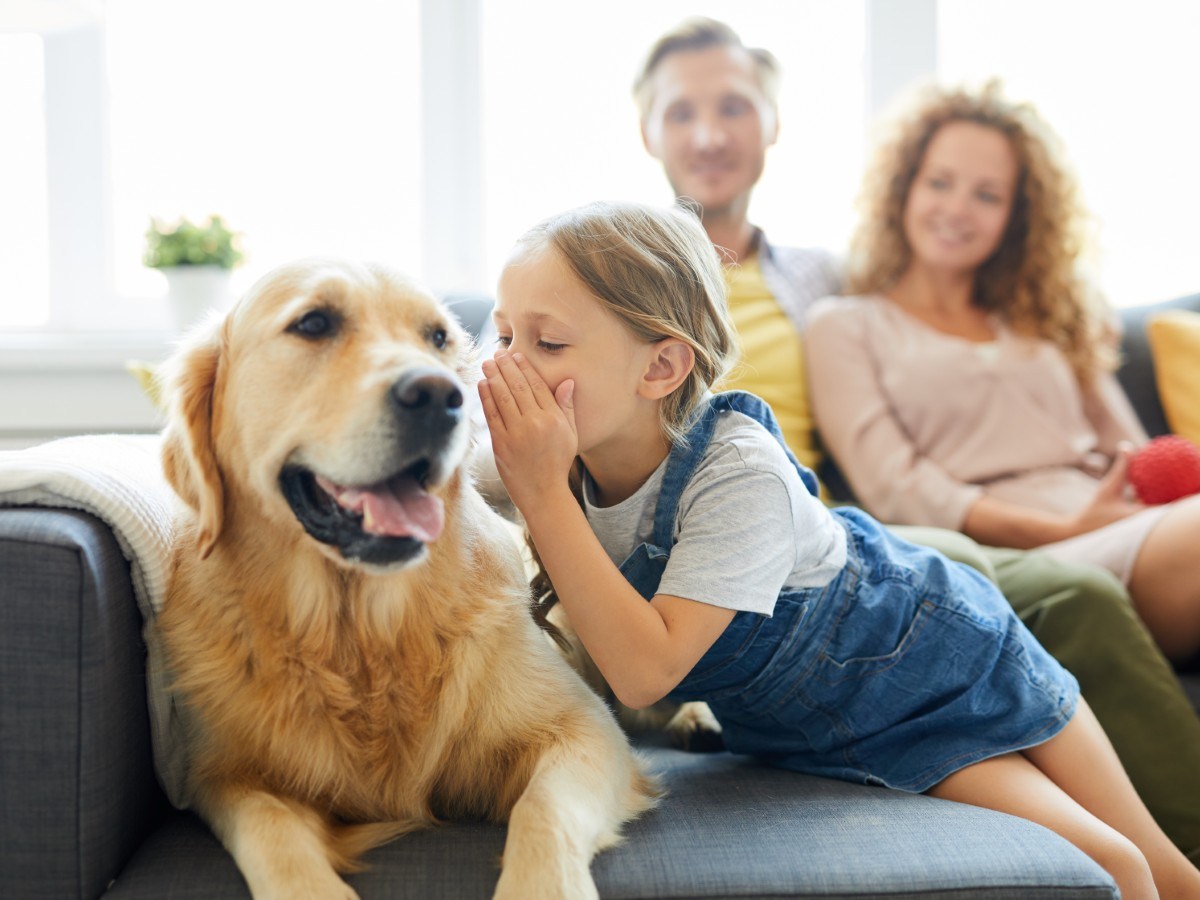
While several studies have found that pets could have a positive impact on human health, researchers at the University of Arizona believe that it may not only be having a pet, but also how owners speak to their pets, that can impact well-being. The researchers have developed a system, known as AURAL-Pet, to analyze how people speak to their pets, and what they say, to better understand human-pet interactions and the impact on human well-being. The research was published in the journal Frontiers in Psychiatry on August 4.
Dara Jonkoski, the study's lead author and a Ph.D. student in the Department of Psychology at the University of Arizona, told Newsweek that "understanding how interactions between people and their pets differ can help us determine which human-pet interaction styles may map onto different wellbeing outcomes—both for the owner and the pet." She added that if they find "certain variables map onto better wellbeing outcomes, this could inform pet owners of ways in which they can interact with their cats and dogs to potentially improve their wellbeing." The team at the University of Arizona tested AURAL-Pet on 5,072 recordings of people's conversations with or about their pets, using the electronically activated recorder known as 'EAR.' 240 people participated in the study. The findings of the test proved that the coding system could be reliably applied to future studies involving human-pet interactions, the researchers said. Jonkoski said that AURAL-Pet is "essentially a way of translating everyday audio recordings into a measurable snapshot of how someone relates to their pet." She added that it captures "how often and in what ways people interact with their pets by simply listening to those interactions unfold." The researchers noted that in the recordings, pet owners commonly narrated their own thoughts or actions, described the animal’s behavior, or discussed subjects such as the weather and future plans.
Megan Mueller, a professor of human-animal interaction at Tufts University, who was not involved in the study, told Newsweek that AURAL-Pet is an "innovative methodology for understanding our relationships with pets that will be an important research tool for the field." "How we talk to and interact with our pets is likely an important window into our perceptions of these relationships and the potential benefits," she said. "How we talk to our pets may indicate how we are feeling about that relationship, and the role that a pet plays in our life. Analyzing these daily interactions can provide fascinating insight on how we interact with our pets in our normal, everyday lives." Jonkoski said that the coding system is made up of 30 variables which "represent different behaviors related to interactions between humans and pets," such as walking with a pet, speaking to a pet using "baby-talk"—a high-pitched, exaggerated speech register often used with infants—and speaking to a pet as if they were a human confidante.
The system does not allow for pet owners to "hold conversations with their pets," she added, explaining it instead allows them to "quantify all the interactions people are already engaging in with their pets, from the rich to the mundane." Jonkoski said that AURAL-Pet is now being applied to another project called the C.A.R.E. study, run by associate professors in the Department of Psychology at the University of Arizona. The study involves collecting a range of mental health and well-being data from adults over 60, and the coding system may help researchers understand how conversations with pets affected the well-being of the elderly. Jonkoski said that "using this rich dataset, we can answer questions such as, “do more positive interactions with pets map onto better human mental health and wellbeing outcomes?” Jonkoski, D.
S., et al. (2026) Cross-species conversations: the development of the AURAL-Pet coding system to capture how people talk to pets in daily life. Frontiers in Psychiatry. https://www.frontiersin.org/journals/psychiatry/articles/10.3389/fpsyt.2026.1881870/full Contact Newsweek editors on this story: Kara Dolman and Emma Lee-Sang
Extract — continue reading at the source.