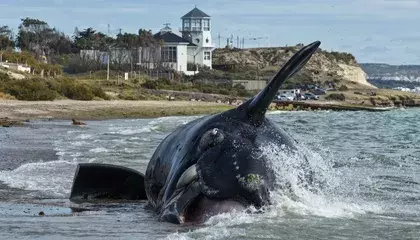
Hundreds of whale calves have washed up dead along Argentina’s coast in recent months, leaving scientists scrambling to determine what’s causing the deaths. Every year, southern right whales migrate to the sheltered waters off Argentina’s Peninsula Valdes to give birth and rear their young. Between May and December, it’s not uncommon for dead whale calves to be found along the coast of Chubut province, in the center of the Patagonia region—some 20 to 30 percent of calves born in a given season may not survive, per Live Science’s María de los Ángeles Orfila.
But this year, experts say the death toll appears to be much higher than usual. They’re holding off on releasing the final tally until after the season ends. But preliminary figures suggest more than 300 southern right whale calves have died since June, roughly three times the previous record of 113 deaths set in 2012.
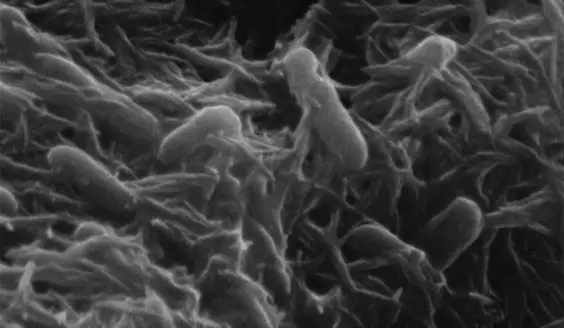
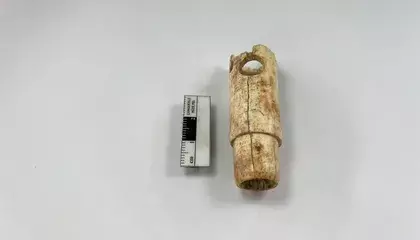
Una publicación compartida por Foro para la Conservación del Mar Patagónico y Áreas Influencia (@fmarpatagonico) Because of the unusually high calf mortality, scientists sent tissue samples for analysis earlier than usual this year. Those samples tested positive for Erysipelothrix rhusiopathiae, a bacterium that can cause a skin infection called erysipelas. Scientists suspect gulls are spreading the bacteria by pecking at southern right whale calves as they surface to breathe, creating wounds in their skin.
The bacteria could already be present on the whales’ skin, or it might be transferred by a gull that previously pecked an infected whale. E. rhusiopathiae was first detected in southern right whale calves in 2013. Scientists are still trying to understand what could have made it so deadly this year.
One possibility is that the bacteria itself has evolved, leading to more severe infections. Or perhaps, changes in food availability are affecting the mothers’ body condition and, as a result, the health and resilience of their newborn calves. The deaths might also be connected to changes to marine conditions, such as water temperature, salinity or pH, possibly caused by climate change or El Niño.
These shifts might be creating “this perfect storm where this bacteria is powerful enough to overcome the immunity of the babies and cause their deaths,” Marcela Uhart, a veterinarian at the University of California, Davis, who leads the Southern Right Whale Health Monitoring Program, tells the . Southern right whales were hunted to the brink of extinction during the 19th and 20th centuries. However, the population has rebounded since an international moratorium on commercial whaling was enacted in the 1980s.
Extract — continue reading at the source.