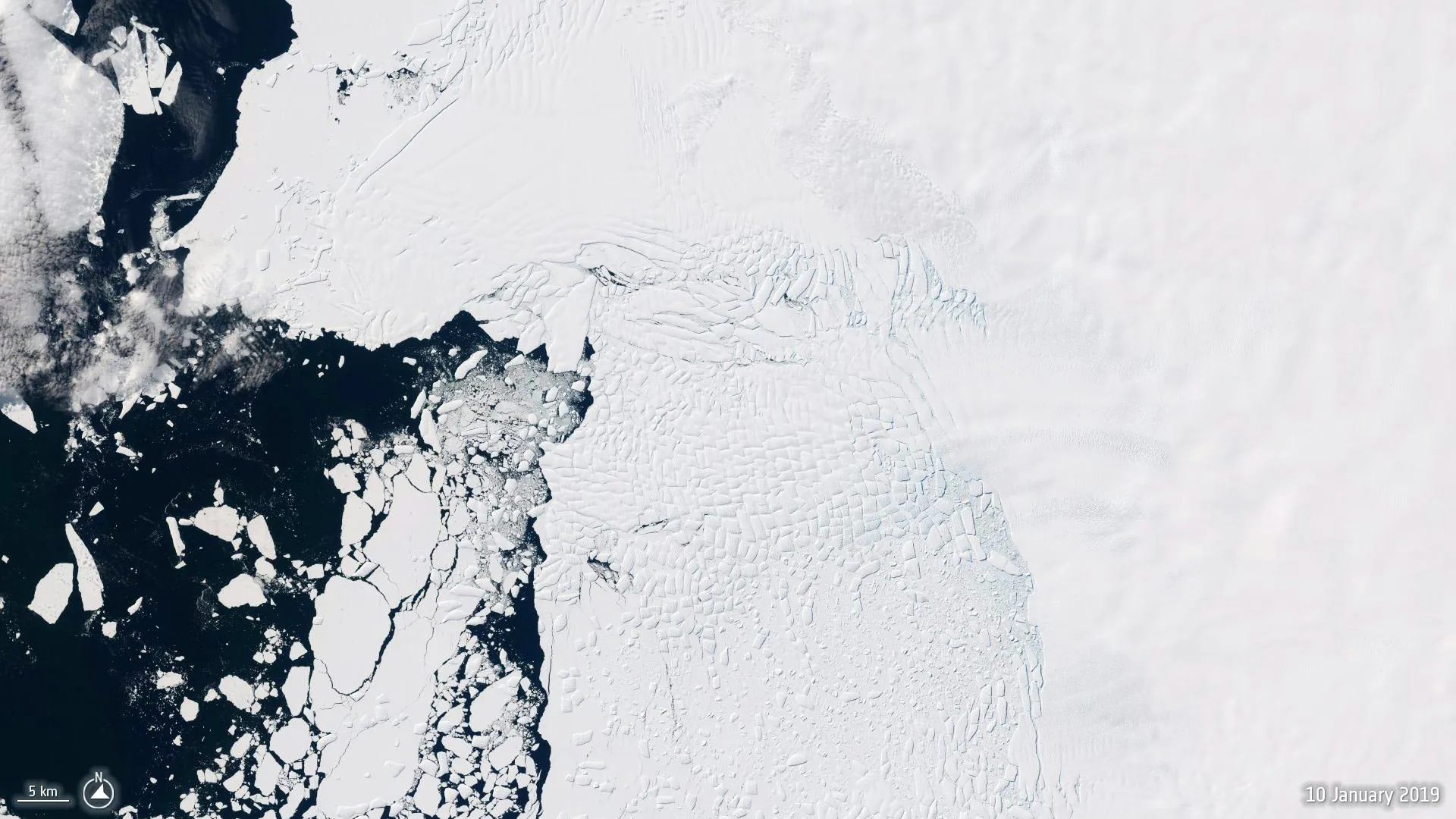
Glacial earthquakes are a special type of earthquake generated in cold, icy regions. First discovered in the northern hemisphere more than 20 years ago, these quakes occur when huge chunks of ice fall from glaciers into the sea. Until now, only a very few have been found in the Antarctic.
In a study published in Geophysical Research Letters, I present evidence for hundreds of these quakes in Antarctica between 2010 and 2023, mostly at the ocean end of the Thwaites Glacier – the so-called Doomsday Glacier that could send sea levels rising rapidly if it were to collapse. A glacial earthquake is created when tall, thin icebergs fall off the end of a glacier into the ocean. When these icebergs capsize, they clash violently with the “mother” glacier.
The clash generates strong mechanical ground vibrations, or seismic waves, that propagate thousands of kilometres from the origin. What makes glacial earthquakes unique is that they do not generate any high-frequency seismic waves. These waves play a vital role in the detection and location of typical seismic sources, such as earthquakes, volcanoes and nuclear explosions.
Due to this difference, glacial earthquakes were only discovered relatively recently, despite other seismic sources having been documented routinely for several decades. Most glacial earthquakes detected so far have been located near the ends of glaciers in Greenland, the largest ice cap in the northern hemisphere. The Greenland glacial earthquakes are relatively large in magnitude.
The largest ones are similar in size to those caused by nuclear tests conducted by North Korea in the past two decades. As such, they have been detected by a high-quality, continuously operating seismic monitoring network worldwide. The Greenland events vary with the seasons, occurring more often in late summer.
They have also become more common in recent decades. The signs may be associated with a faster rate of global warming in the polar regions. Although Antarctica is the largest ice sheet on Earth, direct evidence of glacial earthquakes caused by capsizing icebergs there has been elusive.
Extract — continue reading at the source.