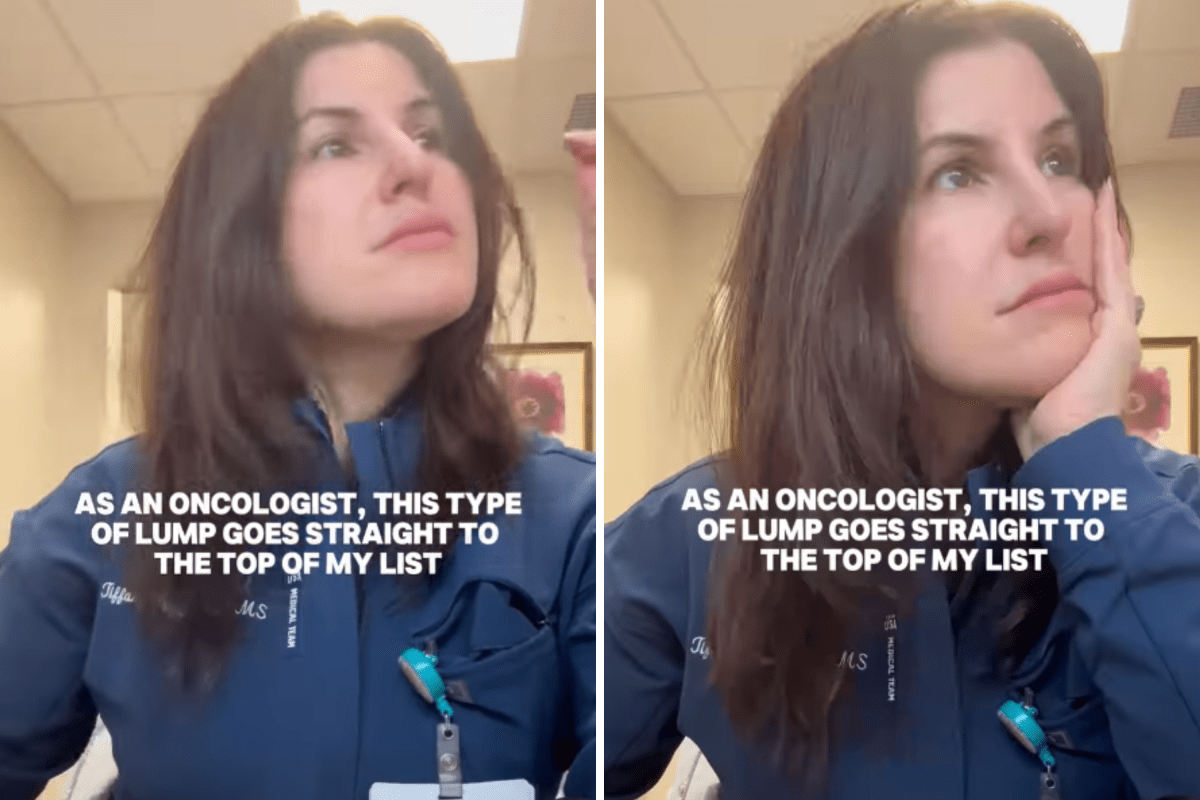
Finding a lump can be alarming, but according to one oncologist, some bumps and swellings deserve more attention than others, even when they don't fit the warning signs many people have been taught to look for. Tiffany Pompa outlined five lump characteristics that immediately raise concern in her clinical practice: soft texture, pain or tenderness, lumps that have been there for some time, the location of a lump, and the presence of a lump with other symptoms. One of the biggest misconceptions, she told Newsweek, is the idea that cancer follows a predictable pattern.
"Cancer doesn't always follow the textbook pattern of a hard, fixed and painless lump," Pompa said. "This is the most common presentation we are trained on, but it is far from universal and, in reality, misleading." She said she has cared for patients whose soft, mobile, tender or mixed-feature lumps ultimately turned out to be malignant. "The danger of the 'hard and painless' misconception isn’t a lack of awareness but a false reassurance," Pompa said.
"When a lump doesn't match the 'classic' description, both patients and even clinicians are more likely to dismiss it rather than investigate further and that is often what delays diagnosis." Pain, she stressed, should never be used as a reason to rule out cancer. Rather than focusing on discomfort alone, Pompa encouraged people to pay attention to the overall pattern, including whether a lump is enlarging, persisting or becoming more intense over time. A lump linked to an obvious cause such as an infection, injury, insect bite or skin reaction may be less concerning if it completely resolves.
However, Pompa said a lump that lingers or continues to grow warrants medical attention. Among all the locations she highlighted, one stood out above the rest: a lump above the left collarbone. Known as Virchow's node, this area is particularly important because of how the body's lymphatic system drains fluid from the chest and abdomen.
"Unlike the nodes in your neck or armpit, which often swell from benign causes, a supraclavicular lymph node doesn't react the same way to everyday, common triggers," Pompa said. Because the area acts as a major collection point for lymphatic drainage, enlargement can sometimes signal cancers involving organs such as the stomach, pancreas, esophagus or lungs, as well as lymphoma. A 2025 study published in the journal Diagnostics found that nearly half of supraclavicular lumps were cancerous.
Observing 348 patients, the study's authors found that 49 percent of the supraclavicular nodes were malignant, with lung cancer (22 percent) and lymphoma (16 percent) the most common. For those who may feel anxious after discovering a lump, Pompa emphasized that the goal is not panic but evaluation. "There isn’t a single feature I would point to as reassuring and that is the exact problem," she said.
Extract — continue reading at the source.