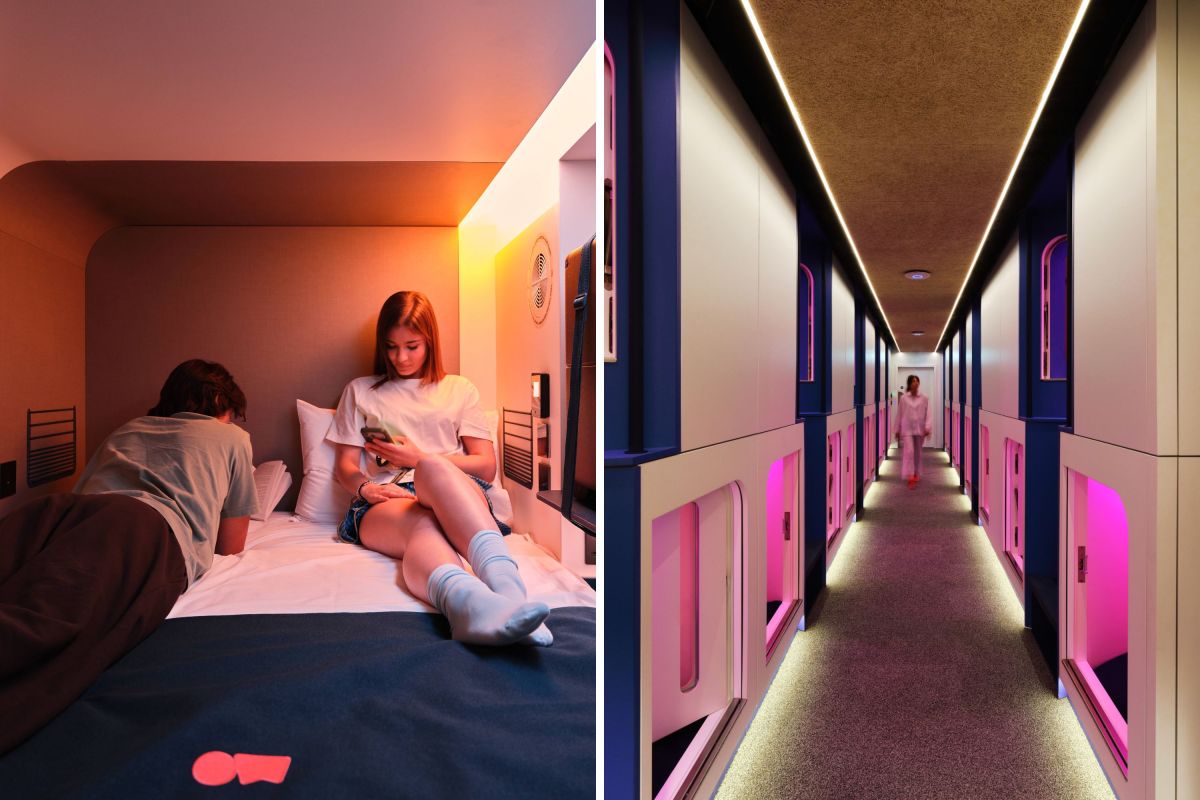
Generation Z has been reshaping the landscape of various sectors, from the workplace to the travel industry, including hotel design. Hotels have been making the most of the power of Gen Z consumers and getting locked into their preferences. Research has shown that Gen Z travelers’ tastes are more nuanced than what you might perceive at first glance, and although budget-conscious, they aren’t purely motivated by the price point of a product.
The findings of an August 2026 survey by Booking.com, which were shared with Newsweek, found that among American travelers aged 18 to 34, 84 percent would be willing to splurge for well-located accommodation, while 86 percent would be willing to splurge for more comfortable accommodation. A large majority (90 percent) also say “comfort and convenience” are important when evaluating a trip's overall value, while around the same (91 percent) say it’s important to balance quality and price. More than three-quarters (85 percent) say it's important to stay within budget, while 90 percent believe memorable experiences make a trip worth the money, according to the Booking.com survey.
Similarly, an October 2023 study in Research in Hospitality Management found that “authenticity and personalization are crucial for creating the unique experiences that Generation Z desires,” and “values that encompass environmental and community policies hold significant importance for this cohort.” One “futuristic” pod hotel in London aims to strike that balance of ticking just the right boxes, not only for the Gen Z age group, but the wider “Gen Z psychographic,” says Fredrik Korallus, the CEO of the Otherwander Soho, a new capsule hotel set steps from Oxford Street in the heart of the capital’s Soho neighborhood, designed by the London-based design studio SODA. "This certainly includes Gen Z, however, it broadens to a Gen Z psychographic, rather than a specific age or demographic as such. Design matters—our customers look for interesting, comfortable, and shareable design.
They are highly visual and quality-minded, and document and share everything on social media. They look for authenticity and a local connection, and we have drawn on London and Soho for design inspiration.” The Otherwander Soho offers an “industry first digital experience,” Korallus said, where guests check in online before they arrive and are later sent a “Wanderpass,” a QR-enabled digital key, to add to their phone’s wallet. Bypassing the traditional check-in process at a reception desk, upon arrival, they can scan the digital key to enter the hotel and their sleeping pod, or what’s referred to as a “nest.” Korallus said that “the journey is 100 percent digital,” with food, drinks, and travel amenities accessible via vending facilities, and this “suits our target customers who increasingly expect brands to offer seamless digital experiences.” A December 2019 study published in the Journal of Hospitality by researchers at the University of Nevada, Las Vegas, found that “guest-facing technologies,” such as self-check-in and check-out services, are "an important consideration for the members of Generation Z when selecting a hotel accommodation, and they are willing to pay more for a hotel property that offers them.” Set at a price that supposedly “doesn’t break the bank,” the Otherwander Soho aims to offer community, comfort, and privacy with small touches of luxury, “the kind you’d expect from other pricier hotels,” the company says.
These can include shared bathrooms featuring vanities with a terrazzo finish, spacious private shower cubicles with wet and dry zones, a rain shower, along with complimentary soap, shampoo, hair dryers, slippers, and towels. Korallus said the nests all feature fresh, filtered air provision with individual temperature controls, as well as mood lighting with “some surprise scene settings” that play on different themes. "Color lighting effects also create a futuristic atmosphere that shifts in response to the time and mood of the space, from a quiet Tuesday morning to a dynamic Soho Friday night," SODA director Ryan Holland recently told Dezeen.
Korallus said that “the interior space is calming,” and offers “a total black-out as well as sound dampening and fresh air which allows for a phenomenal sleep experience.” Guests can also enjoy communal social spaces, known as “huddles,” that are “ideal for mixing and mingling" as well as working or relaxing, which is "a desired feature by our target customers," he added. Korallus said their research has indicated that the majority of younger travelers look for “stylish, timeless and impactful design” that is “aesthetically pleasing and ideal for sharing via social media.” Their guests look for a hassle-free, frictionless hotel experience, with no unnecessary room amenities, such as televisions or minibars, and value-for-money to allow for longer stays. Hana Ben-Shabat is the founder of Gen Z Planet, a research and advisory firm dedicated to Gen Z and their effects on our culture, workplace, and commerce, and the author of Gen Z 360.
Extract — continue reading at the source.