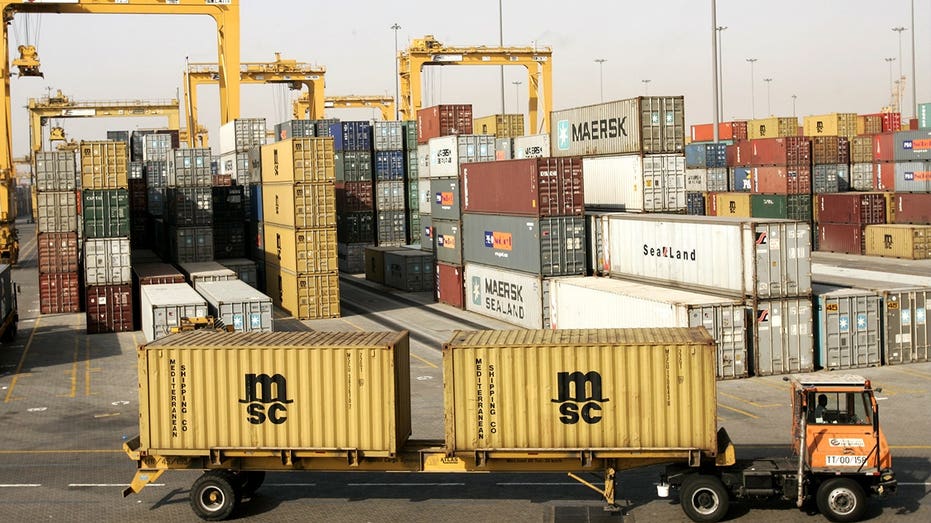
The United Arab Emirates suspended all trade, commercial exchanges and financial transactions with Iran after accusing Tehran of firing ballistic missiles toward maritime traffic. The action severs one of the Islamic Republic’s most important commercial and financial links and threatens to close off an economic route President Donald Trump's sanctions have struggled to reach. It also further deepens Iran’s isolation amid its standoff with the U.S.
The UAE supplied 31% of Iran’s imports, valued at roughly $21 billion, in 2024, and was the destination for 13% of its exports, according to World Trade Organization trade data. IRAN DEAL CLOCK HITS ZERO AS TRUMP DEMANDS ‘WHITE FLAG’ WITH NEW PRESSURE CAMPAIGN LOOMING Miad Maleki, a senior fellow at the Foundation for Defense of Democracies and former Treasury official, said the UAE is one of Tehran’s two key economic lifelines. "The UAE and China are Iran's two economic bloodlines.
If UAE is serious about its economic embargo against Iran, then it'll close the one the U.S. Navy couldn't touch," Malek wrote on X. KEY CHINA-IRAN INFRASTRUCTURE EXPOSES CRITICAL HOLE IN TRUMP'S WAR STRATEGY Maleki said Dubai has become Tehran’s gateway to global commerce, with third-country goods routed through the emirate to Iran.
"Most of what Iran calls ‘imports from the UAE’ was never Emirati. Dubai has been basically Iran's window to the world economy," he said. The UAE Foreign Ministry said the measures would remain in place "until further notice," citing a regional escalation that it said undermined peace and security.
Emirati officials said two ballistic missiles launched from Iran fell into the sea and were targeting maritime navigation. Iran denied responsibility, with its foreign ministry deeming the accusation as "baseless." Spokesperson Esmaeil Baghaei said the UAE’s claim ran counter to good-neighborliness and referred to what he called a history of "multiple false-flag operations" in the region. Dubai has also served as an important conduit for Iranian financial networks facing U.S. sanctions.
Earlier this month, the U.S. Treasury Department sanctioned Dubai-based exchange houses and trading fronts it said helped Iranian networks move hundreds of millions of dollars and recover revenue from oil sales. The Treasury said this action advanced President Donald Trump’s maximum-pressure policy, though neither Washington nor Abu Dhabi has said the UAE’s new trade freeze was coordinated with the U.S. campaign.
Extract — continue reading at the source.