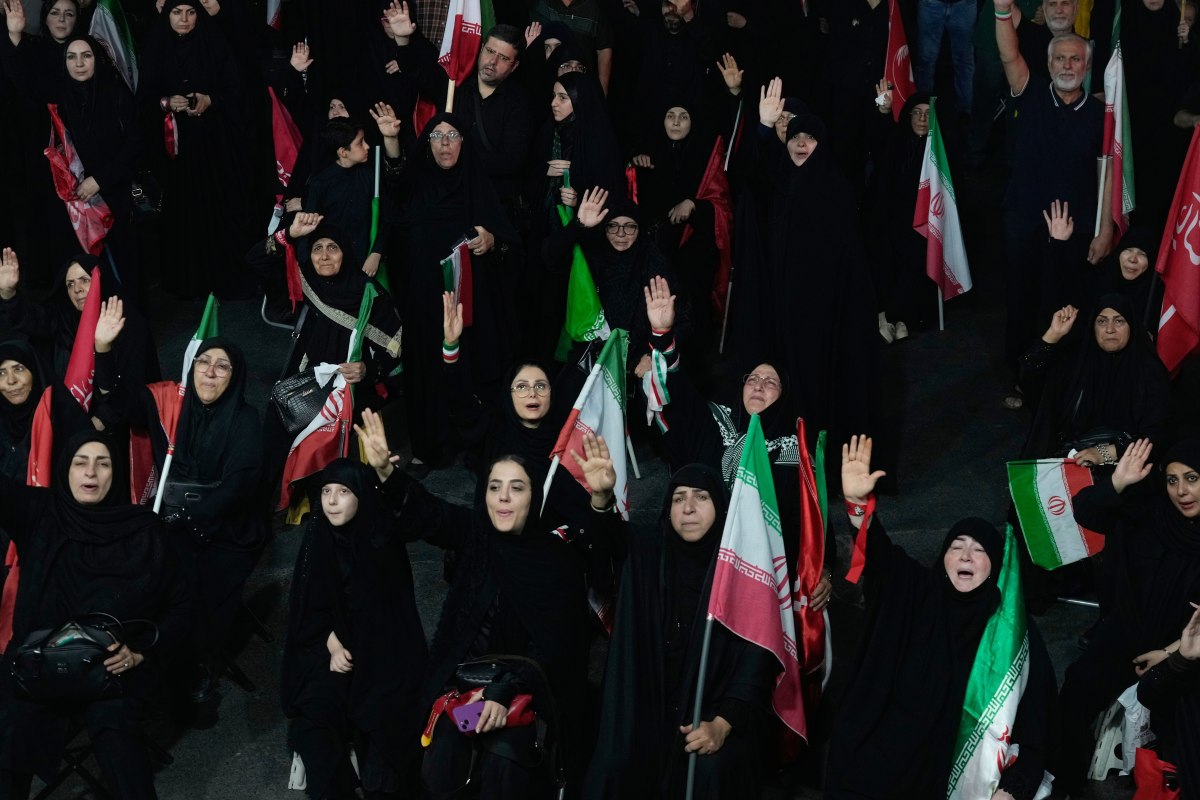
Nearly six months after the U.S. and Israel began attacking Iran, the Islamic Republic has not surrendered, despite President Donald Trump’s claims of total victory. Its missiles still fly across the Gulf, its security forces remain cohesive, and its threat to commercial vessels in the Strait of Hormuz continues to drive up global energy costs. Yet three charts reveal a different reality beneath Tehran’s defiance: the war has already inflicted a painful economic defeat.
Trump has accelerated the damage of an economic crisis that predates the war, fueled by sanctions, corruption, currency depreciation, energy shortages, and policy failures dating back years. This is not yet a strategic victory for Washington. Tehran still wields leverage through Hormuz and can disrupt its Gulf neighbors.
But Iran has suffered sharp losses, and Trump is now seeking to intensify that pressure further under "Operation Economic Fury"—first launched in April—after talks collapsed. "No one has given the Islamic Republic of Iran a greater opportunity to make a Deal than me," Trump wrote on Truth Social on Wednesday. "TRAGICALLY, for them, they have failed to take it.
Therefore, today, I am announcing the MOST CRUSHING ECONOMIC OPERATION EVER TAKEN AGAINST ANY COUNTRY! This will be Economic Warfare and Isolation on an unprecedented scale." Trump continued: "Oil smuggling, swap lines, cash transfers, exchange houses, ship registries, front companies — It all needs to stop NOW. "This will be an ECONOMIC D-DAY, and we need all of our Allies to stand with the United States of America to isolate, and defeat, the Iran threat." Whether economic defeat becomes the broader victory Trump seeks depends on what happens next.
OPEC’s estimates show the damage to the industry that underwrites much of Iran’s access to hard currency. Tehran can create rials, but it cannot manifest dollars or yuan. Oil is the regime’s principal means of earning the foreign currency needed to pay for imports, sustain industry, and finance a state already under heavy sanctions.
By July, oil production was almost 23 percent below prewar levels. Lower production reduces the barrels available for sale just as the U.S. blockade and sanctions made them harder to export and monetize. A prolonged production slump therefore forces increasingly painful choices between imports and civilian consumption, reconstruction, and preserving the military-security apparatus on which the regime depends.
Extract — continue reading at the source.