Alfred Hitchcock is known as the master of suspense, and he’s one of my favorite classic film directors, creating some fantastically memorable scenes and characters. One of my absolute favorite sequences in all of cinema is in North by Northwest, when Leo G. Carroll, the spy handler, explains the reasons behind the espionage operation they’re asking Cary Grant to help with, and the entire speech is drowned out by the roar of airplane engines.
Hitchcock knew the importance of pulling the audience into the story in such a way that the plot details don’t really matter if the rest of the film is compelling through acting, music, and shot composition. While a great many of Hitchcock’s films are of the thriller persuasion, he dabbled in other genres as well. Over the course of his long and varied career, he directed films that explored everything from spies and political thrillers to romance to dark comedies.
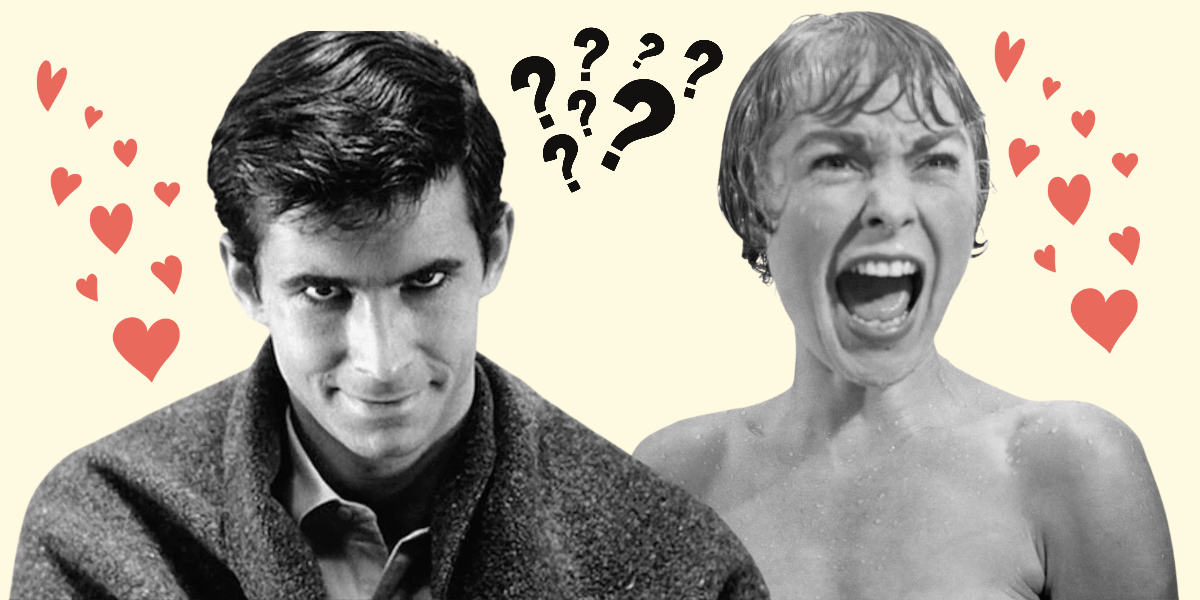
He also made three films that I consider either horror or at least horror adjacent: The Birds, Psycho, and Vertigo. Frenzy deals with a serial killer in rather graphic fashion for the year it came out (1972), but I think it reads more as straight-up thriller than horror, since much of it is told from the perspective of a man who is wrongfully accused of the murders, unlike a horror film where the audience is put in a place of tension and discomfort and fear of the unknown. All three movies discussed here not only embrace horror elements; they also feature strong romance cues.
Before we dive into the films, though, a note on Hitchcock and his behavior behind the scenes. It’s no secret that Hitchcock was both a fantastic director and an awful person to many women in his life. He fetishized women, particularly his icy blondes, and when they spurned his advances, he was often rude or worse, sometimes assaulting them by groping or attempting to kiss them without their consent.
Tippi Hedren, who starred in two films for Hitchcock, went on to describe such an experience with him in her autobiography during the filming of Marnie, but his terrible treatment of her began during her first film, The Birds. In the climactic scene, Hitchcock forced Hedren to deal with live birds for the filming, instead of the mechanical ones that were initially proposed, and she is really being pecked and attacked in the scene. The crew threw live birds at her, inflicting real injuries and once coming dangerously close to hurting her eye.
Filming the scene took five days of production (for only about a minute of finished film), and Hedren was deeply traumatized by the experience, much as her character Melanie was. In light of the revelations surrounding Hitchcock’s treatment of not only Hedren but other women in his professional life (ranging from inappropriate comments to outright sexual assault), it’s difficult to watch this scene (and others) and not feel uncomfortable. Much as we need to acknowledge the many romance novels that perpetuated dangerous tropes like dubious consent, exoticizing and fetishizing non-Western cultures, and, let’s face it, outright rape in earlier works, there’s also no sense in hiding the problematic aspects of powerful figures in the film industry, from directors and producers to actors and agents.
Extract — continue reading at the source.