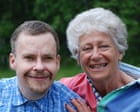
In 1984 Jean Phillips-Martinsson, a British woman living in Sweden, came across an article in the Lancet. It was about Prader-Willi syndrome (PWS), a rare genetic condition named after Andrea Prader and Heinrich Willi, two of the three Swiss paediatricians who discovered it in 1956. It was a lightbulb moment for Phillips-Martinsson, who had been in limbo for 14 years, wanting to know why her son, Anders, born in 1970, was floppy and unable to suck as a baby, and later had behavioural problems and was constantly hungry (hyperphagia).
It turned out these are all key signs of PWS. Phillips-Martinsson contacted the article’s author, who was able to diagnose Anders. She said her first thought was, “Are we alone in Sweden?”, and through the endocrinologist Martin Ritzén she was put in touch with four other families with a PWS child.
They had all felt similarly isolated, and when they met for coffee on in April 1986 at Phillips-Martinsson’s house in Stockholm she said: “It was an extremely emotional situation for us all.” She and the other parents wanted advice on PWS, which causes behavioural and mental health issues as well as constant hunger and weight gain. So that year she set up a Prader-Willi Syndrome Association in Sweden. But she knew it was too small to be effective: the condition is so rare (estimated to affect between one in 15,000 and in one in 25,000 people) that a global charity with a wider reach was essential.
It helped that she had networking and research skills, and could speak several languages. With a background in PR and translating, over the next few years she poured her energies into researching PWS. She discovered fledgling PWS charities in other countries, including the Netherlands, the US and the UK, and in November 1986 attended the PWS-UK’s conference in Bristol.
In 1988 she was excited to hear from the American geneticist Dr Suzanne Cassidy. Thanks to a new technique called high-resolution analysis, geneticists knew that PWS resulted from an anomaly on chromosome 15. Research was taking place across the world, but it was not coordinated, and Cassidy wanted to bring researchers and doctors together in an international conference.
Phillips-Martinsson and Cassidy met in 1989, forming an organising committee for a conference to be held in the Netherlands in 1991. During the next couple of years, a time she described as “being drowned in correspondence”, Phillips-Martinsson drummed up support from researchers, doctors and parents around the world, and secured sponsorship from the Swedish company Kabi Pharmacia, the World Health Organization and Nato. While much of the conference was devoted to scientific developments, Phillips-Martinsson championed the families, making sure one day of the conference focused on the concerns of parents and caregivers.
Extract — continue reading at the source.


