You got on a train, plane, boat or, even a Greyhound bus, and went somewhere that wasn’t home. Now, the modern tourism industry has complicated matters. Today, a destination has to be an experience, an immersive one.
It must have entertainment, restaurants, stadiums, spectacles, transportation systems, social media content and enough charging stations to keep everyone’s phones alive while they photograph themselves having the experience. Las Vegas has made the experience of immersion its operating philosophy. President and CEO of the Las Vegas Convention and Visitors Authority Steve Hill, described the city’s approach with a word not normally associated with tourism bureaucrats: ruthless.
We don’t eliminate too much.” This is Las Vegas in a nutshell. The city doesn’t so much erase its past as pile new experiences on top of it. The city has become particularly good at determining what visitors want next and abandoning what no longer works.
And, it keeps people keep coming back. Hill told the assembled crowed at Newsweek's New Destinations event that more than 90% of Las Vegas visitors are repeat visitors, although the oft-repeated figure of roughly 40-million visitors requires clarification: It represents about 40 million visits from approximately 25 million people. In other words, Las Vegas has discovered the fundamental secret of tourism: You don't just have to persuade people to visit; you have to persuade them to visit again.
That changes the business. A destination doesn't need every new attraction to be the reason someone gets on an airplane. Sometimes it merely needs to give the returning customer something he or she hasn't already seen.
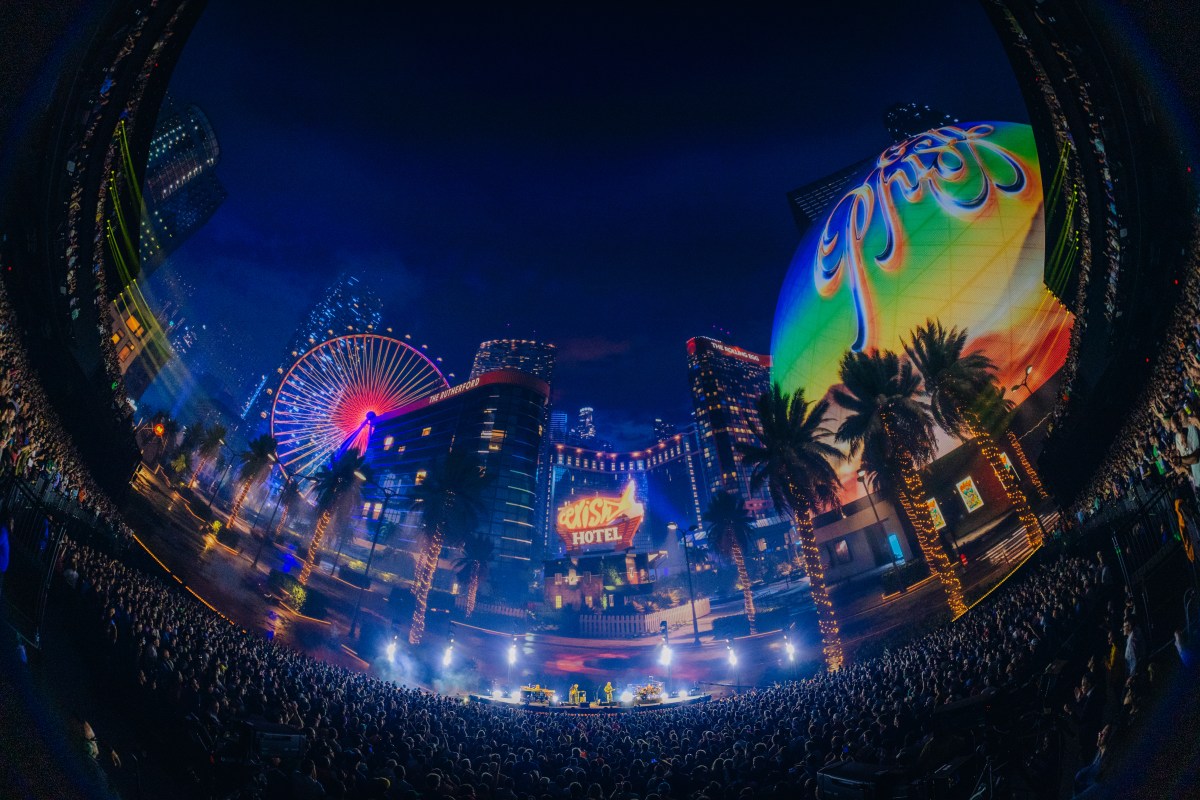
The world's largest spherical arena wasn't part of Las Vegas a few years ago. Now, Hill said, it accounts for roughly 15% to 20% of the tickets sold throughout Las Vegas. This is how a modern tourism hub evolves.
Extract — continue reading at the source.