Grocery store shelves are bursting with fancy salts: Himalayan, kosher, sea salt and more. Considering these choices, it can be easy to forget about the public health victory found in basic, iodized table salt. The nutrient iodine is a crucial component of thyroid hormones, necessary for fetal and early childhood brain development and health throughout life.
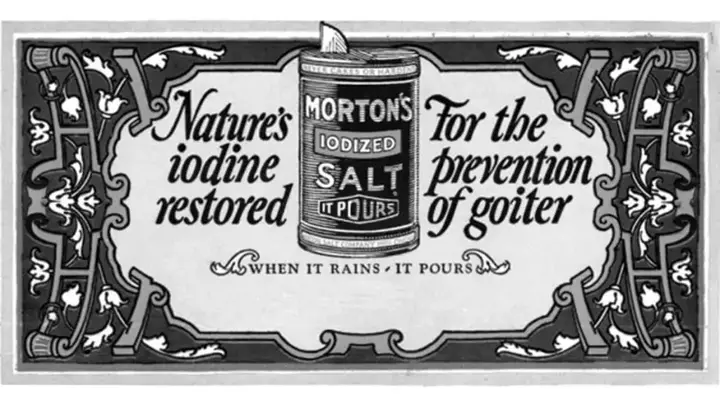
At the start of the last century, iodine deficiency was a rampant and visible public health problem in the United States, with the telltale sign of enlarged thyroid glands, called goiters, especially prevalent in much of the north. A series of steps taken by a medical society in Michigan and U.S. salt producers brought iodized salt to tables across the country, and by the 1950s, occurrences of goiters had dropped precipitously. But more recently, the United States appears to be backsliding on iodine nutrition.
In 2017 and 2018, 24 percent of women and 30 percent of men, aged 14 and older, weren’t getting an adequate amount of the nutrient. That’s about twice as many as in 2001 and 2002, researchers reported in the Journal of Nutrition in 2025. Breaking the data down further, nearly half of pregnant women haven’t been getting enough iodine.
The study reflects an estimated, short-term look at population iodine levels. Long-term, a consistent dearth of iodine robs the body of the ability to produce sufficient amounts of thyroid hormones. If iodine levels in the population continue to trend down, that could eventually result in more goiters and harm brain development in children.
With all of the ways that diets, salt intake and noniodized options have changed over time, the importance of iodine nutrition may not be top-of-mind for the general public like it was a century ago. That supersized gland, called a goiter, bulges at the neck. In the United States, goiters were extremely common a century ago in the Northwest, Great Lakes and Appalachians; together, the area became known as the “goiter belt.” Iodine naturally occurs in seawater and soil.
But in the noncoastal northern part of the country, soils and water sources have little iodine, so the crops produced in these inland areas lack the nutrient. An examining physician for the World War I draft reported in 1918 that 30 percent of almost 600 men from a northern Michigan county had goiters, some large enough to be disqualifying. A 1922 Michigan Department of Health study of schoolchildren in four counties revealed that close to 50 percent had goiters.
Extract — continue reading at the source.