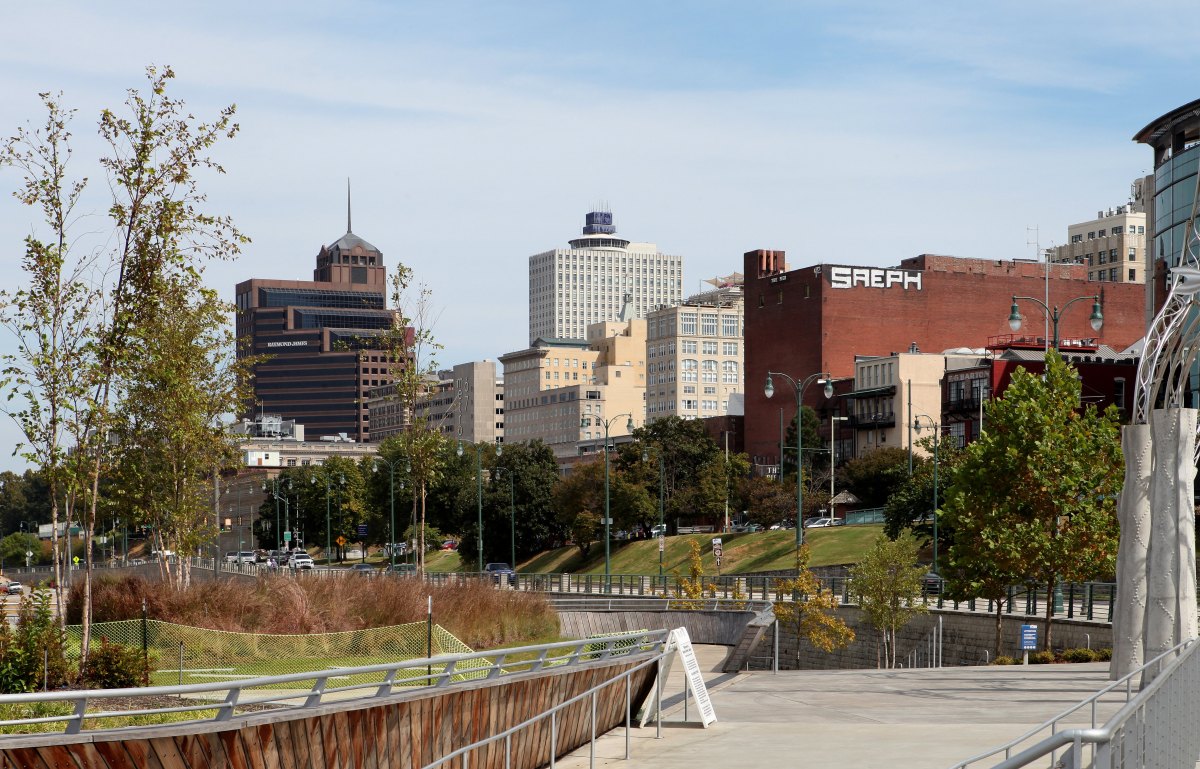
Americans are moving less than they used to during the pandemic, when the rise of remote work allowed tens of thousands to leave crowded, expensive metropolises for cheaper havens across state lines, but some cities are still rapidly losing residents, data shows. The latest report from the Bank of America Institute on Americans on the move, released on Friday, found that Memphis, Tennessee, experienced the sharpest net population drop of any major U.S. metropolitan area in the second quarter of 2026, down by nearly 1 percent compared to a year earlier. It was followed by Washington, D.C. (-0.73 percent), Los Angeles (-0.63 percent), Boston (-0.60 percent), Miami (-0.57 percent), Baltimore (-0.53 percent), Orlando (-0.49 percent), New York (-0.48 percent), San Jose (-0.44 percent), and St.
Louis (-0.41 percent), a list which includes some of the most expensive cities in the country. Mobility has slowed down among Americans in the second quarter of the year, the Bank of America Institute found, with declines reported across income groups, generations and move types. But the sharpest pullbacks were experienced by lower-income households and millennials, a generation that has long struggled to build up wealth and reach traditional life milestones like homeownership - showing that affordability is an important factor in the moving equation.
That is why the Midwest, a traditionally more affordable region in the country compared to the Northeast and the West, led the country in population growth in the second quarter of 2026, accounting for most of the fastest-growing metros in the country. These include Indianapolis (+1.87 percent in the second quarter of the year, compared to a year earlier), Columbus (+1.24 percent), Louisville (+1.15 percent), Cincinnati (+0.99 percent), Milwaukee (+0.99 percent), Minneapolis (+0.89 percent), Grand Rapids (+0.70 percent) and Cleveland (+0.37 percent). It was a non-Midwestern city, however, to top the list of the cities which have seen the biggest year-over-year population growth in the second quarter of the year, up 1.88 percent - Salt Lake City, Utah.
The city’s appeal to newcomers is hardly a new phenomenon: for years, Salt Lake City’s low employment rate, booming job market, outdoor opportunities, and relatively lower cost of living compared to other major western cities have been attracting new residents. In Salt Lake City, the median sale price of a home was $608,669 in June, according to Redfin, while the median household income between 2020 and 2024 was $75,090, adjusted for 2024 inflation, according to the U.S. Similarly, Indianapolis boasts a low cost of living and relatively affordable housing market, a thriving job market, and something of an exciting food and cultural scene.
Here the median sale price was $258,859 in June, while the median household income was $66,219 between 2020 and 2024. Raleigh, North Carolina, up 1.25 percent from a year earlier, has a strong job market, decent life amenities, and good universities - all while offering relatively affordable housing, increasingly a rarity in the U.S. Here the median household income was $86,309 in 2020, according to city officials’ data, while the median sale price of a home in the city was $424,769.
By comparison, the median sale price of a typical U.S. home was $408,776 in June, according to Redfin. If there are winners in the country’s population growth race, there are also losers, and once again it has a lot to do with affordability - with one significant exception. The cost of living is not the main reason why Memphis’ population is shrinking, as the city is relatively affordable.
Extract — continue reading at the source.