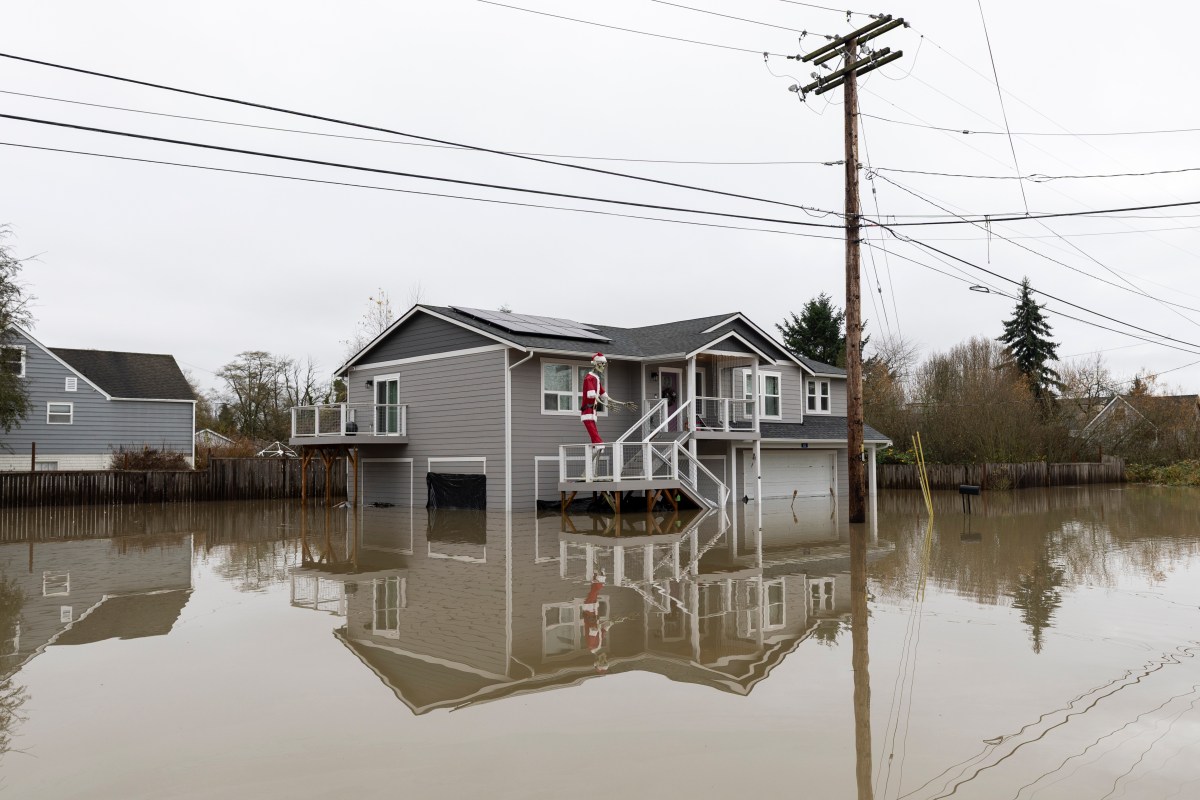
Homeowners across the United States are paying more for insurance than ever, as rising building material costs and more frequent, severe natural disasters push companies to hike premiums. Average premiums surged by 18 percent in the Northeast, 25 percent in the Midwest, 27 percent in the Southeast, and 43 percent in the West between 2018 and 2024, even after accounting for inflation, according to an analysis by the National Association of Insurance Commissioners (NAIC). The organization's first-of-its-kind report suggests that rising premiums are only part of the home insurance affordability crisis facing the country; increasingly, insurers are deciding they no longer want to cover certain homes at all.
Researchers found that insurer-initiated nonrenewal rates surged across every major region of the country between 2018 and 2024, raising concerns about the growing availability of coverage in some of the most disaster-prone parts of the country. According to the NAIC analysis, company-initiated nonrenewal rates increased by 96 percent to 216 percent across the four regions studied, while average inflation-adjusted premiums rose by 18.3 percent to 43.3 percent. Claim frequency and severity also increased over the period, especially between 2021 and 2024.
The Southeast experienced the sharpest increase in nonrenewals, with the rate climbing 216 percent within the seven-year period. The Northeast saw a 147 percent increase over the same period. In the West, insurer pullbacks accelerated dramatically between 2018 and 2024, with nonrenewals jumping from eight per 1,000 policies in 2022 to 25.1 per 1,000 policies by 2024.
In the Midwest, they rose by 96 percent. The results paint a picture of an insurance market under growing pressure from increasingly costly natural disasters, higher rebuilding expenses and climate-related risks. While insurers continue to operate in every region, many are becoming more selective about the homes and locations they will insure.
For homeowners, receiving a nonrenewal notice can be even more disruptive than receiving a premium increase - and potentially more dangerous should their home be struck by an extreme weather event. The decision may have little to do with a homeowner's claims history. Insurers may withdraw from entire geographic areas because of rising wildfire, hurricane, flooding or storm risks.
The trend has become increasingly visible in states such as Florida, California and Louisiana, where homeowners have faced soaring premiums, shrinking insurer participation and mounting uncertainty over future coverage. The issue has emerged as a defining challenge facing the U.S. housing market. Homeowners in Florida told Newsweek that insurance costs are becoming a major factor in deciding whether they could afford to stay in the state at all—especially as higher premiums come on top of higher property taxes and homeowners association (HOA) fees.
Extract — continue reading at the source.