A powerful eruption from the sun could bring an unusually vivid display of the Northern Lights to parts of the northern United States later this week, with federal forecasters now predicting the possibility of a moderate geomagnetic storm. The sun produced a powerful M6.9 solar flare on Tuesday, August 25, from an Earth-facing region known as sunspot 4513. The flare peaked at around 6 a.m.
EDT and was accompanied by a coronal mass ejection, or CME—a huge cloud of magnetized plasma thrown outward from the yellow dwarf star, according to Space.com. Early modeling suggested the CME could deliver a glancing blow to Earth on Friday, although precise timing remains uncertain. The latest three-day forecast from NOAA’s Space Weather Prediction Center has since raised the potential storm intensity.
NOAA expects isolated G1, or minor, to G2, or moderate, geomagnetic storm conditions on August 27 and August 28 because of the combined effects of the incoming CME and a high-speed stream of solar wind from a coronal hole. If the Northern Lights are visible, it will be during nighttime hours. The agency currently forecasts the Kp index, a measure of global geomagnetic activity, to potentially reach 5.67—considered a high amount compared to the normal 0 to 2 on the index—within its G2 category.
The Northern Lights, or aurora borealis, are colorful displays in the night sky caused when charged particles from the sun collide with gases in Earth’s upper atmosphere. Visibility will depend heavily on how strongly the CME interacts with Earth's magnetic field once it arrives, meaning the eventual viewing area could change. Under a G1 storm, aurora is commonly visible in higher latitude parts of the U.S.
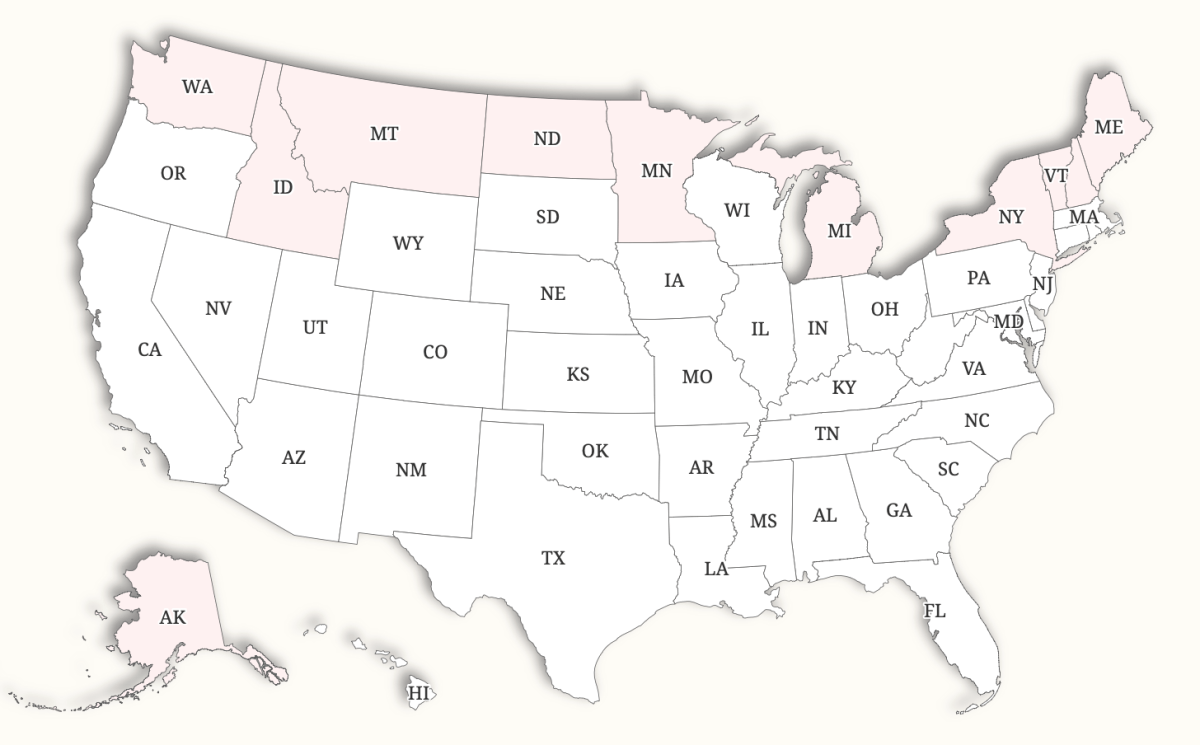
At G2 levels, however, the NOAA says auroras have previously been seen as far south as New York and Idaho, at roughly 55 degrees geomagnetic latitude. Northern parts of northern states are more likely to see the Northern Lights because auroras are concentrated around Earth’s magnetic poles. Charged particles from the sun are guided by Earth’s magnetic field toward these high-latitude regions, forming an “auroral oval” around the poles.
During stronger geomagnetic storms, that oval expands farther south, allowing auroras to become visible across more of the U.S. That means the best prospects for visibility are likely to be across Alaska, Canada and the northern tier of the contiguous U.S., including parts of Washington, Idaho, Montana, North Dakota, Minnesota, Michigan, and possibly northern New England. Skywatchers will also need clear, dark skies away from significant light pollution.
Extract — continue reading at the source.