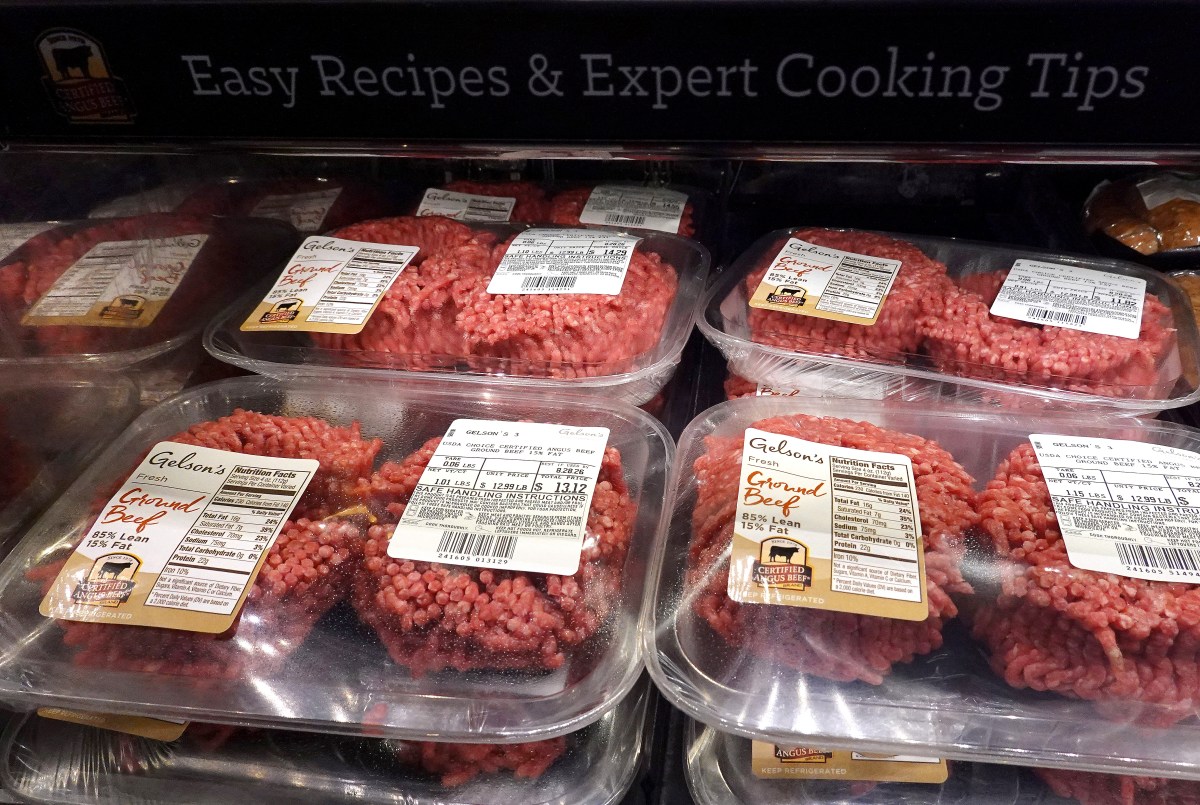
Donald Trump is right to be concerned about the prices Americans pay for beef, but his plan to allow an influx of foreign ground beef to lower costs is only a “short-term Band-Aid,” founder of American meat distribution firm Good Ranchers, Ben Spell, has told Newsweek. Years of drought, high feed costs and herd liquidation have spiked beef prices, which the U.S. president looked to address by announcing that it would allow 300,000 metric tons of ground beef imports at a reduced tariff rate for 90 days. Trump said on August 21 that the meat could be sold at 25 percent below market prices as his administration grapples with Americans' cost-of-living concerns ahead of critical midterm elections in November.
The policy faced pushback from farm and ranch groups and GOP lawmakers, who are often aligned with the president on agricultural policy. Spell said the problem was “10 years in the making, so you can't fix it in 90 days.” Newsweek reached out to the White House for comment. Spell, whose firm calls for greater transparency about where the meat Americans buy comes from, said there is a tension between American ranchers looking to rebuild the country's herd and being asked to compete with an influx of discounted foreign beef.
The U.S. has had no mandatory Country of Origin Labeling (COOL) law for beef or pork since Congress repealed the program in 2015 following a World Trade Organization dispute with Canada and Mexico. Spell said Trump's plan could deprive consumers of information they might need if they wanted to pay more for American-produced product than cheaper imports. In October 2025, American cattle ranchers reacted angrily to Trump’s suggestion to import more beef from Argentina, whose president, Javier Milei, is an ally.
But in February 2026, the Trump administration increased the tariff-rate quota for Argentine lean beef trimmings by 80,000 metric tons. There is no confirmation that any of these countries would be supplying the beef under Trump’s plan, but David Anderson, a professor and extension economist for livestock and food product marketing at Texas A&M University, said a Chinese tariff on beef imports exceeding quota levels could see beef from Brazil entering the U.S. later this year. Anderson told Newsweek that importing more beef, especially trimmings for ground beef, may mean some lower wholesale prices and put downward pressure on beef prices, but added, “How much would show up in grocery store prices?
I think that is harder to say.” Senator Tim Sheehy, a Montana Republican who represents one of the top cattle-producing states, said American ranchers had already been struggling against the meatpacker monopoly, referring to four firms, JBS, Tyson Foods, Cargill and National Beef, which control roughly 85 percent of U.S. beef processing capacity. Sheehy posted on X that Trump’s action “will make it more difficult for American ranchers to rebuild our herd and bring prices down for the American people." Bill Bullard, CEO of R-Calf USA, a cattle producer trade association, said that Trump’s plan would hurt farmers and could discourage the expansion of the domestic herd. This would mean foregoing current sale proceeds and committing capital for several years.
But Varroney believes an influx of imported beef sold under Trump’s plan at a promised discount could pressure the domestic cattle market and weaken producer confidence when the U.S. needs ranchers to invest. "Cow-calf producers facing drought, high input costs and difficult access to capital cannot adjust production quickly in response to a government announcement or a temporary change in prices.” If producers think that policy will repeatedly intervene when market prices begin supporting herd expansion, some may become less willing to retain breeding animals and make the investments required to rebuild, Varonney added. As Spell from Good Ranchers said: “We've got to figure out how we incentivize and get the next generation raising more cattle and rebuilding the herds.” Contact Newsweek editors on this story: Matthew Robinson and Sam Wilson.
Extract — continue reading at the source.