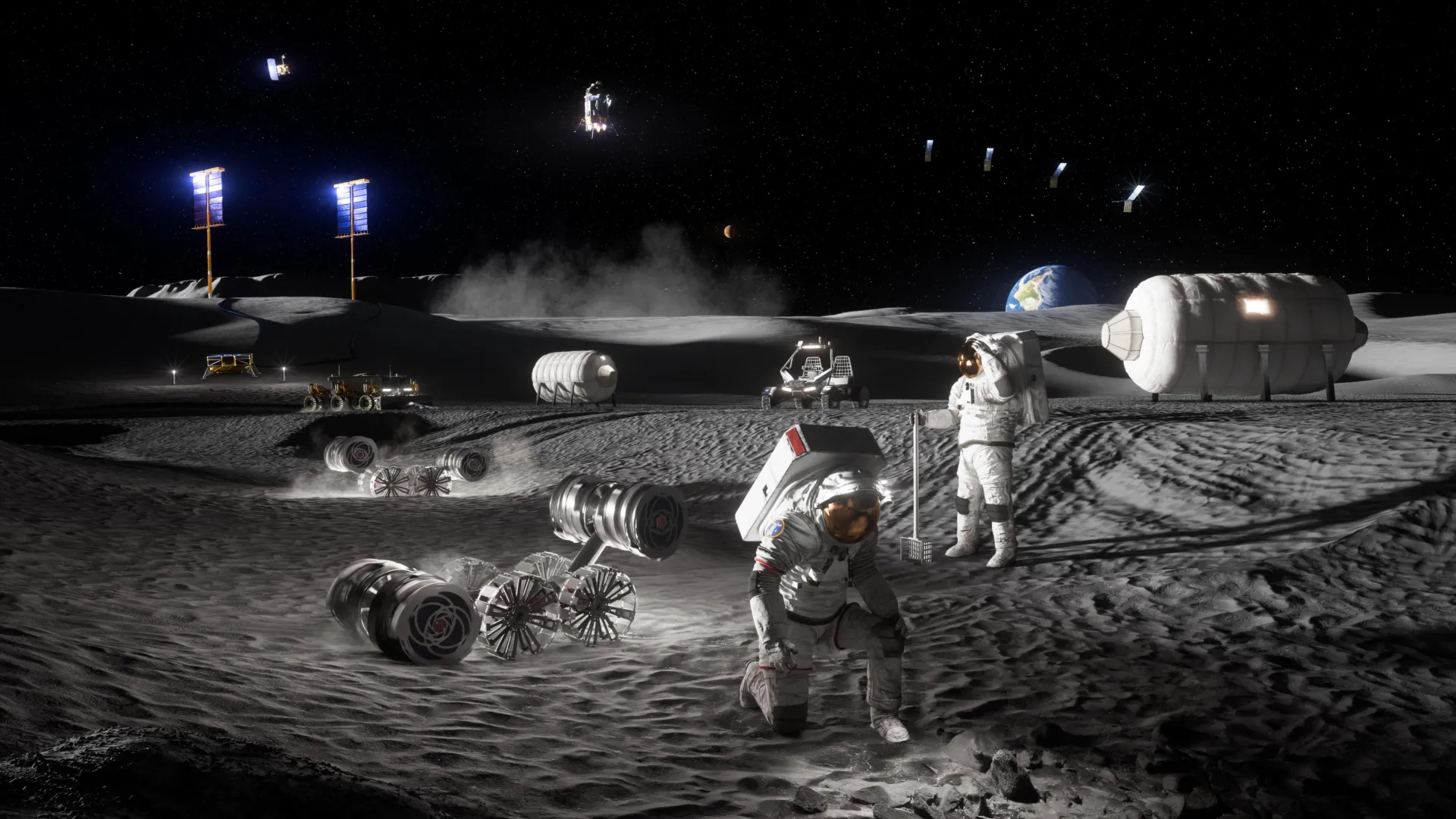
NASA is moving closer to establishing humanity's first Moon base with the selection of three scientific investigations designed to answer some of the biggest questions about living on the lunar surface. The missions will search for underground caves that could shelter astronauts, investigate hidden deposits of lunar ice, and monitor environmental hazards that could threaten future explorers. The new instruments and technologies were selected through NASA's Payloads and Research Investigations on the Surface of the Moon (PRISM) program.
They will be delivered to the lunar surface through the agency's CLPS (Commercial Lunar Payload Services) initiative as part of its Moon Base Program. Each investigation will address a different challenge of establishing a lasting human presence on the Moon. Researchers will examine potential natural shelters, identify resources that astronauts could use, and study dangerous conditions that future habitats and equipment will need to withstand.
Together, the findings will support NASA's Artemis and Moon Base programs as the agency works toward long-term lunar exploration. "NASA Science is building the ultimate interplanetary survival guide to ensure that science goes first to the lunar surface to provide our future astronaut crews with the vital information, resources, and safety precautions needed ahead of time to survive the night on the Moon," said Nicky Fox, associate administrator, Science Mission Directorate, at NASA Headquarters in Washington. "These PRISM selections will directly help NASA minimize risks to our astronauts while maximizing our agency goals as we set up humanity's first lunar outpost in preparation for sending the first astronauts to Mars." Monitoring Moonquakes and Other Lunar Hazards The first investigation, Lunar Environment Monitoring Station -- South Pole (LEMS-SP), will establish an autonomous station to track environmental conditions and potential threats over an extended period.
One of its tasks will be detecting micrometeoroids, tiny pieces of space debris that strike the lunar surface. Unlike Earth, the Moon lacks a substantial atmosphere capable of burning up most incoming objects, making these impacts a concern for future equipment and habitats. The station will also measure the abundance of volatiles, substances that readily turn into gas, within the Moon's extremely thin outer layer of gases.
Tracking these materials will help scientists better understand how the lunar environment changes over time. Another important instrument will be a short-period seismometer, designed to detect vibrations and seismic activity, including moonquakes. These measurements could reveal hazards that NASA must consider when designing structures and installing sensitive equipment on the lunar surface.
By collecting information about impacts, seismic activity, and the surrounding environment, LEMS-SP could help engineers develop safer and more reliable infrastructure for a permanent Moon base. The investigation will be led by Dr. Mehdi Benna of the University of Maryland, Baltimore County.
Extract — continue reading at the source.


