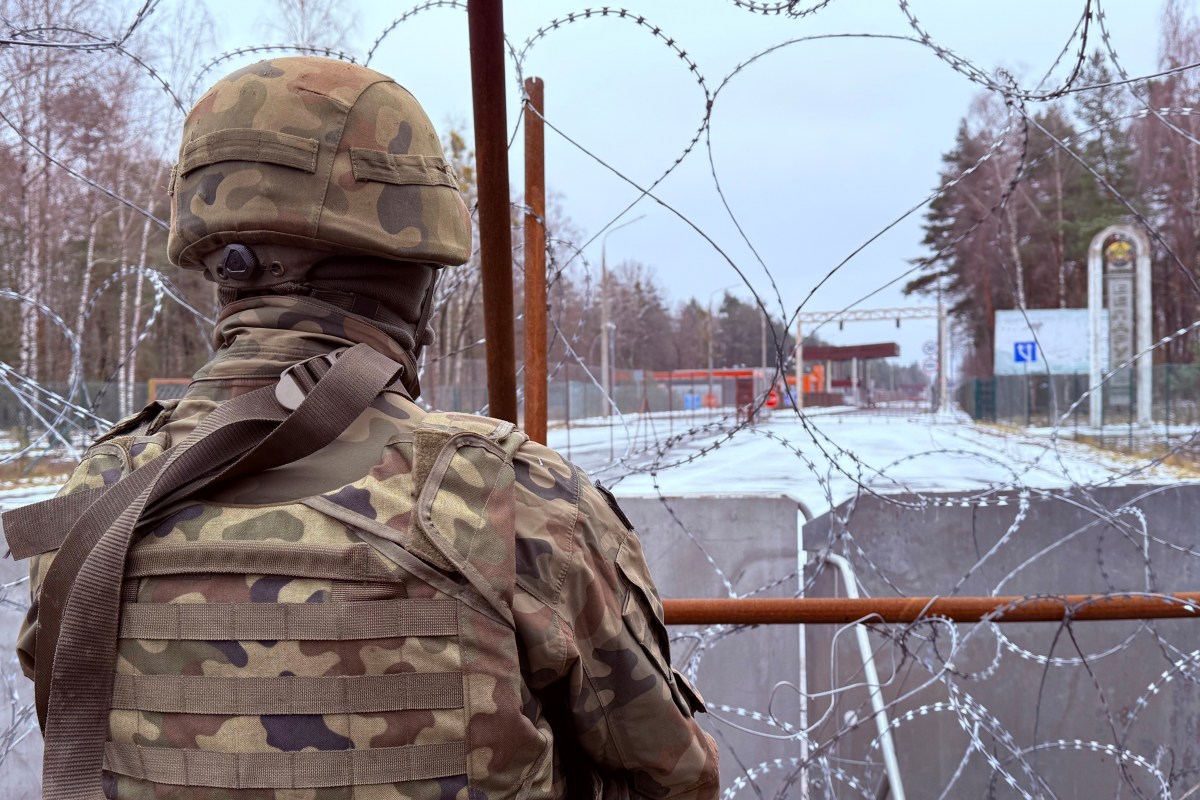
Polish lawmakers are drawing up legislation to prepare for a "pre-war period," according to domestic media reports, amid concerns among NATO officials Russia could launch some form of attack on an alliance member as soon as this year. Poland's defense ministry has put together a draft law to beef up Poland's "defense capabilities" and improve links between the country's military and internal security services, Poland's Rzeczpospolita newspaper reported. "This is preparing the state for the pre-war period," an unnamed source described as close to the president told the outlet.
Newsweek has reached out to the Polish defense ministry for comment via email. Poland announced sweeping changes to its military in 2022, swelling the size of its army, buying new, often American-made weapons and making the military recruitment process easier. Warsaw plans to increase the ranks of its army to 300,000 active-duty soldiers by 2039, according to Polish online news portal and internet radio station RMF24.
This would represent more than three-fold increase from 2015. Another 200,000 will be reservists, the outlet added. Poland has been one of Ukraine's staunchest backers since Moscow launched its full-scale invasion more than four and a half years ago.
It's also NATO's top military spender, when taken as percentage of gross domestic product (GDP), expected to dedicate more than 4.81 percent of its GDP to defense this year. Meanwhile, NATO officials have warned in recent months Russia could escalate its so-called "hybrid warfare" assaults against alliance members, or even attempt a small-scale land-grab against a NATO country as early as this fall. "Hybrid warfare" is a broad term, largely referring to activities that stop short of open fighting, such as cyberattacks, information campaigns or targeting vulnerable infrastructure like power grids or undersea cables.
European capitals have sounded the alarm over a string of incidents described as hybrid warfare attacks, with Russia directly named as the alleged perpetrator or suspected of being involved. Russia's embassy in London told Newsweek on Thursday it "categorically rejects" these accusations and said "technical failures, infrastructure faults and criminal incidents across Europe are routinely attributed to our country, without evidence and often before any investigation has been concluded." The Polish government said in September that a fire at a Starlink satellite site linked to the Ukrainian military was an "act of sabotage," while Polish prosecutors said they suspected a Russian connection. Separately, a Russian drone struck the engine of a passenger train traveling from Kyiv to Warsaw last month, close to the Polish border.
A Russian military helicopter violated Polish airspace after crossing over from Russia's Kaliningrad exclave, the Polish military also said in mid-September. European NATO nations, particularly those pressed up on Russia's border or Ukrainian soil, have been further set on edge by a series of drone and missile incursions into their airspace, which some officials describe as Moscow probing NATO reactions, trying to weaken the alliance and hack at support for Ukraine. Polish Prime Minister Donald Tusk, said intelligence assessments indicate a "real risk" of more drones and missiles breaking into NATO airspace in the near future.
Extract — continue reading at the source.