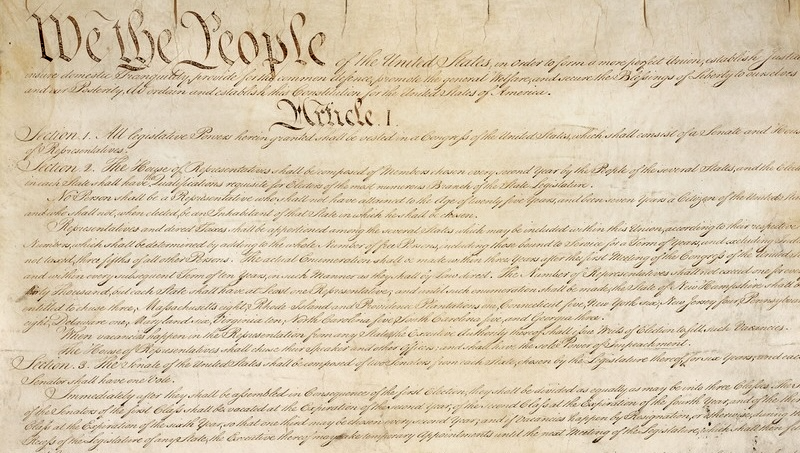
The Constitution of the United States is made of things that are born, live, thrive, decay, and die: insects, animals, plants, ideas. In order to form a more perfect Union. Each of its elements began, long ago, in the loamy earth, hatching and creeping or slipping, slick and squealing, from the womb of the mind.
Establish justice, insure domestic tranquility. The text is written on parchment made from sheep, fleeced, their hides soaked in lime, stretched and dried. Provide for the common defense.
The ink came from the buds of oak leaves, swollen to the size of musket balls by the eggs of wasps. Promote the general welfare. Its words were shaped by quills fashioned from the feathers of molting geese.
Secure the blessings of liberty. Its lofty, momentous ideas came from the minds of men, long since dead, and from the books they read. To ourselves and our posterity.
Of the nearly two hundred written constitutions, the Constitution of the United States—the most influential constitution in the world—is also among the oldest, a relic, as brittle as bone, as hard as stone. Constitution is neither bone nor stone. It is an explosion of ideas.
Parchment decays and ink fades, but ideas endure; they also change. The Constitution attempted to solve ancient problems having to do not only with the people and their rulers, the structure of government, and the nature of rights, but also with the knowability and endurance of law. Ingeniously, it accounted for the passage of time.
Extract — continue reading at the source.

/https://tf-cmsv2-smithsonianmag-media.s3.amazonaws.com/filer_public/4e/b6/4eb67aab-ffb5-452d-97d5-a81c1db9cf9c/rotating_fluid.jpg)
/https://tf-cmsv2-smithsonianmag-media.s3.amazonaws.com/filer_public/0d/77/0d779495-70e9-49db-8e7f-02d9067239e2/26_cookie_5773_1.jpg)

/https://tf-cmsv2-smithsonianmag-media.s3.amazonaws.com/filer_public/6c/5f/6c5f3401-48da-41c5-8eb0-c7f99032b198/11_nabarlek_on_augustus_island__ian_bool.jpg)