New Zealand could be facing a weeks-long wait to know the shape of its next government, after its nail-biting election failed to hand a decisive victory to either the incumbent rightwing coalition or opposition left bloc. On preliminary results, the centre-right National party, led by the prime minister, Christopher Luxon, managed to secure enough seats to govern alongside its traditional coalition partners, the libertarian Act and populist New Zealand First parties. But with some seats won by very slim margins, and special votes yet to be counted, that success is precarious, resulting in an election too close to call until official results are released on 27 November.
Special votes include overseas votes and ballots cast outside a voter’s electorate. In 2023, 600,000 such votes were made, 21% of the total. These votes tend to favour the left – in 2023, special votes resulted in Te Pāti Māori (the Māori party) and the Greens gaining three seats between them.
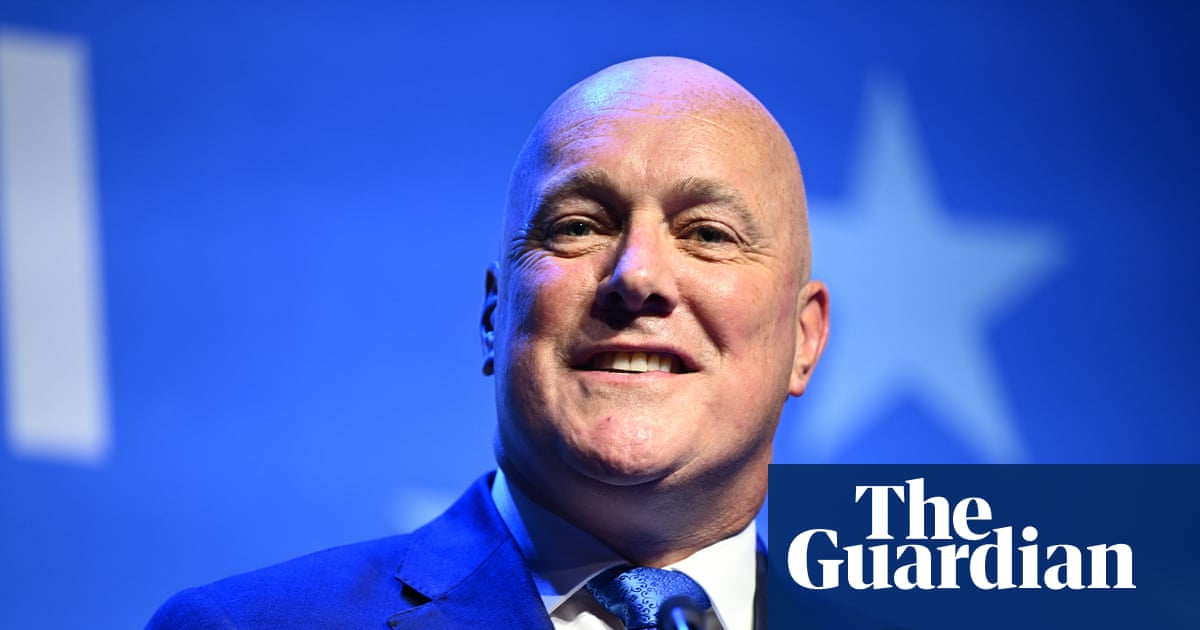
With nearly 100% of the regular votes counted on Saturday night, National secured 42 seats, Act 13 and New Zealand First 12. The combined 67-seat majority is wafer thin, with the left bloc just three seats behind. Speaking to a room full of the party faithful at Auckland’s Viaduct events centre just before midnight, Luxon said the results were “too close to call” and the special votes would need to be counted before negotiations could begin.
National was still the largest party in parliament, he said, and had “a pathway to forming the next government”. National pipped Labour by 0.02% in the party vote. Labour, led by Chris Hipkins, secured 35 seats, while its traditional coalition partners the Greens won 16 and Te Pāti Māori five.
Even with the seven seats from the centrist newcomer party, Opportunity, the left bloc is three seats short of forming a government. Before a rowdy crowd of supporters at the Cosmopolitan Club in Upper Hutt, north of Wellington, Hipkins joked that New Zealand had spoken but “it may take a bit longer to work out what they’ve said”. The collapse of the two major parties, amid a sluggish economy and stubbornly high inflation, is feeding record support for the smaller parties, including Act, New Zealand First and the Greens.
It is also helped propel Opportunity into parliament for the first time. Opinion polls in the lead-up to the election had Opportunity placed to become the kingmaker. At this stage, the right bloc does not need the party to govern, but if special votes change the landscape, its predicted role could come to fruition.
Extract — continue reading at the source.