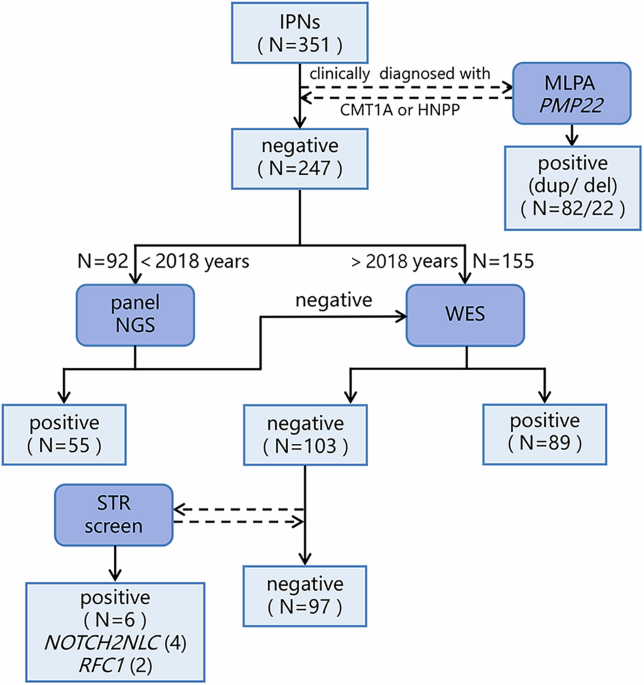
Non-coding GGC repeat expansions in NOTCH2NLC and AAGGG repeat expansions in RFC1 have been implicated in NIID and CANVAS, respectively. Both disorders classically present with peripheral neuropathy as an initial manifestation. This study aimed to investigate the prevalence of short tandem repeat (STR) expansions in NOTCH2NLC and RFC1 among patients with genetically undiagnosed inherited peripheral neuropathy (IPN).
In this cohort study, we screened 103 such patients for STR expansions using repeat-primed PCR and fragment analysis. Clinical, electrophysiological, and skin histopathological features of patients were comprehensively analyzed. Additionally, a systematic literature review was conducted to summarize all published NOTCH2NLC-related IPN cases.
Four patients with IPN (3.9%, 4/103) were found to have heterozygous GGC repeat expansions in NOTCH2NLC. Two patients harboring biallelic AAGGG repeat expansions in RFC1 exhibited predominantly sensory axonal neuropathy. A total of 107 patients in seven reports were identified.
The most prevalent clinical features were impaired motor function (66/86, 76.7%), followed by sensory abnormalities, tremor, and muscle atrophy. The size of the expanded GGC repeats ranged from 68 to 517. Sporadic NIID cases presented with later onset and milder features compared to familial cases.
Radiological and cognitive manifestations correlated with onset age but not with repeat size. Our results indicate that STR expansions account for 5.8% (6/103) of genetically undiagnosed IPN cases in our cohort. This study broadens the clinical spectrum of NOTCH2NLC and RFC1 repeat expansions and highlights the importance of screening for STR expansions among genetically undefined IPN patients.
This is a preview of subscription content, access via your institution Receive 12 print issues and online access Prices may be subject to local taxes which are calculated during checkout Van de Vondel L, De Winter J, Timmerman V, Baets J. Overarching pathomechanisms in inherited peripheral neuropathies, spastic paraplegias, and cerebellar ataxias. Trends Neurosci. 2024;47:227–38.
Extract — continue reading at the source.


