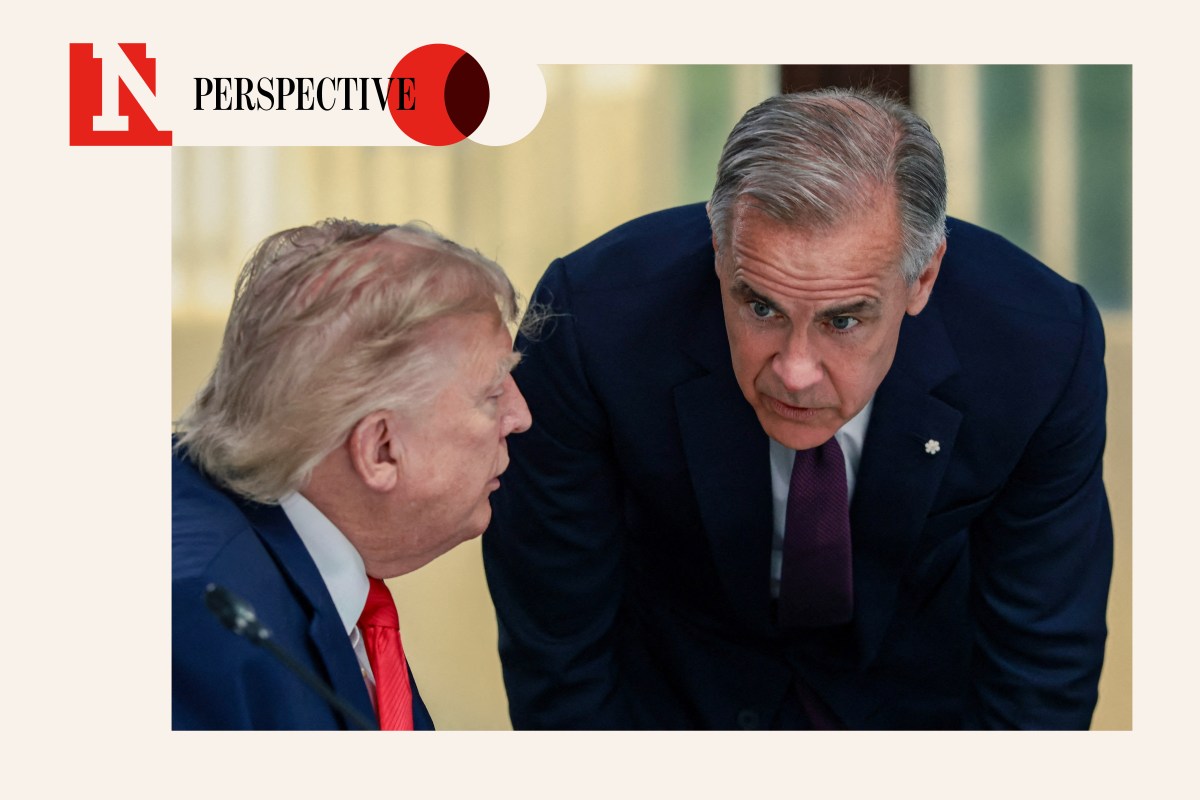
Canadian Prime Minister Mark Carney has fiercely rejected Trump’s trade war. Yet, his justification for Canada’s response now sounds remarkably similar to the argument Trump has made for tariffs: protect domestic workers and industries, accept some pain today and build a stronger economy tomorrow. After walking away from trade negotiations with Washington last month, Carney announced dollar-for-dollar countertariffs, acknowledging that they would “raise costs and reduce choice for Canadians.” Still, he argued the sacrifice was worthwhile because Canada needed to defend its industries, invest at home and become less dependent on the United States.
Some of the biggest benefits, Carney conceded, “will take time.” The irony is pretty obvious: Trump may be losing the international argument over his particular trade war while winning the larger argument over whether protectionism is legitimate economic policy. Seems like everyone is now speaking his language without perhaps even acknowledging it. Trump’s case for tariffs has always rested on a rejection of the old free-trade calculation.
Cheap imports may benefit consumers, according to his argument, but those prices can conceal a larger cost if factories close, supply chains move overseas and strategically important industries disappear. The White House says tariffs are intended to encourage domestic production and produce benefits for American workers over decades that will limit the potential negative impacts of cheap imports. Carney disputes much of Trump’s diagnosis.
He has called tariffs taxes ultimately borne by consumers and accused Washington of using economic integration as a weapon. Oddly enough, today, his prescription for Canada increasingly accepts the same underlying trade-off. Canada will support businesses as they “retool, retrain, diversify and build” while using tariffs to give Canadian producers protection from American competition.
Carney is simultaneously pushing infrastructure investment, domestic purchasing and new export markets to make Canada more economically resilient. The goals might slightly differ (Trump is acting offensively while Carney is on the defensive) but the mechanism and political bargains are Trumpian: economic efficiency is no longer the only consideration as governments are prepared to make consumers pay more when they believe domestic industrial capacity is worth protecting. The European Union has traditionally cast itself as one of the strongest defenders of rules-based international trade.
Yet in July, the EU introduced a new regime protecting European steelmakers, limiting tariff-free steel imports to 18.3 million metric tons annually and imposing a 50 percent duty above those quotas. The European Commission says the policy is needed because global overcapacity threatens the “long-term viability” of European steelmaking. Brussels has a strong argument that its policy is different from Trump’s: the EU measure targets a particular industry facing documented global overcapacity while Trump has deployed tariffs across a far wider range of goods and countries.
Extract — continue reading at the source.