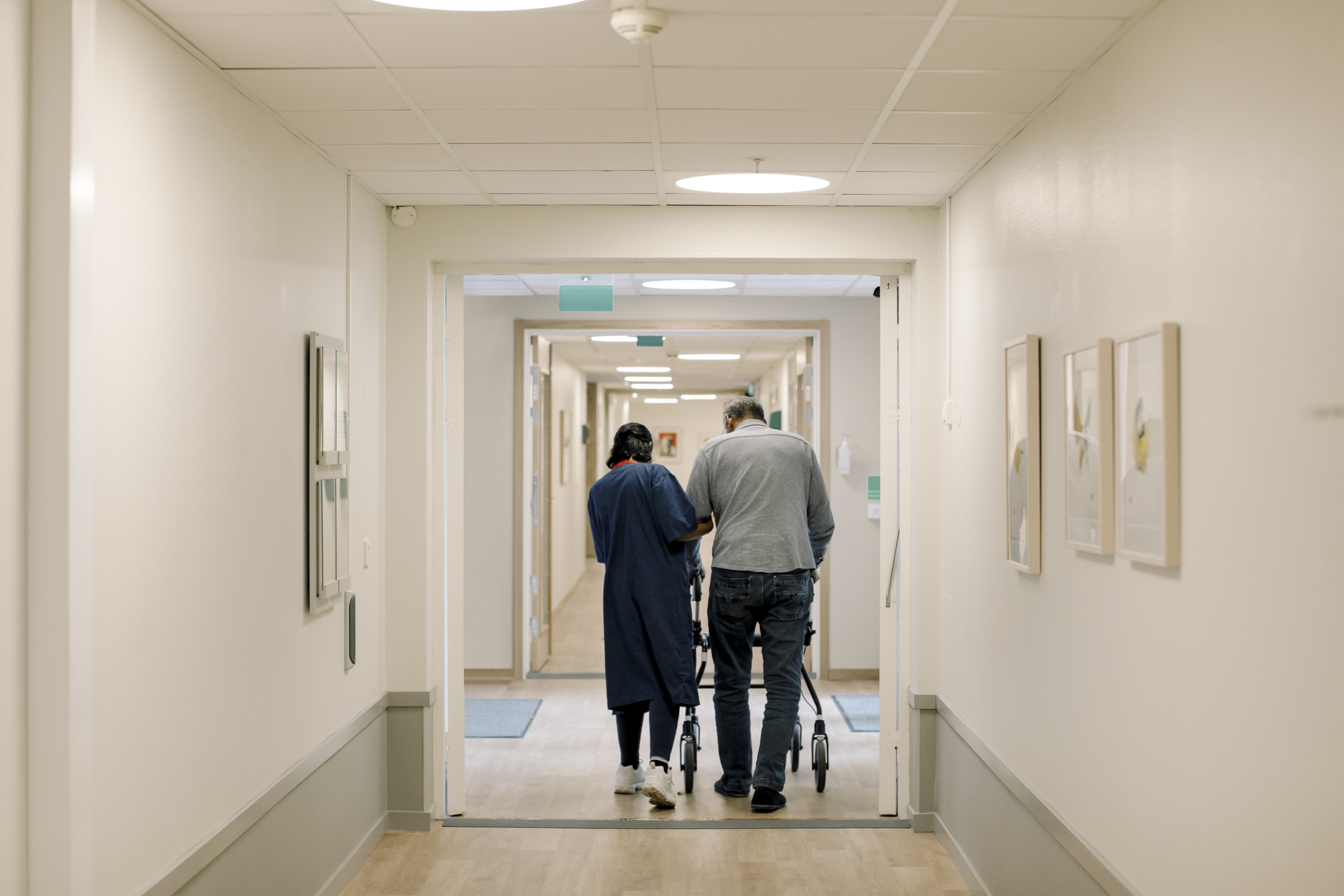
As an occupational therapist working in medical respite care, Caitlin Synovec saw people in their 50s or 60s at a moment when their lives had forever shifted. Perhaps a stroke or other serious medical event sent them to the hospital. But too often, during their extended treatment, they lost their jobs and then their housing.
Newly homeless, they might manage to snag a spot in a respite care program designed for people without stable housing who need a place to continue their recovery. But then, a question would loom over their future: Where would they go next? Many patients in that situation wind up living on the streets or in shelters, despite efforts to find them permanent housing.
A surprising number of older adults, however, find themselves in a nursing home—even if they don’t need or want that level of care. According to research from the United Health Foundation, one in 11 people in nursing homes have “low-care needs,” meaning they do not require physical assistance for bed mobility, transferring, using the toilet, or eating. The ratios vary by state, from a low of 2.5% in Hawaii to nearly 23% in Oklahoma.
It’s an expensive housing solution: One year in a nursing home costs $119,340 on average, compared to around $16,000 per person per year for subsidized permanent supportive housing that includes some services. Synovec recalls one client in her 50s who lost her housing while she was in the hospital getting treatment for a stroke. Although a family member was willing to take her in, she couldn’t navigate their second-floor apartment.
The stroke left her without the use of one arm and with mild cognitive problems, but she still was able to manage most daily activities, including taking the bus to visit family, friends, and her church. She needed some help—for example, with getting dressed—but she valued her independence. The hospital discharged her to a nursing home.
Many emergency shelters aren’t equipped for the elderly, even though older adults are the fastest-growing segment of the homeless population. Shelters often house people in bunk beds. Their bathrooms typically aren’t designed for people with disabilities.
Extract — continue reading at the source.