AS SOMEONE WHO spent large chunks of his early twenties driving around the country pretending to be Jack Kerouac (while acting more like Hunter S. Thompson), I’ve spent time in just about every contiguous U.S. state. Some, as you might imagine, are more interesting than others—and Indiana isn’t exactly topping the list.
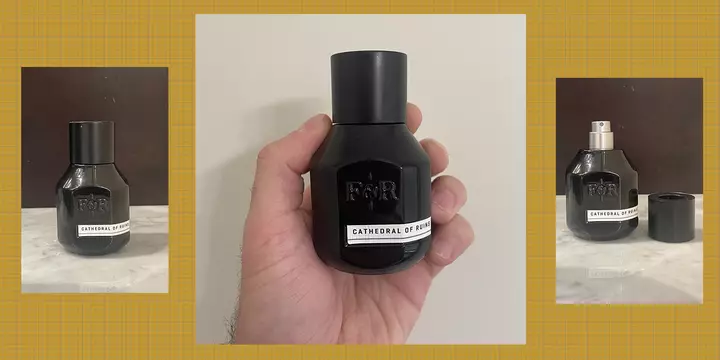
So when I discovered one of my new favorite fall colognes was inspired by Gary, Indiana, I began questioning my own reality. But Fulton & Rourke Cathedral of Ruins Extrait de Parfum is that good. The only thing I know about Gary, Indiana is that it’s where Michael Jackson and the Jackson 5 were from—and they left.
But after reading about the inspiration behind Fulton & Rourke’s latest scent—and, more importantly, smelling it—I’m wondering if it might be worth a trip. Specifically, the fragrance is inspired by City Methodist Church in Gary, Indiana. Built in the 1920s, the church is still admired for its grand Gothic architecture.
Over the years, its roof caved in, but the stone walls remained intact, allowing vegetation to grow throughout its halls. Equal parts creepy and beautiful, it’s exactly the type of place I’d like to sneak into to see if I could spend a night without freaking out. More so, its mysterious, earthy, and intriguing yet inviting atmosphere captures exactly the type of vibe I look for in cologne this time of year.
After wearing the fragrance for over a month, here’s how it lived up to its inspiration. Cathedral of Ruins opens with an intense combination of cypress, black peppercorn, and rose, before heart notes of saffron and Peru balsam begin to emerge. After 20 minutes or so, the base notes of leather and frankincense really start to take hold.
The result is a woody amber scent that feels lived in and worldly, like cracking open an old copy of The Portrait of Dorian Gray you found at the back of the library. It’s sophisticated without being pretentious, and noticeable without being loud or overpowering. After applying two to three sprays to the neck and one to my wrists, the cologne maintains most of its strength for seven to eight hours, but lingers much longer.
Extract — continue reading at the source.