For decades, scientists generally assumed that fossilization destroyed the original organic molecules once present in bones, teeth, and other tissues. Under that view, proteins and other biological materials were not expected to survive for tens of millions of years. New research led by the University of Liverpool now provides strong evidence that some Mesozoic fossils, including dinosaur bones and teeth, can retain traces of those original organic materials.
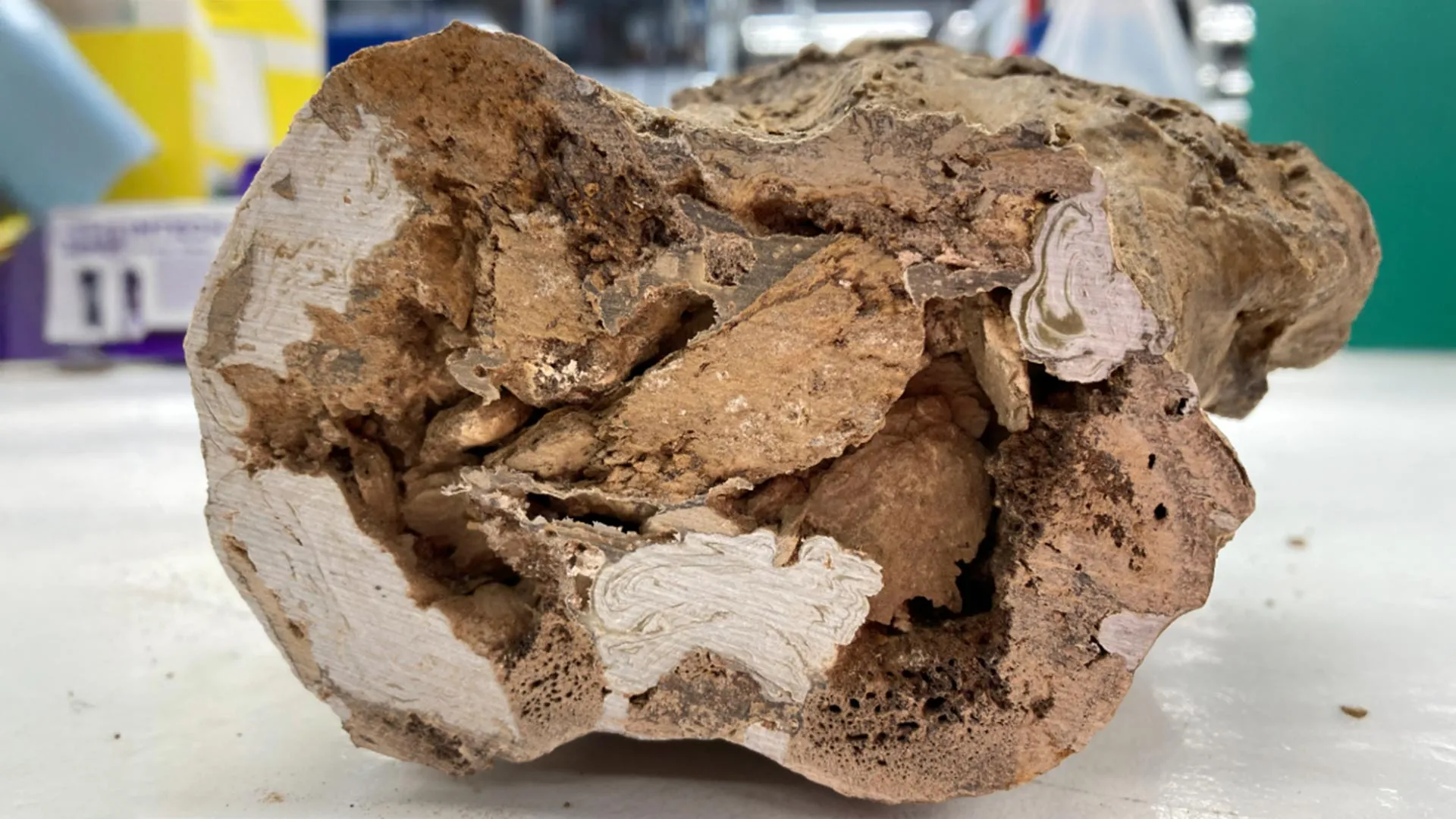
Using advanced analytical methods, researchers detected remnants of collagen in the hip bone of an Edmontosaurus, a duck billed dinosaur. The finding adds important new evidence to a scientific debate that has continued for about 30 years. Ancient Collagen Found in a Dinosaur Fossil The study, published in Analytical Chemistry, examined an exceptionally well preserved Edmontosaurus sacrum weighing 22 kilograms.
The sacrum is a group of vertebrae connected to the pelvis and forms part of the animal's lower spine. The fossil was excavated from Upper Cretaceous rock layers in the Hell Creek Formation of South Dakota. This famous geological formation preserves fossils from near the end of the age of dinosaurs.
The specimen is now part of the University of Liverpool's collections. Because of its unusually good preservation, the fossil gave researchers an opportunity to apply several modern techniques, including protein sequencing and mass spectrometry. Mass spectrometry is a method that helps scientists identify molecules by measuring their mass and chemical properties.
In this case, it allowed the team to search for molecular signatures associated with collagen, the major structural protein found in bone. Evidence That Fossil Proteins Can Survive Professor Steve Taylor, chair of the Mass Spectrometry Research Group at the University of Liverpool's Department of Electrical Engineering & Electronics, said: "This research shows beyond doubt that organic biomolecules, such as proteins like collagen, appear to be present in some fossils. "Our results have far-reaching implications.
Firstly, it refutes the hypothesis that any organics found in fossils must result from contamination. "Secondly, it suggests that cross-polarized light microscopy images of fossil bones, collected for a century, should be revisited. These images may reveal intact patches of bone collagen, potentially offering a ready-made trove of fossil candidates for further protein analysis.
Extract — continue reading at the source.