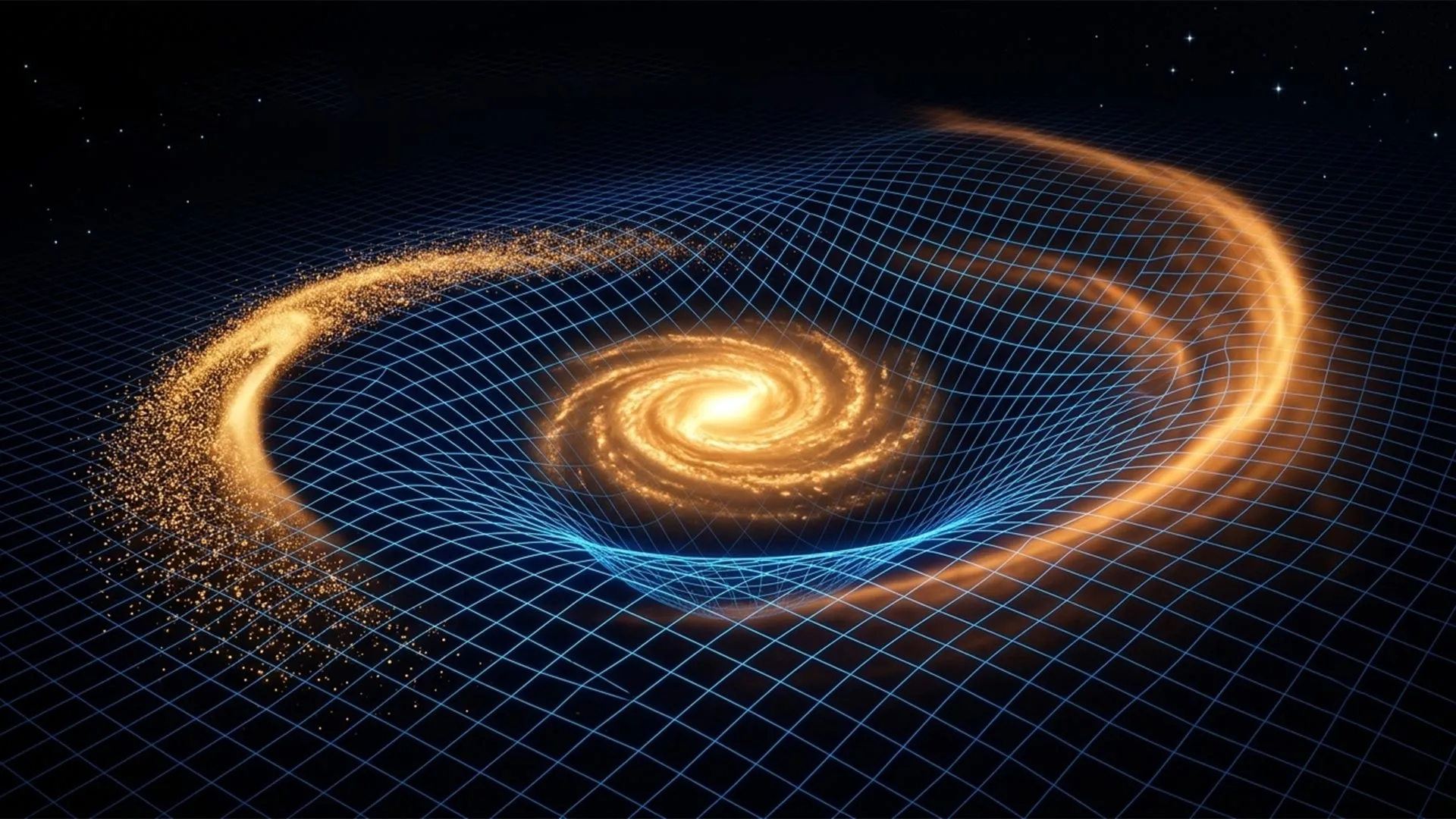
Table tennis players can make a ball suddenly curve by giving it just the right spin. That motion is caused by the Magnus effect, a familiar piece of physics that also influences the flight of larger balls in sports such as soccer. Now, an international team working at the Paul Scherrer Institute PSI has observed a related effect at the atomic scale.
For the first time, researchers have experimentally demonstrated the optical Magnus effect by focusing laser light on a single ion and measuring how the light interacts with it. Instead of causing an atom to follow a curved path, the effect shifts the location where the laser interacts most strongly with the ion. That interaction point moves slightly sideways, a finding that could matter for quantum computers that use laser light to control qubits with extreme precision.
The results were published in Physical Review Letters. A Laser's Strongest Interaction Is Slightly Off Center At first glance, it seems reasonable to expect that an ion would interact most strongly with a laser exactly at the beam's brightest point. But when laser light is focused very tightly, the structure of its electromagnetic field becomes more complicated.
Because of that altered field structure, the strongest interaction does not occur exactly at the center of the beam. Instead, it appears slightly to one side. This small sideways displacement is the optical equivalent of the Magnus effect that makes a spinning table tennis ball curve through the air.
That tiny shift could become important in quantum computing. Lasers are often used to change the states of qubits with very high precision. If the optical Magnus effect is ignored, it could interfere with that control and contribute to errors.
The same effect may also be useful. "The forces it generates could be used to couple qubits to one another, enabling more complex computations," explains first author Philip Leindecker from the PSI Center for Photon Science and the Department of Physics at ETH Zurich. To detect the effect, the researchers used a single calcium ion as an extremely sensitive probe.
Extract — continue reading at the source.