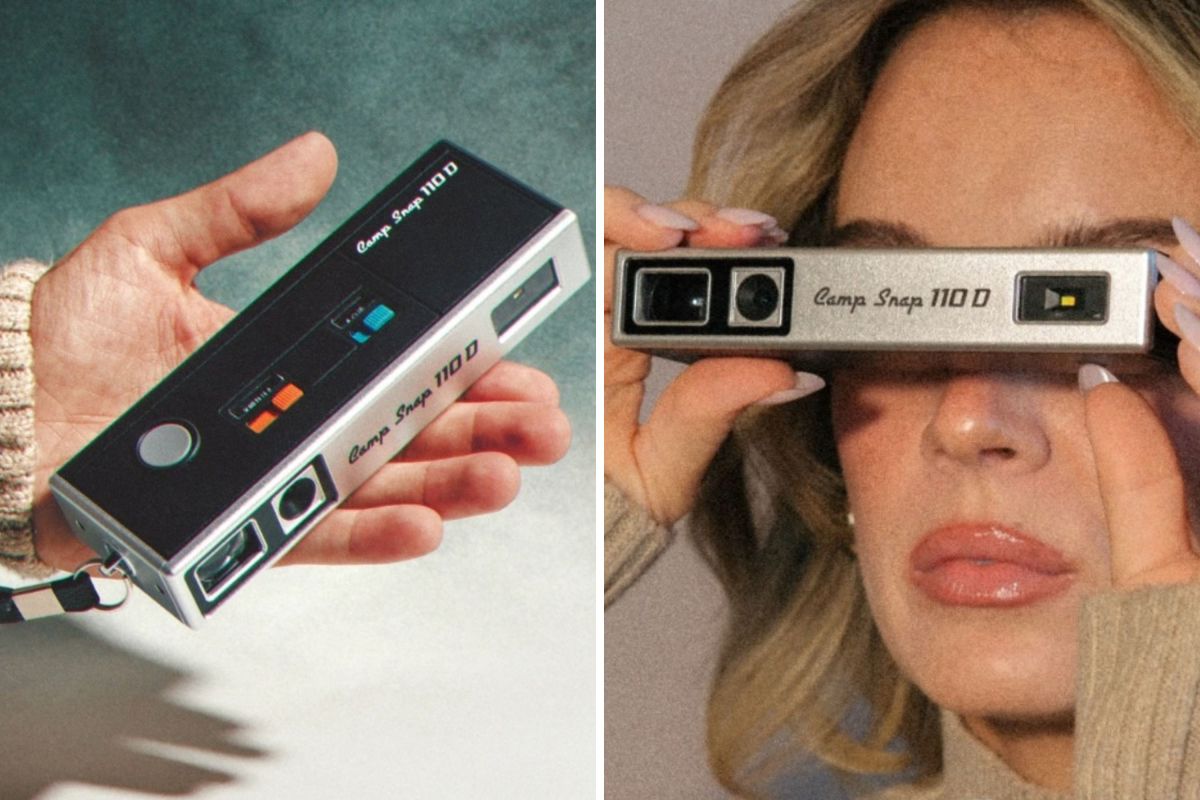
A new pocket camera that recreates an iconic old model with a modern touch has been unveiled more than 50 years after the original device was born. The new camera comes amid a revival of retro technology and a gravitation to authentic, real-life experiences and simpler times in an increasingly digital age. The Camp Snap 110 D is a pocket-sized camera that embodies the look and feel of the 110 cameras that used a cartridge-based analogue film format, introduced by Kodak in 1972.
The camera is digital and rechargeable, so you don’t need film to take pictures, and it comes with no screen to "distract you from what you're actually taking a picture of," the company behind it says. It only features a status display that indicates the battery life and number of photographs taken. The company explains: "In 1972, the iconic 110 silhouette made cameras simple & pocketable…50 years later, we reimagined it digital & screen free.
We kept the unmistakable long, slim shape of the original 110 camera and reimagined everything inside for today." This means photos can’t be reviewed as they’re taken, as one would do on cameras with a digital screen. The images can only be viewed once they’re transferred to another device, which helps to recreate a bit of the anticipation that once came with waiting for film to be developed to see how pictures turned out. The global film photography camera market is projected to nearly double from $36.84 million in 2026 to $52 million by 2035, according to a report by Market Reports World.
It found that "consumers are increasingly searching for creative activities that feel personal, physical, and less automated than smartphone photography." Teemu Suviala, the global chief creative officer at global brand and design consultancy Landor & Fitch and former global head of brand design at Meta’s Reality Labs, told Newsweek: "There’s a good reason old-school digital cameras are having a moment now. Smartphone photography has become so good, so immediate, and so familiar that our pictures can feel interchangeable and, mainly, boring. A point-and-shoot gives you something different—the unpredictability of a lived-in image and the softness of a real, slightly fading memory." Suviala says the latest camera remake offers more than a retro aesthetic and puts a small boundary between taking a photo and everything else that gets you pulled into your phone.
With a screen-free camera, instead of reviewing every shot as you go, you can "just take the picture, put the camera away, and stay at the party," and recall how the night was later when you see the images all at once. Suviala noted: "The wait has become part of the appeal, a product feature. What really matters is being fully in the moment, rather than getting pulled into social feeds, messages, and lost calls." Harpal Singh, an AI SEO and GEO consultant, and founder of blimpp, who analyzes consumer search behavior, agreed that more consumers are focused on intentionality.
He told Newsweek: "There is a growing public sentiment and appreciation toward products that facilitate a more intentional life with a greater sense of control." A July 2026 study by YPulse, a market research firm, found that around two-thirds of Gen Z and younger millennials use analogue technology, such as digicams, instant film, and film cameras, as well as other retro products, such as flip phones and vinyl records. YPulse found that this old tech trend among younger generations is driven mostly by digital burnout. A December 2025 study by the web browser Shift found that 62 percent of its users experience digital burnout, with 34 percent of Gen Z respondents saying they regularly feel burnout.
Extract — continue reading at the source.