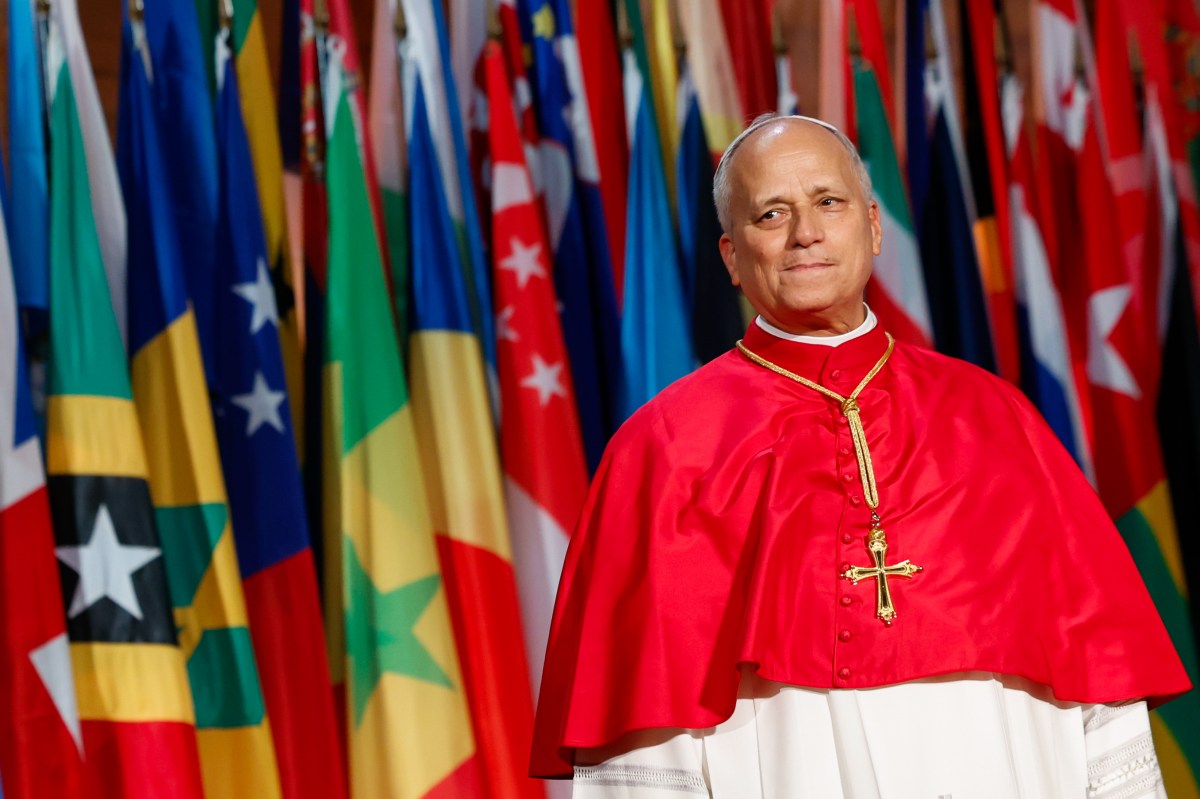
Pope Leo XIV warned Friday that AI could threaten human dignity and become an “instrument of domination,” a message in sharp contrast with President Donald Trump’s embrace of the technology and push to keep the U.S. ahead in the AI race. During his visit to France on Friday, Leo repeatedly returned to the question of what it means to be human in an age of increasingly powerful machines. At UNESCO in Paris, he said technological advances must remain directed toward the human person rather than becoming tools of control.
The pope's comments come as governments and technology companies debate how quickly artificial intelligence should develop and how much regulation or oversight is necessary. Trump has taken a markedly different tone than the pope when addressing warnings about AI. Speaking at the United Nations on Tuesday, Trump dismissed concerns about the technology, calling them a “hoax” and said he would not “stifle growth” of something he believes could have an impact greater than the Industrial Revolution.
He also said the Justice Department would monitor the industry and intervene if necessary. The difference is not simply between embracing and rejecting AI. Leo has explicitly acknowledged the technology's potential while arguing that its development must remain subordinate to human dignity, moral responsibility and the common good.
At UNESCO, Leo warned that humanity's growing reliance on machines could change not only how people work but how they understand themselves. He also drew a distinction between AI's ability to process information and the human search for meaning. Meaning is the oxygen of the mind.” Leo's concern extends beyond the capabilities of individual AI systems.
He warned that communication technologies can make information more abundant without necessarily making it more truthful. Trump has repeatedly emphasized maintaining American technological leadership and has argued that excessive restrictions could undermine that position. In September, he said the United States was leading China in AI and argued that “whoever wins AI wins.” He has also rejected calls for broader new restrictions, while saying existing government authorities can address abuses when necessary.
Leo, by contrast, has focused less on the race for technological supremacy and more on the question of what technological progress should ultimately serve. His May encyclical says AI should not be allowed to reduce people to “productivity,” “cognitive performance” or “mere data,” and argues that technology must be directed toward the common good. That difference does not mean Leo is calling for an end to AI.
Extract — continue reading at the source.