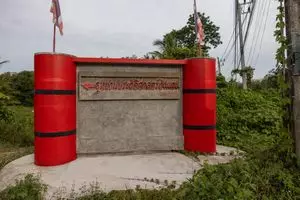
Most Popular PlacesRandom PlaceListsItinerariesAdd a PlaceDownload the App Red Barrels Historical Memorial St. John's Episcopal Church Frank & Nancy’s Marine Corps Museum Giant Squid Museum Where to See the World’s Creepiest Dolls and Toys 10 days ago A memorial to over 200 “communist suspects” who were incinerated in red petroleum barrels in Lam Sin Thailand in the early 1970s. Near this site, and throughout southern Thailand in the early 1970s, there occurred an extremely horrific series of events which few persons outside of Thailand are aware of, and often falls upon deaf ears within.
It was here that suspected members of the Communist Party of Thailand (CPT), were executed by being burnt in 200-liter red petroleum barrels (drums). In Thailand, the years from 1971 to 1973 were characterized by the violent suppression of the communist movement in areas deemed as strongholds of the “Red Insurgency”. The Lamsin community in the southern province of Phatthalung was one such area.
The state actors that implemented the suppressive polices were believed to be the Communist Suppression Operations Command (CSOC). In Lamsin alone, near the memorial site, over 200 “communist suspects” were incinerated in red petroleum barrels - the total number in all districts and provinces involved was 3008. The “Red Barrel” incident, as it is referred to as in the acts of state violence in southern Thailand in the early 1970’s, included the incineration of suspected communists or people accused of providing assistance to the CPT.
The acts usually began with arrest and interrogation. The victims were then “knocked” unconscious after the interrogation and then incinerated in petroleum barrels that were usually red. Some victims were killed prior to incineration but others woke up while being burnt alive and screamed in agony.
To drown out the cries of the victims, the officials started their truck engines. The victims ashes were later thrown into a canal near the site. The 200-litter petroleum drums had an iron grille divider; the victim would be placed on the grille and about 20 liters of gasoline would be poured over them to collect on the bottom.
The barrels were chosen to both conceal the evidence of the crimes and as well because they could be reused; the strong scent of the fuel would cover up the smell of the dead. Some victims were simply burned after being beaten without any form of interrogation. The Red Barrel Memorial, or Thang Daeng Memorial, was constructed in 1980 after the reconciliation process began when members of the CPT were allowed to return home.
Extract — continue reading at the source.