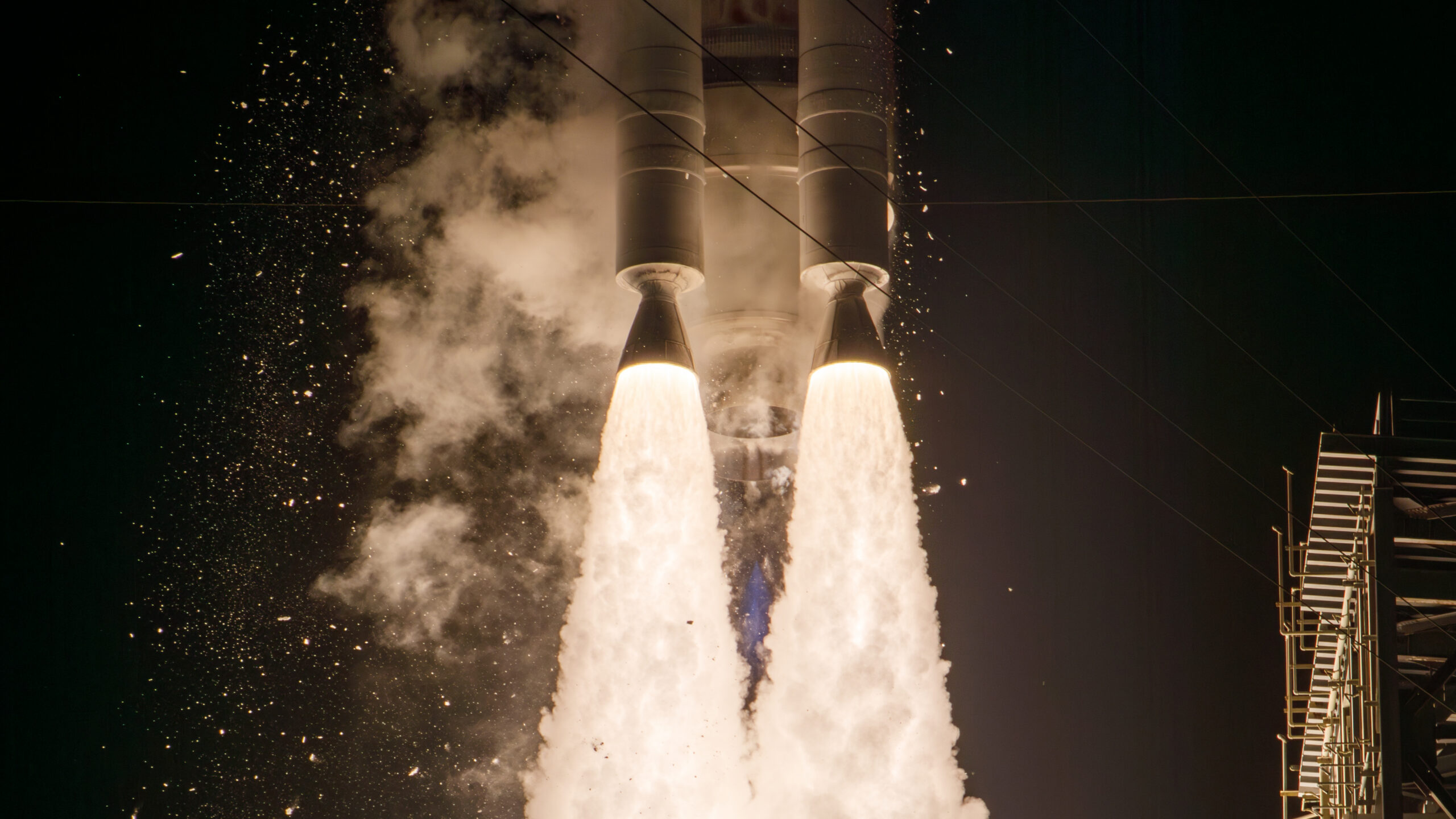
The big news this week, from our perspective, is that United Launch Alliance’s Vulcan rocket appears to be close to launching. We’ve seen a no-earlier-than launch date for the return to flight mission of October 29 (an Amazon Leo flight), and the next rocket up after that, also an Amazon Leo mission, is also planned for this year. Assuming the solid rocket boosters work, Vulcan could be poised for a major breakthrough next year in cadence.
As always, we welcome reader submissions, and if you don’t want to miss an issue, please subscribe using the box below (the form will not appear on AMP-enabled versions of the site). Each report will include information on small-, medium-, and heavy-lift rockets as well as a quick look ahead at the next three launches on the calendar. Nuri rocket notches another success.
South Korea successfully deployed five satellites for its first domestically launched microsatellite constellation during the fifth flight of its homegrown Nuri rocket Wednesday, Yonhap News Agency reports. In addition to the primary payload of five New-space Earth Observation Satellite Constellation for National Safety microsatellites, nine of the rocket’s 10 CubeSat secondary payloads were released as planned, according to the Korea AeroSpace Administration. PERSAT-02, developed by South Korean startup Quaternion, failed to separate from the rocket.
Pushing for more commercial activity … The mission was Nuri’s fourth consecutive success after its debut flight failed in 2021, raising the small-lift rocket’s overall launch success rate to 80 percent. After the launch, Science Minister Bae Kyung-hoon pledged continued government support for additional launches led by the private sector as South Korea seeks to shift from a government-led space development model toward a more commercially driven industry. HyImpulse test flight slips into 2027.
German launch startup HyImpulse has pushed the second flight of its SR75 suborbital rocket into spring 2027, European Spaceflight reports. As recently as last month, the company had said the flight would occur at the “end of 2026.” HyImpulse said the new target was based on its assessment of the remaining activities required under the license framework and the seasonal weather conditions at SaxaVord, rather than on the vehicle’s readiness.
Extract — continue reading at the source.