The midsize crossover debuted in 2021, one of VW’s first new electric vehicles designed in the wake of dieselgate. A year later, the company began local production in Chattanooga, Tennessee, and a couple of years ago facelifted the model, adding a much-improved rear drive unit in the process. But Chattanooga turned its attention away from the ID.4 earlier this year.
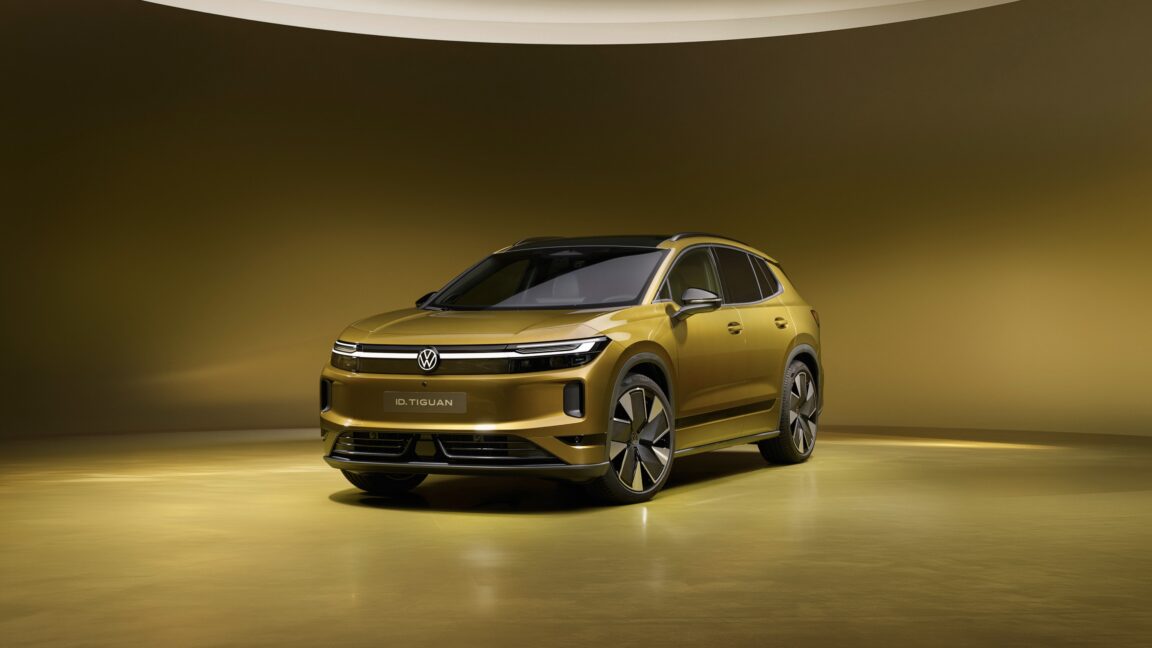
And, having sold almost a million ID.4s (and near-identical ID.5s) globally, the German automaker has decided it’s time for its replacement. Dropping the numerical and adopting the moniker of VW’s big seller is a statement. Tiguan brings these two success stories together,” said Thomas Schäfer, CEO of the VW brand.
VW was an early pioneer of using flexible vehicle architectures to create a multitude of bodystyles and sizes with common parts, and its transition into building EVs hasn’t changed that. Tiguan uses an updated version of the company’s mass-market EV platform, now called MEB+, with either 58 kWh or 77 kWh battery packs. The smaller pack is only available with a 187 hp (140 kW) rear electric motor, but the 77 kWh battery can be had with either a 281 hp (210 kW) rear-wheel drive powertrain or as a 295 hp (220 kW) all-wheel drive version.
Range is up to 373 miles (600 km), at least according to the European WLTP test. Alongside the mainstream name, it has a more mainstream look, though it’s part of VW’s new design language. For those keeping track of the various interesting names car companies give their design languages—it can’t just be me—this one is called Pure Positive.
The automaker says it wants the ID. Tiguan to feel like it belongs to the premium rather than mainstream segment, both inside and out.
Extract — continue reading at the source.