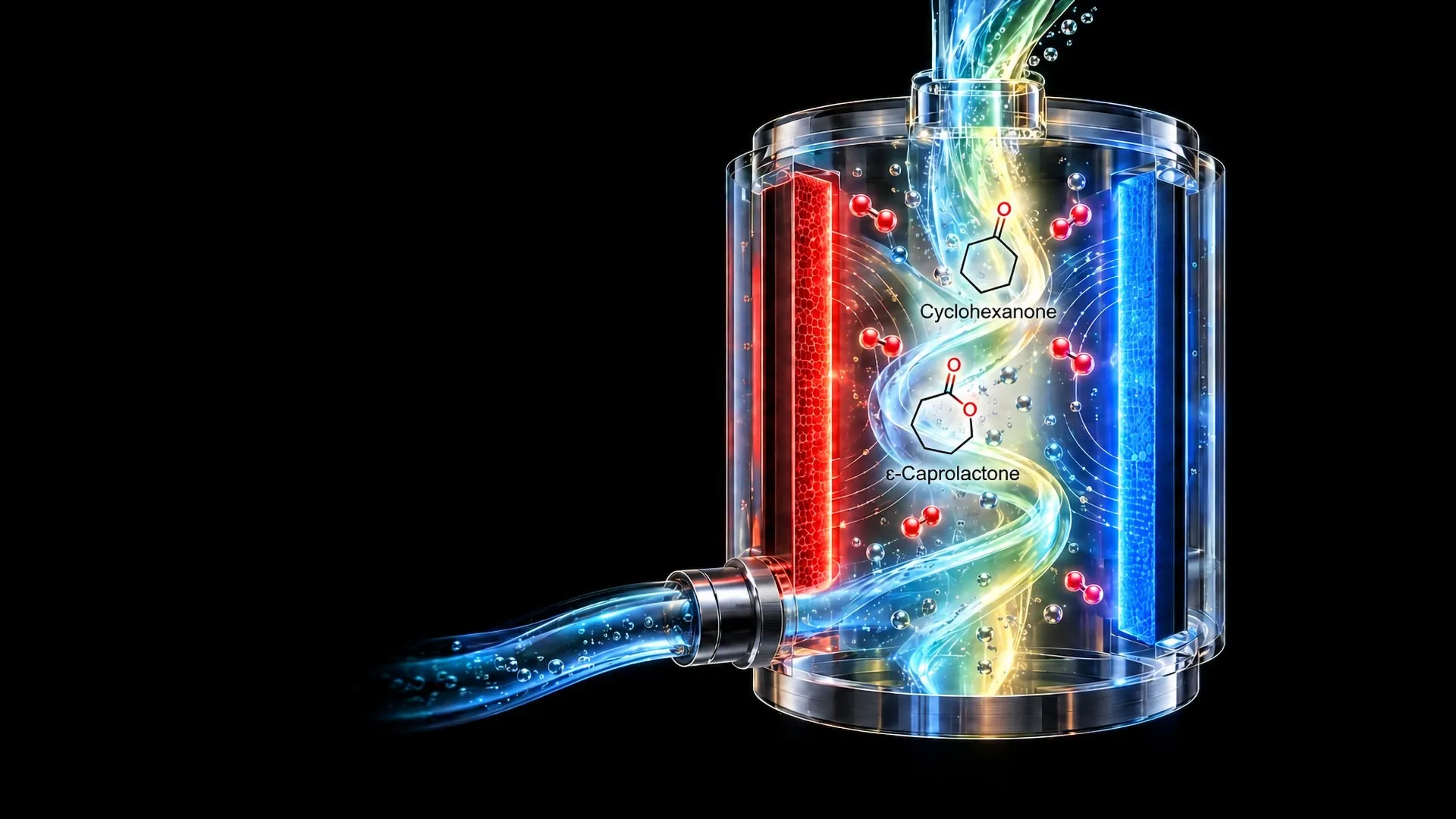
Scientists have identified a hidden factor that can determine whether a chemical reaction succeeds or fails. By controlling tiny changes in acidity near electrodes, researchers dramatically improved the production of valuable chemical ingredients, raising the proportion of the desired product from approximately 16% to 97%. The breakthrough, led by Professor Jaeyune Ryu of the Department of Chemical and Biological Engineering at Seoul National University College of Engineering, could help make chemical manufacturing safer, cleaner, and more efficient.
The researchers developed a method that uses oxygen and electricity to produce compounds used in plastics, medicines, adhesives, and other everyday materials without requiring the separate addition of peroxide oxidants. Their discovery centers on a surprisingly overlooked factor called "local pH," which describes the acidity or alkalinity in the immediate surroundings of an electrode. By redesigning a chemical reactor to control the distance between electrodes and the movement of liquid through the system, the team found a way to manage these conditions and greatly improve the reaction's performance.
The work focused on two important families of chemicals: lactones and epoxides. Lactones are essential starting materials for biodegradable plastics and polyurethanes, while epoxides are used to manufacture adhesives, protective coatings, and epoxy resins found in electronic materials. Both also play important roles in producing pharmaceuticals and other specialized chemicals.
The findings were published in the Journal of the American Chemical Society (JACS), a leading chemistry journal published by the American Chemical Society (ACS). The Hidden Chemistry That Can Make or Break a Reaction The research builds on a technique known as organic electrosynthesis, which uses electrical energy to drive reactions that produce carbon-based chemical compounds. This approach has attracted growing interest because it may reduce the need for some of the chemical oxidizing and reducing agents commonly used in traditional manufacturing.
Such agents help reactions proceed by accepting or donating electrons, but some can be hazardous to handle and generate unwanted waste. Until now, much of the effort to improve organic electrosynthesis has centered on familiar factors, including the electrical voltage, the materials used for electrodes, and the composition of the liquid in which reactions occur. However, the researchers suspected that something important was being overlooked: the microscopic chemical environment directly next to each electrode.
This is where molecules exchange electrons and undergo chemical transformations. Although the surrounding solution may appear uniform, conditions within this tiny region can be dramatically different. One particularly important factor is pH, a measure of how acidic or alkaline a substance is.
Extract — continue reading at the source.


