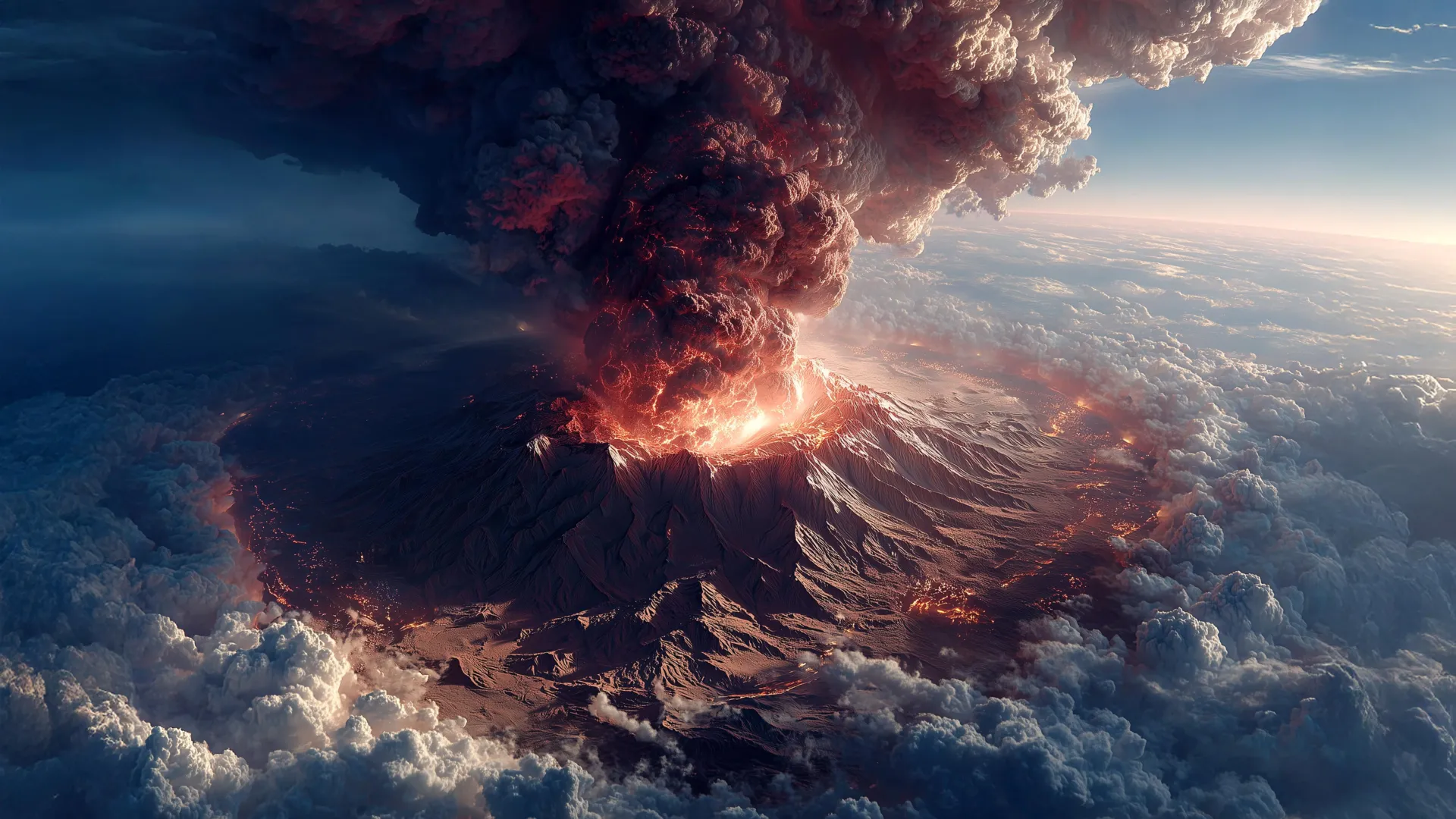
A massive volcanic eruption that struck Japan about 7,300 years ago had a devastating impact on prehistoric communities, but its aftermath was far more complicated than scientists once believed. While some populations declined or disappeared from affected areas, others continued to grow despite the destruction. An international research team led by Lund University investigated how the Kikai-Akahoya eruption changed population patterns across Japan.
Their findings challenge the idea that the disaster either completely wiped out nearby communities or left them largely unaffected. Instead, the researchers uncovered a surprising mix of population decline, migration, adaptation, and growth. A Catastrophic Volcanic Eruption in Ancient Japan When the Kikai-Akahoya volcano erupted beneath the sea approximately 7,300 years ago, Japan was home to Jomon communities that depended on hunting and gathering for survival.
"This eruption must have been devastating, exploding out of the seabed with little warning. It battered the Japanese islands with powerful earthquakes and enormous tsunamis, and then blanketed the landscape with meters of volcanic ash," explains senior author Peter Jordan, professor in archaeology at Lund University. For decades, archaeologists have disagreed about what happened to the people living near the eruption.
One theory describes an almost complete apocalypse, with human populations abruptly disappearing from areas closest to the eruption. Another suggests that some communities managed to survive even relatively close to the disaster. The new findings indicate that neither explanation fully captures what happened.
The eruption severely damaged ecosystems, forced people from their homes, and made some regions uninhabitable. Yet evidence also points to remarkable adaptability among survivors, with certain populations actually increasing after the catastrophe. "The disaster caused major loss of life.
However, survivors migrated, forged new social relations, innovated new kinds of economy, and appear to have found creative ways to exist and later thrive in the new post-disaster conditions," says lead author Enrico Crema, professor at Cambridge University. How the Volcanic Disaster Reshaped Japan's Population The researchers identified striking differences in how communities across Japan responded to the eruption. In southern Kyushu, Jomon populations had already been shrinking long before the volcano erupted.
Extract — continue reading at the source.



