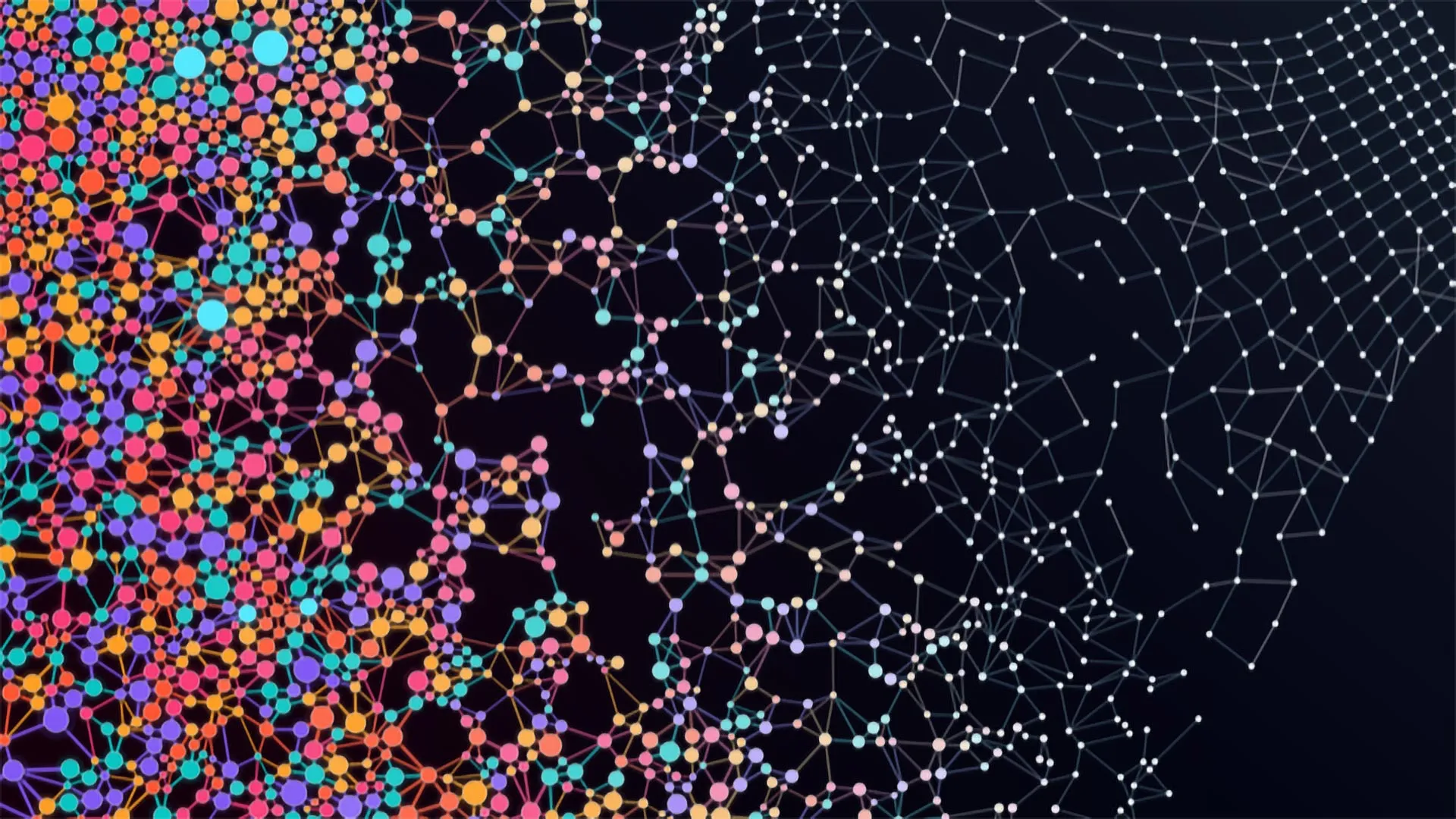
Perfection may not always be the best recipe for stability, especially in complex systems such as electrical grids, ecosystems, and advanced materials. For years, researchers often worked from the assumption that networks should perform more reliably when their individual parts behave as similarly as possible. Real systems, however, rarely look that tidy.
Power generators operate differently from one another, neurons vary in form and behavior, species occupy different roles in ecosystems, and the components inside engineered materials are not always perfectly uniform. Physicists at Northwestern University now say those differences may sometimes be an advantage rather than a defect. In a new study, the researchers created a mathematical framework designed to determine when variation, which scientists often describe as disorder, can actually make a network more stable.
Their results suggest that many physical, engineered, and biological systems can become more resilient when their components, or the connections between them, are not identical. That finding challenges the idea that uniformity should always be the goal. Instead, carefully introducing differences into a system could help engineers design more resilient power grids, architected materials and other interconnected technologies.
The work also may help explain why irregularity is so common in natural systems, including neural, biological and ecological networks. The study was published Sept. 17 in the journal Science. The researchers also developed a website that allows users to explore the framework visually.
By adjusting different parameters, users can watch network components interact, synchronize and form organized patterns. "Previous studies found a growing number of cases in which disorder (also called heterogeneity, irregularity or asymmetry) across a network's nodes can actually improve stability and desirable behavior," said Northwestern's Adilson Motter, who led the work. "We have seen this in important real-world systems, including power grids, metamaterials and brain computation.
But we didn't know how widespread this effect was or which kinds of systems could benefit from it. Our new study answers those questions, explains why these differences can improve stability and even reveals why scientists overlooked this effect for so long." Motter is the Charles E. and Emma H. Morrison Professor of Physics and Astronomy at Northwestern's Weinberg College of Arts and Sciences and director of the Center for Network Dynamics.
Extract — continue reading at the source.