Around 2.5 to 2 billion years ago, Earth underwent the largest chemical transformation ever recorded at its surface. Oxygen began accumulating in the atmosphere, setting in motion changes that eventually helped make possible the rise of complex organisms such as plants and animals about half a billion years ago. As oxygen levels increased for the first time, enormous amounts of microbial material were buried beneath the seafloor.
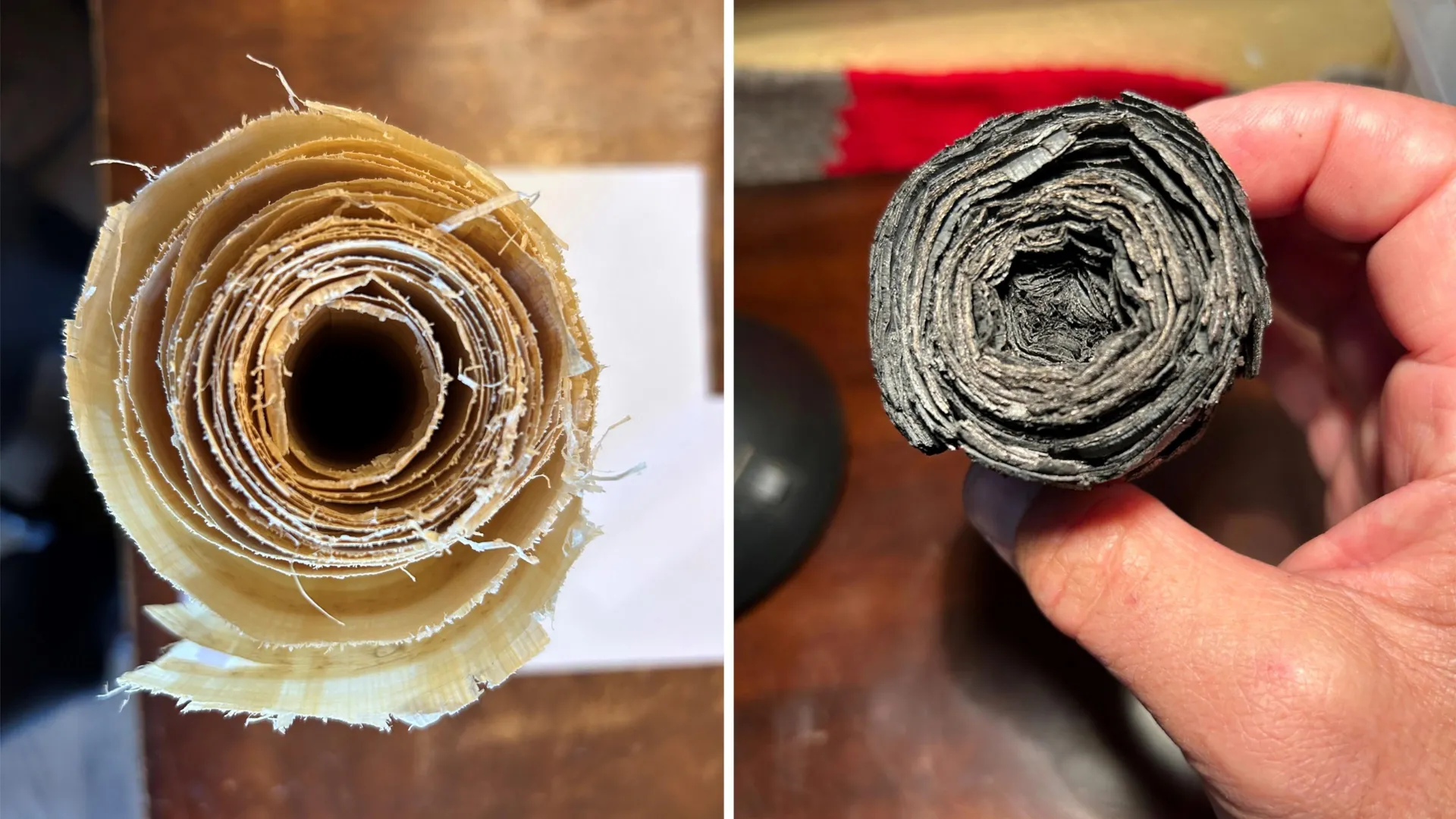
That burial trapped carbon in rocks and left behind an unusual isotopic signature. For decades, many scientists have interpreted that signature as evidence that Earth's carbon cycle became dramatically unbalanced on a global scale. Evidence supporting that interpretation has come from drill cores -- long cylinders of solid rock pulled from deep underground -- recovered from ancient marine sediments in Karelia, Russia, and the Francevillian Basin in Gabon.
A new study led by Caltech researchers, however, is raising questions about whether the Russian evidence really records a planetwide event. "One major debate centers on an unusual carbon-isotope signal that has often been interpreted as evidence of a worldwide environmental change," says Nivedita Thiagarajan (PhD '12), a senior scientific researcher at Caltech who works in the lab of John Eiler, the Robert P. Sharp Professor of Geology and Geochemistry and Ted and Ginger Jenkins Leadership Chair of the Division of Geological and Planetary Sciences.
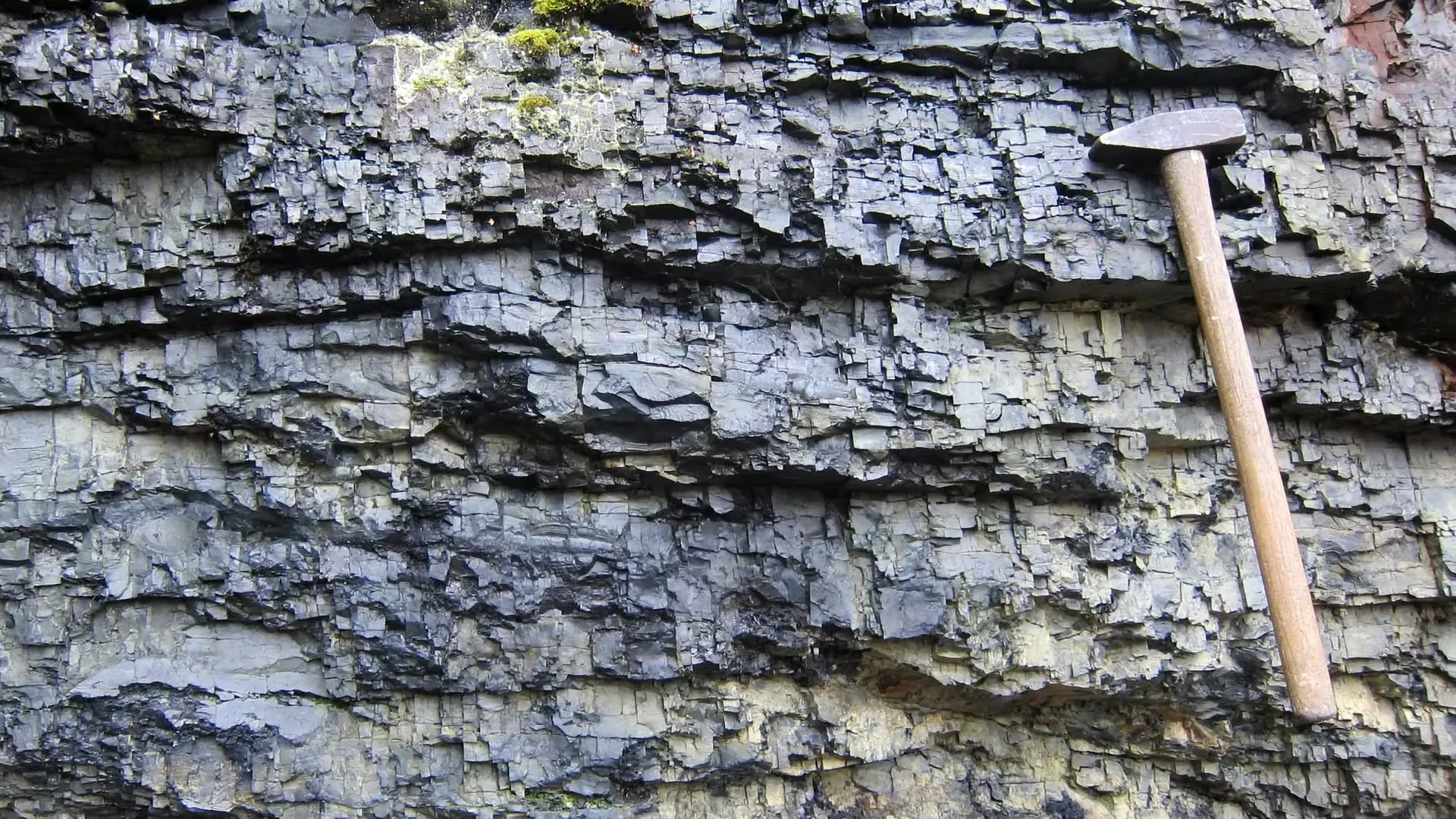
"We studied gases trapped in microscopic pockets within rocks from the Zaonega Formation in Karelia, Russia, one of the world's oldest known fossil oil fields, and found that the carbon-isotope signal at this key site can be explained by local phenomena that occurred in a several-hundred-square-kilometer sedimentary basin rather than across the entire globe." Thiagarajan is the lead author of a recent paper published in Geology. The study describes how the researchers reconstructed the sequence of changes preserved in Karelia's rocks following the first major increase in atmospheric oxygen. Carbon isotopes -- heavier or lighter forms of the element -- provide information about the origins of biological material that accumulated billions of years ago.
By measuring the relative amounts of these isotopes in drill cores (or carbon-isotope signals), researchers can build a record of ancient environmental change, somewhat like reading the growth rings of a tree. An unusual carbon signal found in both the Zaonega Formation and rocks from Gabon is known as the Shunga-Francevillian event. Scientists have often pointed to it as evidence that Earth experienced a major global disruption of the carbon cycle around 2 billion years ago.
"Earth, in a way, went crazy during that time interval when oxygen appeared in the atmosphere. What we are trying to assess are the causes and consequences of Earth oxygenation," explains Aivo Lepland, a researcher at the Geological Survey of Norway (NGU) in Trondheim and a co-author on the study. "This information is archived in the rocks, so, in order to study what happened, you have to study rocks." To examine the Shunga-Francevillian event from another perspective, the researchers analyzed drill cores stored at NGU.
Extract — continue reading at the source.