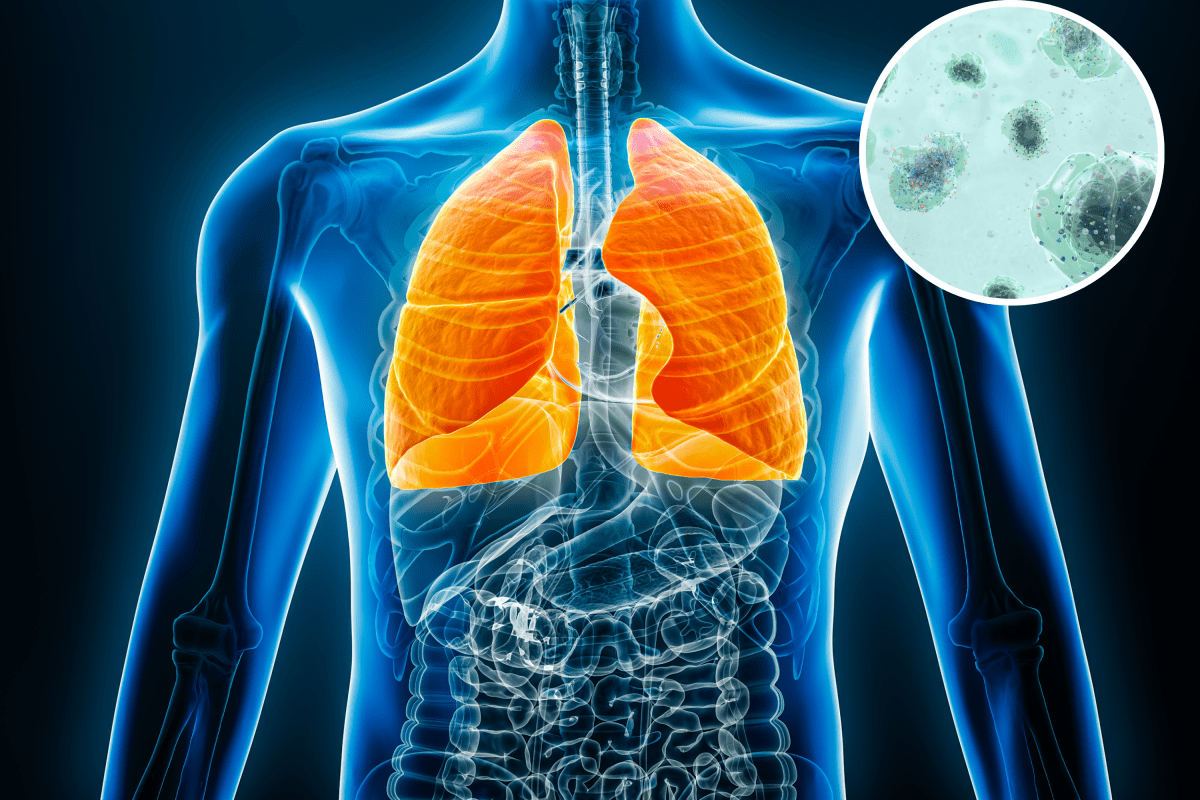
Microplastics have become an unavoidable part of modern life, but what happens after they are breathed into the body remains largely unknown. Now, researchers studying patients undergoing testing for lung problems have found that those diagnosed with lung cancer were more likely to have detectable microplastics in their lungs. The findings, due to be presented at the European Respiratory Society (ERS) Congress in Barcelona, Spain, add to growing evidence that tiny plastic particles are making their way into the human body through the air we breathe.
Researchers say the study raises important questions about whether microplastics could play a role in lung disease. Ilias Dimeas, from University College Dublin School of Medicine in Ireland and the University of Thessaly in Greece, told Newsweek that it is possible that cancerous lungs are simply better at trapping or retaining microplastics, rather than microplastics contributing to cancer development. He said: "This observational study shows an association between a greater microplastic burden and lung malignancy, even after adjustment for smoking exposure, but it cannot establish causation or determine which came first.
"Microplastics might contribute to inflammation or other biological processes relevant to cancer, but cancerous or otherwise diseased lungs might also trap or clear particles differently." He added longitudinal and mechanistic studies will be needed to distinguish between these possibilities. The researchers stressed that the study does not prove microplastics cause cancer. Scientists still know remarkably little about what happens after microplastics enter the body.
Dimeas said researchers have yet to determine what normal background levels of microplastics in the lungs look like, how much those levels vary between individuals, or whether the particles contribute to disease. "If we are breathing these particles in every day, we need to understand where they end up and whether they could be linked to disease," he said in a statement. The research included 100 people undergoing a bronchoscopy to investigate lung symptoms at University Hospital of Larissa in Greece.
A bronchoscopy involves passing a thin, flexible tube with a camera into the lungs so doctors can examine the airways and collect samples. According to the American Cancer Society, lung cancer (both small cell and non-small cell) is the second most common cancer in both men and women in the United States (not counting skin cancer). In men, prostate cancer is more common, while breast cancer is more common in women.
The organization estimates there will be about 229,410 new cases of lung cancer in the U.S. in 2026. As part of the study, each patient provided a lung-wash sample, in which saline solution is used to collect cells and other material from the lungs. Half the participants also provided a small sample of lung tissue.
Extract — continue reading at the source.