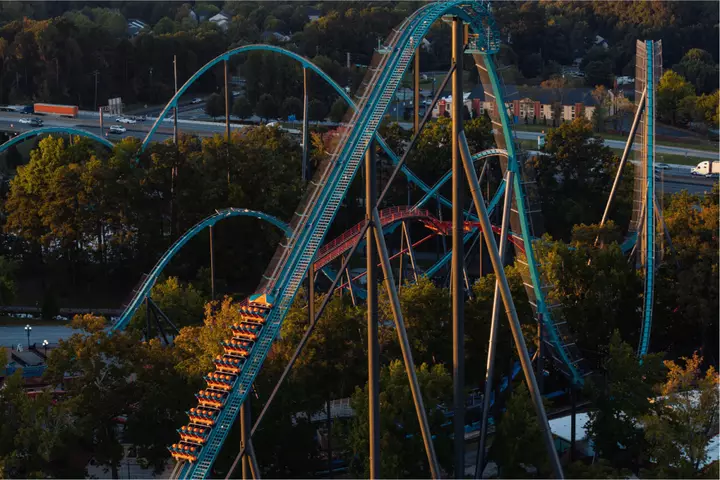
As Six Flags Over Georgia prepares to reopen this weekend following the death of a 42-year-old father while riding a roller coaster on Monday, October 12, questions remain on what caused the accident and what happens next. Hassan Jihad Ibn Kariem, of Atlanta, died after being ejected from the Goliath roller coaster at the Six Flags Over Georgia amusement park, prompting the closure of a number of similar rides across North American theme parks. The park is scheduled to reopen Friday, October 16, although Goliath will remain closed.
Six Flags says it does not currently have an anticipated reopening date for the ride as an investigation continues. Preliminary reports and witness accounts say that Kariem was ejected from the coaster during the ride, leading to questions about a potential failure in the restraint. Goliath, a roller coaster manufactured by Bolliger & Mabillard (B&M), is one of multiple hyper coasters designed with an individual “clam shell” lap belt that secures the rider while leaving the upper body free.
Investigators have not said whether a mechanical failure caused Kariem to be ejected, and there is currently no confirmed explanation for how he left the restraint. Brian Avery, a senior lecturer in the University of Florida's Department of Sport Management, told Newsweek that when riders meet requirements and are correctly seated, they “should remain contained throughout the ride, including during airtime.” The clamshell belt has several layers of safety, including seat and restraint geometry, locking mechanisms, restraint monitoring and dispatch interlocks. Attendants also check each rider’s belt before the ride begins.
However, Avery said that there can still be failures. Those are investigative questions, not conclusions about the person involved here.” Avery said that investigators would likely examine the restraint’s locking mechanism, pivots, connections, fasteners, the seat, and the supporting structure for damage, as well as wear, improper adjustment, or unintended release. There is no federal regulation over amusement park rides, with the responsibility for safety regulations left down to the state.
The state-by-state system has faced criticism for creating inconsistent levels of oversight across the country, particularly from Democratic Senator for Massachusetts Edward Markey who has repeatedly introduced legislation to close what he calls a “loophole” in safety regulations for amusement rides. In Georgia, the responsibility falls to the Office of the Commissioner of Insurance and Safety Fire, who said in a statement this week that they are conducting an "in-depth and comprehensive review" to determine the circumstances and whether applicable policies and procedures were followed. Roller coasters in the state of Georgia are inspected by the state’s Office of the Commissioner of Insurance and Safety Fire.
Regulations say that amusement rides must have annual inspections, and Commissioner John King confirmed that this had taken place before the season began. Newsweek reached out to the Commissioner’s Office and requested the state’s inspection records for Goliath, but has not yet received a response. Accounts from several witnesses on the ride said that belts were checked before the ride began.
Extract — continue reading at the source.