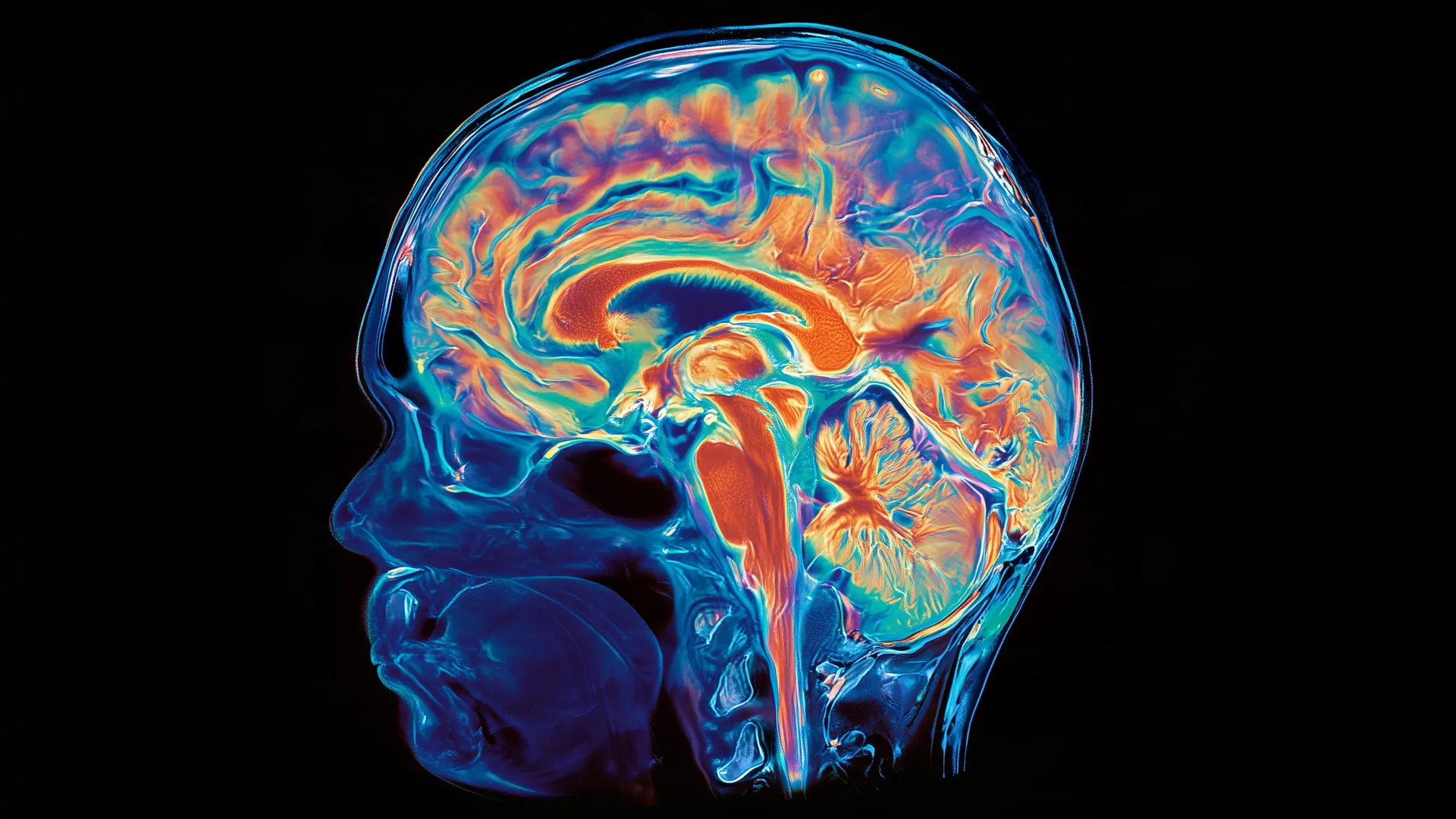
Scientists have long treated the brain as a single organ with a shared developmental origin. New research led by Stanford Medicine challenges that basic assumption, suggesting that what we call the brain is actually built from two distinct systems that arose separately over hundreds of millions of years of evolution. For decades, the dominant model held that the entire brain develops from one early progenitor cell population.
Under that view, the forebrain, midbrain, and hindbrain all trace back to the same developmental starting point. The new findings point to a very different picture. Researchers found that the human brain appears to combine two ancient nervous systems.
One gives rise to structures responsible for essential functions such as breathing and controlling the heartbeat. The other produces regions associated with abilities such as language, mathematics, abstract thought, and reflection on our own existence. The discovery may also explain a long-standing problem in neuroscience: why researchers have had so much difficulty growing certain brain cells in the laboratory.
It could create new opportunities to investigate diseases involving the brain stem, including spinal muscular atrophy (also known as SMA) and amyotrophic lateral sclerosis (also known as ALS or Lou Gehrig's disease). "We've shown for the first time that the front of the brain arises from a totally different progenitor cell than the back of the brain," said Kyle Loh, PhD, associate professor of developmental biology. "Our discovery means that we can now grow neurons from the back of the brain, the hindbrain, in a petri dish and study their functions." The findings will be published in Nature Neuroscience Sept. 18.
Loh is the senior author. Graduate students Carolyn Dundes and Rayyan Jokhai are co-first authors of the research. The adult brain is divided into three major regions: the forebrain, midbrain and hindbrain.
The forebrain supports many of the abilities people most closely associate with complex thought, including language, consciousness and abstract reasoning. The hindbrain, by contrast, sits toward the back of the skull and is often referred to as the brain stem. It helps control automatic processes essential for survival, including breathing, sleeping, heartbeat regulation and hunger.
Extract — continue reading at the source.


