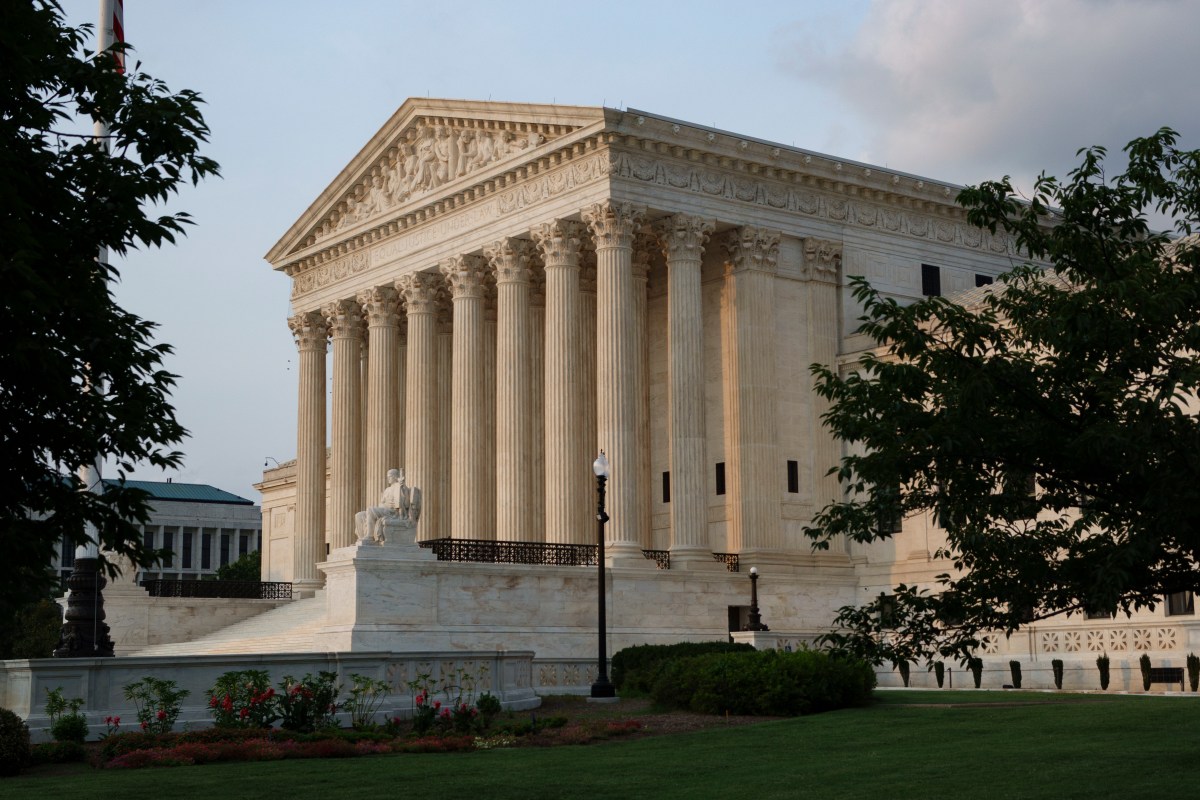
Supreme Court is set to weigh in on whether President Donald Trump's administration can implement new mail ballot requirements ahead of November's midterm elections. The High Court is considering the Trump administration's appeal of an order by U.S. District Court Judge Indira Talwani in Boston that prohibits the U.S.
Postal Service from enforcing its new rule on mail voting before the midterms. After the USPS finalized the rule, states and voting-rights groups sued to challenge the new requirements. On Sunday, a federal judge appointed by Trump also ordered that the USPS not implement the president's executive order.
The High Court faces pressure to act quickly as ballots continue to reach voters nationwide and the justices' decision will determine not only how mail ballots are handled as voting in the midterms gets underway but whether one of the administration's signature election-security initiatives survives. The USPS rule outlines how the agency will support the executive order that Trump signed in March, which directs federal agencies to create lists of eligible voters and orders the USPS to deliver mail ballots only to people on the lists. The rule requires all ballot envelope designs to be preapproved by the USPS and that states submit a list of voters to an online portal that has yet to be activated.
Experts have told Newsweek that it is likely already too late for the changes to be implemented in time for November's elections. Mail ballots are already being sent out in some states, and others are preparing to distribute them in the coming days. Newsweek has contacted the plaintiffs, White House and USPS for further comment via email.
Almost a third of voters cast mail ballots, so the outcome of the legal fight could have a significant impact on voting practices, particularly in the states where mail voting is universal and popular. Supporters of the Trump administration's approach argue that stronger safeguards are needed to maintain confidence in elections, raising concerns about voter-roll accuracy, ballot verification procedures and the possibility that ballots could be issued to ineligible voters. Critics, however, argue that the approach risks confusion among the electorate and may disenfranchise eligible voters ahead of the midterms, with control of Congress at stake and Republicans fighting to preserve their slim majorities in the House and Senate.
The fate of the USPS rule is set to be decided soon by the Supreme Court, which has a 6-3 conservative majority. The High Court is not being asked to decide the legality of Trump's executive order, but to lift Talwani's injunction blocking the USPS's plan while the case proceeds through the courts. In an application to Supreme Court Justice Ketanji Brown Jackson on September 6, U.S.
Extract — continue reading at the source.