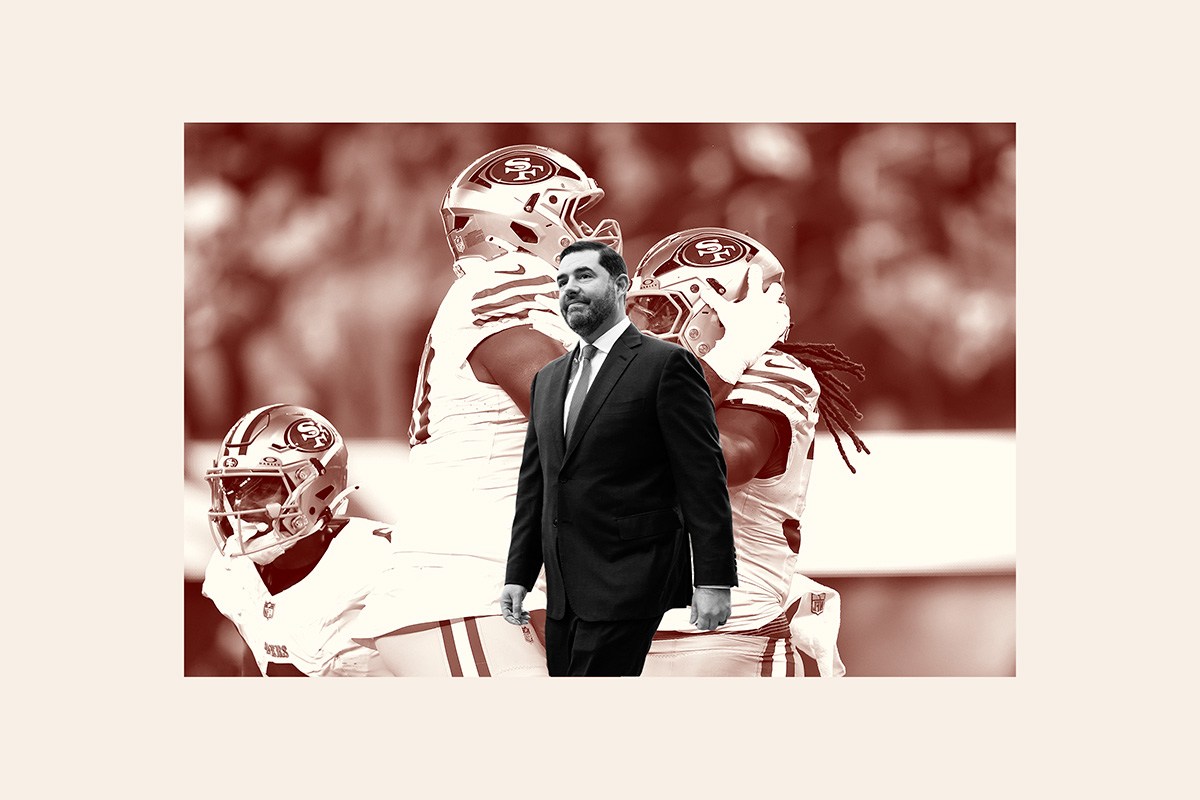
Jed York left an Ohio court proceeding with his cellphone, while the $160 seized during his arrest on suspicion of engaging in prostitution went to the Mahoning Valley Human Trafficking Task Force. York, the San Francisco 49ers' president and a member of the York family that owns the team, pleaded no contest Monday to misdemeanor charges of disorderly conduct and possessing criminal tools after an initial charge of engaging in prostitution was amended. He was sentenced to one day in jail, credited with time served, and fined $1,150.
The 49ers, meanwhile, were recently valued at $10.21 billion by Sportico, making them the NFL's eighth-most valuable franchise. The $160 is eye-catching, as are the initial prostitution engagement charges, but perhaps the more consequential matter involves what the NFL is going to do about the situation. A league spokesperson said the matter "will be reviewed under the personal conduct policy." The review presents the NFL with a test of a principle it has spent years making explicit: off-field conduct can become league business whether the person involved is a player, coach or owner.
York's case poses the harder question of what accountability means when the person involved owns the team. The NFL's Personal Conduct Policy opens with broad language, stating that "everyone" who is part of the league must avoid conduct detrimental to its integrity and public confidence. It specifically mentions owners alongside coaches, players, team employees, officials and league staff.
What's more, the policy also says avoiding a criminal conviction is insufficient by itself to satisfy league standards, so York's case remains subject to the NFL's review and potential discipline. This specific case doesn't require the NFL to invent new ownership standards. The league just has to decide how to apply an existing one.
There is precedent for disciplining owners. In 2014, the NFL suspended then-Indianapolis Colts owner Jim Irsay for six games and fined him $500,000 after he pleaded guilty to a misdemeanor count of driving while intoxicated. In 2018, Commissioner Roger Goodell fined then-Carolina Panthers owner Jerry Richardson $2.75 million after an independent investigation substantiated workplace-misconduct allegations.
The league has gone further in describing why ownership matters. Asked during congressional testimony in 2022 why owners are held to a higher standard, Goodell said, "Because they're ultimately accountable for what happens in their organization. They set the standard." Applying the same conduct policy to owners and employees does not require the NFL to impose the same punishment for every offense, of course, so the league’s decision can still run the gamut.
Extract — continue reading at the source.