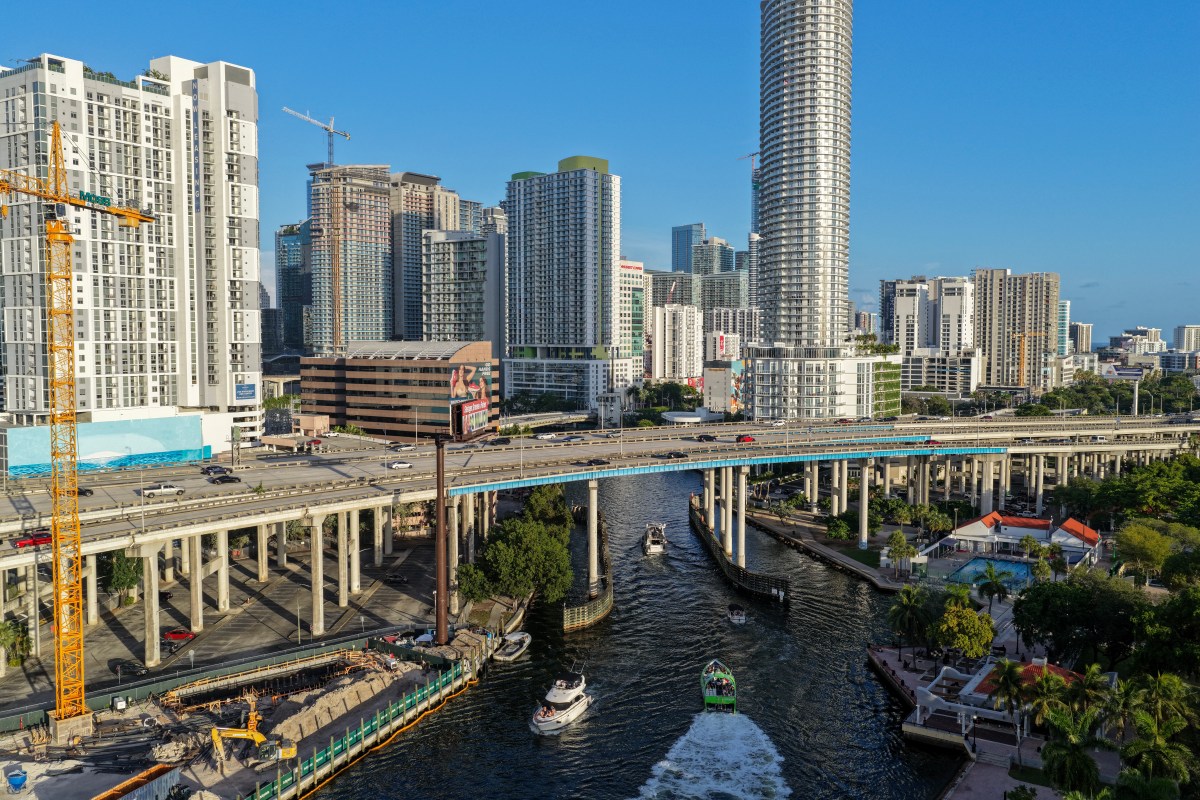
For nearly a century, the American Dream has come to be associated with owning a detached home with a backyard surrounded by a bright white fence, a marker of social mobility, self-sufficiency, and security. In Miami, a city that sprouted into a metropolis nearly overnight at the end of the 19th century, that dream is becoming increasingly difficult to attain. Not only has the cost of living skyrocketed in the so-called Magic City over the past few years, making homeownership unaffordable for many; but the supply of single-family homes in Miami-Dade has plunged, leaving residents with very few options.
According to the latest data by Miami Realtors, single-family inventory in the Miami-Dade metropolitan area, which has an estimated population of 2.8 million, fell nearly 23 percent in July compared to a year earlier. That left just 4.8 months of supply in the metro’s market, a figure that puts Miami-Dade firmly in seller territory—an exception in the country as the U.S. housing market has moved in favor of buyers over the past year, though Americans are struggling to reap the benefit of this shift. Miami’s shrinking supply of single-family homes is the result of several long-running trends converging at once.
Many homeowners who locked in ultra-low mortgage rates during the pandemic have little incentive to sell, limiting the number of properties entering the market. At the same time, years of strong demand from both domestic migrants and international buyers have kept competition fierce even as affordability worsened. Limited developable land in Miami-Dade, where much of the county is already built out or constrained by geography, has further restricted opportunities to add new detached housing.
A decade ago, a family priced out of a downtown condo could still aspire to a starter house further away from the city center. Now, fewer single-family homes in Miami are making it harder for would-be buyers to access that traditional middle-class escape hatch. This exacerbates a growing paradox within the city: Miami is still attracting wealth, but the people who power the city—teachers, nurses, hospitality workers, young professionals and middle-income families—are finding that the traditional route to stability and wealth building is slipping away.
As neighborhoods experience increasing gentrification and affordable housing becomes harder to find, many working families are being pushed farther away or forced to leave Miami altogether,” Symeria Hudson, president & CEO of United Way Miami, previously told Newsweek. Bureau of Economic Analysis’ (BEA) latest Regional Price Parities (RPP) report, a cost-of-living index that compares the overall price level in a state or metro area with the nationwide average. The city beat both New York City and Los Angeles for its expensiveness, driven by the high cost of housing and everyday goods.
The RPP report, which uses 2024 data, gave the Miami-Fort Lauderdale-West Palm Beach metro area a score of 114.155 for all items. This means that prices in the city are much above the national average of 100. Housing in Miami had an even higher score of 155.551.
Extract — continue reading at the source.